
«Данное сообщение (материал) создано и (или) распространено иностранным средством массовой информации, выполняющим функции иностранного агента, и (или) российским юридическим лицом, выполняющим функции иностранного агента»
 Topic: Artificial Intelligence (AI), Digital Infrastructure, Rare Earth Minerals, and Trade Blog Brand: Techland Region: Americas Tags: Export Controls, Great Power Competition, National Security Strategy, North America, Nvidia, Semiconductors, Trump Administration, and United States Integrated Dominance as a Means to Long-term AI Strategy January 28, 2026 By: Heino Klinck
Share
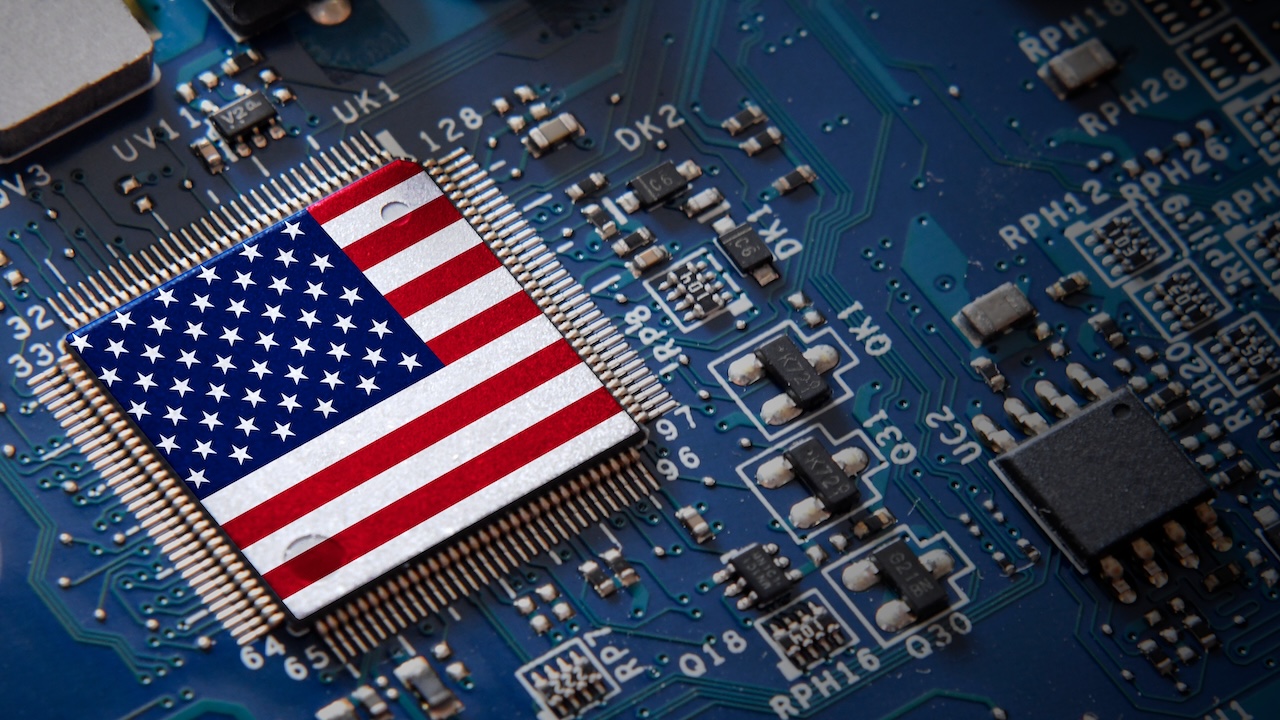
To maintain leadership in AI, the United States must invest more in a resilient, diversified semiconductor supply chain with allies and secure access to critical inputs.
Early in President Donald Trump’s National Security Strategy (NSS), it states:
We want to remain the world’s most scientifically and technologically advanced and innovative country, and to build on these strengths. And we want to protect our intellectual property from foreign theft. America’s pioneering spirit is a key pillar of our continued economic dominance and military superiority; it must be preserved.
This key driving vision for the Trump administration has not received enough attention since the publication of the NSS in November. However, in an era of intensifying great power competition, Washington faces a critical related question about our technological future: how do we build our way to semiconductor and artificial intelligence (AI) leadership? The answer will determine whether America maintains its technological edge for generations to come.
President Trump has demonstrated a clear juxtaposition to his predecessor’s administration. Those four years were embodied by a concept of so-called ‘integrated deterrence,’ which only emboldened bad actors, whether they be the Russians invading Ukraine, the Iranians supporting the horrific October 7 attacks on Israel, and the Chinese anaconda strategy vis-à-vis Taiwan, as well as in the South China Sea.
Instead, we now see a Trump strategy that can be described as ‘integrated dominance.’ Accordingly, the United States must use all the elements of national power to ensure continued, long-term dominance in the AI sector.
Building Our Way to AI Leadership
Under President Trump’s posture of integrated dominance, the current administration is in the process of reversing the AI policies inherited from the Biden Administration. As the United States remains in tough trade negotiations with China and prepares for a Presidential visit there in the spring, the Trump Administration just approved NVIDIA’s H200 chip exports to China. Interestingly, Beijing responded by blocking the imports entirely and doubling down on domestic semiconductor development. Recalibrating our policies to account for our adversaries’ ability to evade sanctions and work around restrictions remains key. To do so, Washington must pursue a more holistic, long-term strategy around semiconductors and artificial intelligence that fosters our global competitiveness with domestic advancements.
The CHIPS and Science Act, which allocated $52.7 billion for domestic semiconductor manufacturing and research, points the way forward. Since its passage, companies in the semiconductor industry have announced over $540 billion in US semiconductor investments. Intel and Taiwan Semiconductor Manufacturing Company (TSMC) each committed over $100 billion for chip manufacturing in Arizona and Ohio, with Samsung investing an additional $37 billion. In fact, it appears that TSMC is prepared to further expand its investment in the United States as part of a bilateral trade deal.
Beyond manufacturing fabs themselves, America’s semiconductor competitiveness also depends on securing the entire supply chain—from rare-earth materials to specialized equipment and advanced packaging. Today, we remain dangerously dependent on foreign suppliers for critical semiconductor inputs. China controls more than half of the world’s graphite, cobalt, and lithium, essential for both chip production and AI infrastructure. More ominously, China controls approximately 90 percent of the global processing capability. Japan dominates in critical semiconductor manufacturing equipment. Germany leads in specialized chemicals for chip manufacturing, while South Korea leads in advanced memory packaging.
Our long-term AI strategy must include investments in onshoring critical inputs and diversifying supply sources, rather than leaving these chokepoints vulnerable to geopolitical disruptions and relying exclusively on export controls to maintain our competitive edge. Many of the Trump administration’s actions have underscored this point. This means direct government investment in domestic production of semiconductor materials, chemicals, and manufacturing equipment. It means applying targeted tariffs on key raw materials to protect emerging domestic producers while they scale. And yes, it means ensuring US access to the materials themselves globally.
Equally importantly, it means coordinating with trusted allies—Japan, Germany, South Korea, and Taiwan—to build interconnected, resilient supply chains that no single adversary can easily disrupt. A thriving domestic semiconductor and AI ecosystem cannot rest on a fragile foundation of foreign dependencies. In conjunction with and building on our system of alliances, we must have full confidence in the full chain of production, from earth to silicon to finished chip. A focus on technology, commerce, and like-minded partners is the foundation of integrated dominance.
AI or semiconductor autarky is neither achievable nor even desirable. Rather, we should pursue resilient interdependence, where our allies contribute to diverse but secure supply chains in which American innovation remains indispensable.
America’s Best Defense is Investment in AI
The Biden administration’s over-reliance on export control policies reflected a defensive crouch. A Trumpian aggressive approach is required to ensure American technological leadership for the next generation. America’s competitive advantage has come from continuously creating it. We became the world’s technology leader by outbuilding, out-investing, and out-innovating rivals. Applying the visions of American exceptionalism and even a technological manifest destiny through an integrated dominance approach of harnessing US ingenuity through sustained domestic investment and allied coordination can deliver strategic victory.
About the Author: Heino Klinck
Heino Klinck is a retired US Army colonel who served as deputy assistant secretary of defense for East Asia from 2019-202. He is also the founder of Klinck Global LLC and serves as a senior advisor at the National Bureau of Asian Research (NBR).
Image: Tang Yan Song/shutterstock
The post Integrated Dominance as a Means to Long-term AI Strategy appeared first on The National Interest.
Источник: nationalinterest.org