
«Данное сообщение (материал) создано и (или) распространено иностранным средством массовой информации, выполняющим функции иностранного агента, и (или) российским юридическим лицом, выполняющим функции иностранного агента»
 Topic: Diplomacy, and Foreign Leaders Blog Brand: The Buzz Region: Eurasia Tags: Central Intelligence Agency, India, Multipolarity, Russia, Ukraine War, United Arab Emirates, United Kingdom, and Vladimir Putin India and UAE Condemn Putin Assassination Attempt—but Not Russia’s War January 6, 2026 By: Brandon J. Weichert
Share
The seeming double standard in Indian and Emirati statements makes sense, given both nations’ strong relationships with Russia and the troubling political consequences of Putin’s death.
On December 30, the world awoke to the startling news that, as Ukrainian President Volodymyr Zelensky was meeting with President Donald Trump at Mar-a-Lago in Florida to discuss a peace plan to end the Ukraine War, someone had launched 91 explosive-laden drones at one of Russian President Vladimir Putin’s dachas.
Putin was not at the Lake Valdai dacha in Novgorod when at least one of the Chaklun-V drones with a six-kilogram explosive device made its way to Putin’s vacation palace.
Russia Claims the UK Tried to Kill Putin
Russian sources insist that the Ukrainians are to blame.
Specifically, Moscow is fingering London. As the Russian narrative goes, London is opposed to any Trump-brokered peace deal between Zelensky and Putin. Moreover, the Kremlin has speculated that the British are trying to make Zelensky look bad—in an attempt to lay the groundwork to replace him with former Ukrainian wartime general Valerii Zaluzhnyi, who is serving as Ukraine’s ambassador to the UK following his retirement from the armed forces.
By initiating the attack, or so Moscow claims, the British were effectively killing two birds with one stone: undermining the peace process underway at Mar-a-Lago, and potentially sowing the seeds for Zelensky’s ouster and replacement by their man, Zaluzhnyi. Had the British killed either Putin and/or senior members of his inner circle by hitting the palace while the Russians were using it, all the better (for them).
Of course, one must take these accusations with a certain amount of skepticism. The British categorically deny them. What’s more, the CIA and other Western intelligence services insist they’ve gone through the data and found no evidence whatsoever indicating the truth of Russia’s claims. The CIA’s conclusion has been that Ukraine was targeting a different military facility close to the dacha, and the Kremlin lied about the drone’s location in order to scuttle peace talks.
Still, it should be highlighted here that multiple news sources in the West are confirming the long-held suspicion that US intelligence assets were used to provide targeting intelligence to Ukrainian forces. Given that relationship, it shouldn’t surprise anyone if the Ukrainians had really made an attempt to kill the Russian leader—a goal that, after all, Zelensky had openly praised in a Christmas message only a week before.
The UAE and India Are Close to Russia Diplomatically
Interestingly, shortly after the failed drone attack became public knowledge, the United Arab Emirates (UAE) and India refused to condemn similar Russian drone attacks against Ukrainian targets in recent weeks—but did categorically denounce the alleged Ukrainian drone strikes against Putin’s dacha. In an extraordinary step, Zelensky took the time to castigate the UAE and India for condemning that strike but refusing to more broadly condemn Russian drone attacks against Ukraine.
But Zelensky’s response misses the point.
The reason that the UAE and India are denouncing the purported Ukrainian drone attacks on Russia is firstly about geopolitics. Both the UAE and India benefit mightily from very close, healthy relations with Moscow. The United Arab Emirates and Russia enjoy a self-described “strategic partnership”; their economies are intertwined, and they both do plenty of business with each other in the global arms market.
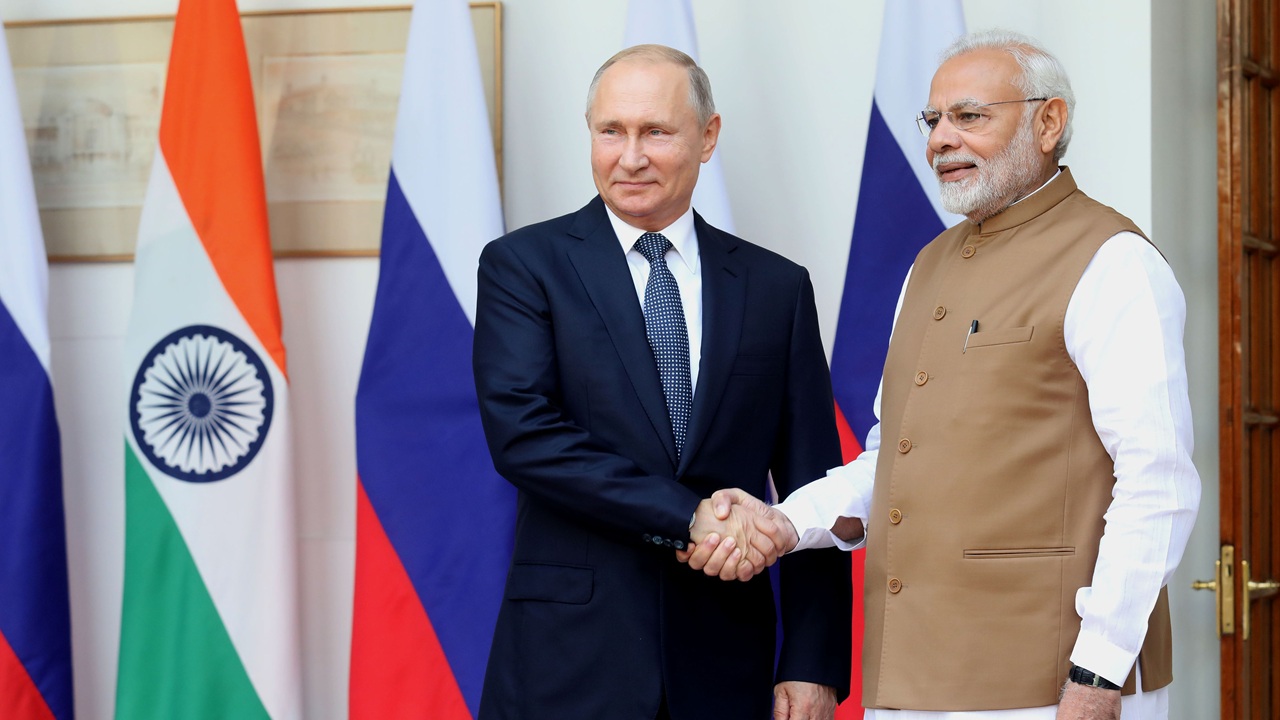
Meanwhile, India has long enjoyed a special relationship with Moscow going back to the first waves of decolonization in the 1940s. When the British left India, the Indian elites pivoted and became close friends with the Russians.
Today, Russia and India enjoy a major trading relationship. India has refused to distance itself from Russia, even under the immense pressure from the West following Russia’s invasion of Ukraine in 2022.
With the collapse of Russo-European oil trading, Moscow shifted almost seamlessly to places like India. These states are not particularly afraid of the West; they care only about accruing as much power and wealth as possible so as to become a truly great power. There is simply no way that India will willingly untether from supporting Russia.
So for the UAE and India to denounce Russia’s attacks on Ukraine in such a public way would be a disaster for their foreign policies. These two countries rely upon Russia in various ways for their economies and defense sectors.
The Middle East’s Assassination Problem
And there’s an added reason why UAE is particularly opposed to the alleged hit on Putin and that has to do with the local politics of the Middle East.
No Arab power wants to be seen as condoning targeted assassinations of world leaders by the US and its allies—because they fear that might set a pretext for Israel, another of America’s primary allies, to assassinate leaders in the Arab world.
Late last year, Israel shocked the world when it brazenly conducted an airstrike against Hamas leaders who had traveled to Doha, Qatar, as part of what they were told were ceasefire talks.
Israeli bombs dropped on Doha, much to the chagrin of the Qatari leadership—and to the horror of the wider Arab world.
The UAE does not want to encourage targeted assassinations of other world leaders for fear that such a precedent might be used on them one day.
So, neither the Indian nor UAE opposition to the alleged Ukrainian assassination attempt should be that surprising to anyone in the West. It’s based totally on the perceived self-interests of the leaders in New Delhi and Abu Dhabi.
About the Author: Brandon J. Weichert
Brandon J. Weichert is a senior national security editor at The National Interest. Recently, Weichert became the host of The National Security Hour on America Outloud News and iHeartRadio, where he discusses national security policy every Wednesday at 8pm Eastern. Weichert hosts a companion book talk series on Rumble entitled “National Security Talk.” He is also a contributor at Popular Mechanics and has consulted regularly with various government institutions and private organizations on geopolitical issues. Weichert’s writings have appeared in multiple publications, including The Washington Times, National Review, The American Spectator, MSN, and the Asia Times. His books include Winning Space: How America Remains a Superpower, Biohacked: China’s Race to Control Life, and The Shadow War: Iran’s Quest for Supremacy. His newest book, A Disaster of Our Own Making: How the West Lost Ukraine is available for purchase wherever books are sold. He can be followed via Twitter @WeTheBrandon.
Image: Shutterstock / Exposure Visuals.
The post India and UAE Condemn Putin Assassination Attempt—but Not Russia’s War appeared first on The National Interest.
Источник: nationalinterest.org