
«Данное сообщение (материал) создано и (или) распространено иностранным средством массовой информации, выполняющим функции иностранного агента, и (или) российским юридическим лицом, выполняющим функции иностранного агента»
 Topic: Diplomacy, and Foreign Leaders Blog Brand: Middle East Watch Region: Middle East Tags: Azerbaijan, Balochistan, China, Gulf Cooperation Council (GCC), Iran, Israel, Kurds, MENA, Pakistan, Russia, and Turkey How the End of the Islamic Republic of Iran Would Challenge Its Neighbors January 9, 2026 By: Abdulla Al Junaid
Share
If protesters succeed in removing the Supreme Leader, they could inspire ethnic minority groups in neighboring countries to challenge their governments.
By now, the latest scenes of Iranian protesters clashing with security forces create a sense of déjà vu. Yet, as the Iranian regime grapples with mounting internal pressures, the prospect of its collapse is becoming increasingly plausible. With a population of more than 92 million, Iran’s upheaval would be a seismic one and felt beyond Iran. Those heralding the collapse of the Islamic Republic should be careful of what we wish for. If the regime does fall, can the United States and its Middle East partners manage the regional fallout?
Iran’s complex demographic tapestry is both a strength and a central challenge for the country. The Kurds in the northwest, the Baluchis in the southeast, the Ahwazi Arabs in Khuzestan, and the Azeris in the north each have distinct identities and aspirations. Should the regime fall, these communities may seize the moment to demand autonomy, or even independence.
Conversely, if opposition factions such as the National Council of Resistance of Iran (NCRI), led by Maryam Rajavi, and the Iran National Council (INC), associated with Crown Prince Reza Pahlavi, can coalesce around a credible transitional authority, they may reduce fragmentation and help stabilize the country.
Yet the prospects for such reconciliation remain uncertain. The NCRI and INC offer different visions for Iran’s future, and their narratives have often failed to address minority rights and political representation convincingly. Distrust among minority communities toward both camps is real. In the absence of credible guarantees and inclusive governance, separatist sentiment could gain momentum, further complicating the post-regime landscape.
The geopolitical ramifications would be far-reaching. Turkey, long sensitive to Kurdish nationalism, would watch Iranian Kurdish mobilization closely. A weakened Iran could embolden Kurdish demands across borders, raising tensions in Turkey’s southeast and along its frontier with Iran.
The Gulf Cooperation Council (GCC) states would focus on Khuzestan, which has a sizeable Arab population and a history of grievances tied to discrimination and economic marginalization. Any opening for autonomy or separatism could both represent an opportunity and a challenge.
Pakistan would also feel the shockwaves. The Baluch population spans both Iran and Pakistan, and regime change in Tehran could energize Baluch nationalism. Islamabad already faces a persistent insurgency in Baluchistan; major shifts across the border could aggravate its internal security challenges.
Azerbaijan, too, could seek to expand its influence, given the large Azeri population in northern Iran. Mismanaged transitions or external opportunism could inflame ethnic tensions and destabilize both sides of the border.
For Israel, the implications would be significant. Iran’s Jewish community, one of the oldest in the world, reflects the country’s deep historical pluralism. But a sudden power vacuum could leave minorities uncertain, particularly if radical factions compete for control. Beyond that, Israel’s broader concern would be whether a post-regime Iran becomes more restrained or instead evolves into a fragmented arena where anti-Israeli militancy can thrive.
A regime collapse would also disrupt the regional balance involving major powers. Russia has often treated Iran as a useful counterweight to Western influence; instability could provide Moscow an opening to push its influence further south. China would face its own dilemmas; Iran has been central to Beijing’s Belt and Road strategy and its broader effort to secure energy routes and regional leverage. A less stable Iran would force China to recalibrate quickly.
The fall of the Iranian regime could trigger a historic realignment, with ripple effects well beyond Iran’s borders. The direction of change will depend on whether Iran’s transition is inclusive, orderly, and representative, especially of minority communities. Without that, the country risks trading authoritarianism for fragmentation. With it, Iran could begin building the foundations of a stable state.
About the Author: Abdulla Al Junaid
Abdulla Al Junaid is a geopolitical columnist and commentator in Middle Eastern and international media. He is the former department head for Analysis and Policies at the National Unity Party in Bahrain, the former deputy director of MENA2050, an advisory board member of the German-Arab Friendship Association (DAFG), and a permanent committee member of the Germany-GCC Annual Conference on Security and Cooperation. He was a guest speaker at the German-GCC Annual Conference on Security & Cooperation, the Herzliya Conference, and the Abu Dhabi Strategic Forum. He is also an executive partner at INTERMID Consultancy (Bahrain).
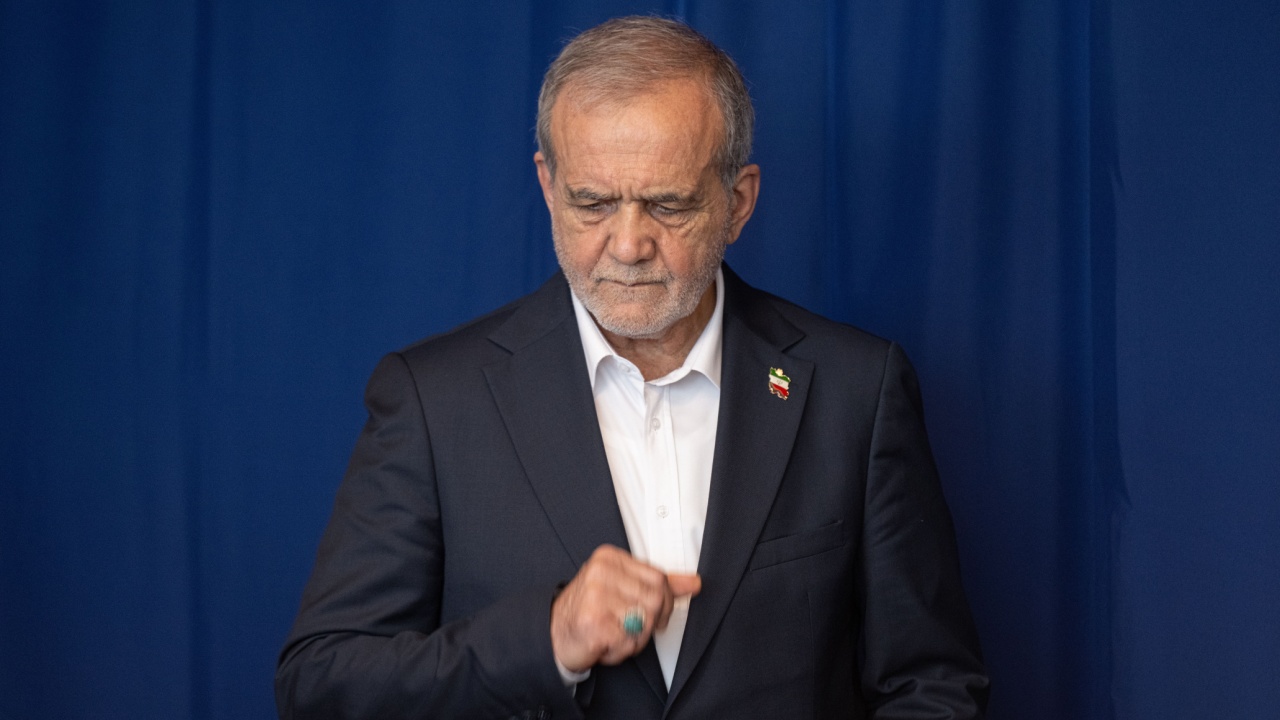
Image: Noam Galai / Shutterstock.com.
The post How the End of the Islamic Republic of Iran Would Challenge Its Neighbors appeared first on The National Interest.
Источник: nationalinterest.org