
«Данное сообщение (материал) создано и (или) распространено иностранным средством массовой информации, выполняющим функции иностранного агента, и (или) российским юридическим лицом, выполняющим функции иностранного агента»
 Topic: Critical Minerals, and Oil and Gas Blog Brand: Energy World Region: Europe Tags: Aleksandar Vučić, Donald Trump, Hungary, Jared Kushner, Lithium, Nicolas Maduro, Robert Fico, Russia, Serbia, Slovakia, United States, and Viktor Orban How Great Power Politics Is Undermining Europe’s Green Transition January 21, 2026 By: Aleks Eror
Share
The removal of Nicolas Maduro marks the arrival of a Trumpian geopolitical era defined by blunt realism. Advocates of the green transition would do best to realize that.
In the aftermath of Nicolas Maduro’s dramatic capture by US forces earlier this year, political and media outrage obsessed over the Trump administration’s disregard for international law and congressional authorization. Critics cast the operation as a throwback to crude imperialism: American power was deployed to vassalize Venezuela and expropriate its vast oil reserves. That outrage continues to rumble. Yet one critical question has gone largely unasked: what does this carbon-fueled intervention say about the future of net zero and the West’s much-vaunted green transition?
For years, policymakers have insisted that the world is approaching peak oil — not merely because of environmental necessity, but because geopolitical imperatives demand it. Europe, we were told, must sever itself from fossil fuels to weaken Russia’s war machine. Climate ambition and strategic prudence were meant to go hand in hand. And yet the world’s most powerful state has just demonstrated its willingness to use military force to secure access to hydrocarbons.
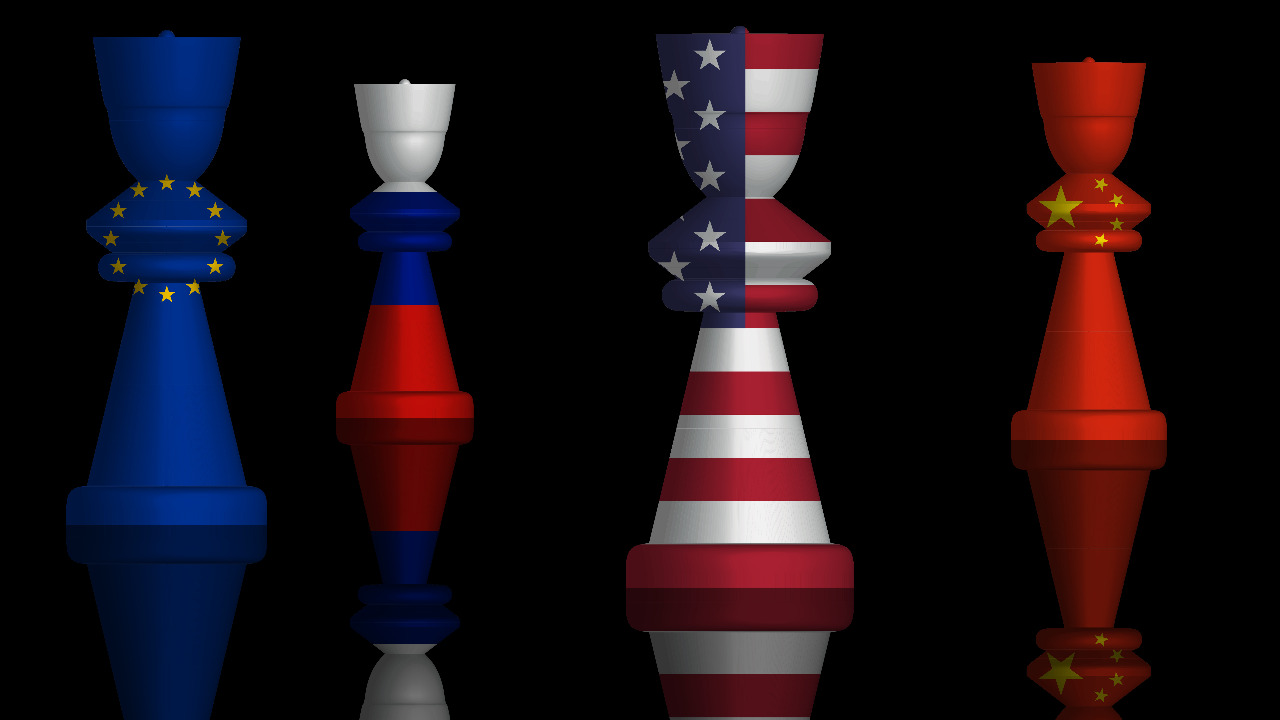
Add to this President Trump’s repeated signals that he intends to assert US control over Greenland — driven in part by the strategic shipping routes opening up as Arctic ice retreats due to climate change — and the illusion becomes difficult to sustain. Far from accelerating the green transition, great power politics are entrenching fossil fuels as strategic assets. The green revolution will be greatly delayed as a result, and the European Union will suffer the consequences more than most.
The Limits to the EU’s Green Energy Plan
The EU has staked its identity on becoming the world’s leader in decarbonization. This commitment is both ideological and strategic. In the long run, transitioning away from fossil fuels is essential. In the short to medium term, however, Europe still needs carbon. Industrial production, defense manufacturing, and household energy consumption remain heavily dependent on oil and gas. Fossil fuels are not only more reliable, but they are also cheaper. That matters in an era of stagnant growth, rising defense spending, and voter fatigue with high energy bills. Saying this openly in Brussels, however, is the ultimate taboo.
Nowhere is this disconnect clearer than in the EU’s approach to Russian energy. The European Commission has bound itself to a rigid objective: cutting the bloc off from Russian gas entirely by the end of 2027. This is framed as a moral and strategic necessity and the only way to starve Vladimir Putin’s war machine. Yet Russian energy continues to reach Europe through intermediaries, while major powers such as China buy Moscow’s exports at a discount. The sanctions regime has reshuffled trade flows, not ended them.
With a potential end to the war in Ukraine now on the horizon, Europe faces a narrow window to reassess a policy that has delivered high domestic costs with limited strategic payoff. The unfortunate reality is that Russia’s economy is not going to suddenly collapse because of energy sanctions. Remaining wedded to this strategy will, however, ensure that the EU continues to suffer through slower growth, higher industrial costs, and reduced competitiveness. The original intent behind sanctions was understandable. However, a change of course is needed, particularly at a time when Europe is under pressure to remilitarize as a result of America’s weakening commitment to NATO.
For a long time, the EU thought it could prioritize diplomacy over its military. But in this rapidly emerging new world order, firepower seems to be a prerequisite if you want a seat at the negotiating table. From a European perspective, economically reengaging with Moscow would be the rational course. That would mean reopening diplomatic channels and lifting the ban on Russian energy imports. Politically, however, such a move is radioactive. It would require an admission that the sanctions strategy failed and that you can’t simply cancel Vladimir Putin through moral outrage alone. If Europe wants genuine strategic autonomy, it will have to rebuild its own military-industrial base. That rearmament will require vast amounts of cheap, reliable energy — something renewables cannot provide at scale.
Alternative suppliers such as Azerbaijan or Qatar cannot realistically fill the gap. Russia remains, for now, the cheapest and most dependable option. Buying Russian fossil fuels would indeed boost Moscow’s revenues. But the alternative is worse — a Europe that cannot afford to defend itself. The only viable strategy is to bet on Europe’s own technological and industrial superiority — to use affordable energy imports to rebuild a defensive arsenal capable of deterring further Russian expansionism. But the EU establishment is unlikely to take that gamble. If change does come, it will come from the periphery of the bloc.
Hungary and Slovakia Are Gorging Themselves on Russian Oil
Hungary has been the most consistent opponent of Brussels’ sanctions orthodoxy. Prime Minister Viktor Orbán has correctly argued that energy diversification is a long-term process and that abruptly cutting off Russian gas will amount to economic self-harm. Hungary’s geography and refining infrastructure leave it with no immediate alternatives. On that basis, Budapest secured exemptions allowing for the continued imports of Russian oil through the Druzhba Pipeline. Slovakia obtained similar concessions. EU elites have tried to portray these countries as Kremlin sympathizers. In reality, they have simply acknowledged material constraints by accepting the world as it is, rather than as Brussels would like it to be.
Orbán has gone further. Leveraging his personal relationship with Trump, he has secured US flexibility on sanctions and tariffs that affect Russian energy imports destined for Hungary. While Washington formally maintains sanctions, enforcement has been selective, with quiet exemptions granted where they align with American political or strategic interests. Hungary’s success in navigating this landscape offers a template for other states that privately prioritize energy security over performative solidarity.
It would be difficult to derail the 2027 phase-out today. But that could change quickly once Kyiv and Moscow formalize a peace agreement — something that could plausibly occur before the end of next year. When that moment comes, the groundwork will matter. Hungary and Slovakia are well positioned to begin building a coalition of like-minded states, applying pressure from the EU’s southern and eastern flanks before confronting the phase-out’s strongest defenders in Germany, France, and the Baltic states.
Potential allies are available. Greece has emerged as a major hub for liquefied natural gas and is benefiting from continued flows of Russian gas re-exported through intermediaries. Lifting sanctions would allow Athens to fully exploit its growing LNG infrastructure. Austria, despite its rhetoric, remains deeply exposed through long-standing ties with Gazprom. Spain and Italy, though less dependent than before, continue to profit from Russian LNG imports that have surged even as pipeline flows declined. Together, these states could form the basis of a pragmatic bloc, one that recognizes that Europe’s current energy strategy is neither sustainable nor strategically coherent.
EU candidate countries could strengthen this alignment, none more so than Serbia. Belgrade is deeply embedded in Russian energy networks. Its state oil and gas company, NIS, is majority-owned by Gazprom and has been targeted by US sanctions. Earlier this week, the Hungarian oil and gas multinational MOL Group struck a provisional agreement to buy out Gazprom’s stake in NIS. If the deal goes through, it will further cement the Serbo-Hungarian relationship that has been growing over the last decade or so. Belgrade and Budapest have coordinated their positions on sanctions and energy, and Orbán has repeatedly lobbied Brussels on Belgrade’s behalf, framing Serbia’s accession to the EU as a strategic necessity rather than a moral and regulatory test.
Bratislava, too, is drawing closer. Slovakia was the first country to formally commit its participation in Expo 2027 in Belgrade, a signal of expanding commercial and political engagement. Several weeks after the signing ceremony in the Serbian capital, President Aleksandar Vučić had an official meeting with his Slovak counterpart, Peter Pellegrini, to discuss growing trade, infrastructure projects, and energy cooperation — all of which are becoming increasingly central to bilateral relations as Slovakia’s national oil and gas company, Slovnaft, also falls under the MOL Group umbrella.
Meanwhile, the Slovak prime minister Robert Fico travelled to Washington last Saturday to strike a multi-billion dollar deal that would see Slovakia buy nuclear reactors from the United States to assist in its own energy transition. Fico extended his trip to meet with President Trump in Florida and further build upon their mutual rapport, which already had a solid basis on issues such as Russia and the European migration crisis. This emerging front in Europe’s eastern flank understands the limits of the existing green orthodoxy, and we are likely to see this nucleus assert itself more boldly over the coming year. Either way, the EU cannot continue to cling to a failed strategy for much longer — so says Miroslav Lajčák, the former Slovak foreign minister and current adviser to Robert Fico.
“It is unsustainable for the EU to continue as a reliable partner for the United States on the global level in this current setup,” explains Lajčák. “Either Europe will need to fully commit itself to strategic autonomy, or it will have to adapt around the actions of the United States.”
“I know that this is a polarizing topic within the EU,” he continues. “But internally we all need to sit down at the table and chart a path forward together. The sooner this happens, the better it will be for the entire bloc.”
Serbia Holds a Powerful Energy Card Right Now
Serbia has also invested heavily in cultivating ties with Washington. The proposed Trump-branded hotel project in Belgrade, associated with Jared Kushner, was not merely a commercial venture but a geopolitical signal. Serbian leaders understand Trump’s worldview and have positioned themselves accordingly. That positioning could prove decisive if a coordinated effort emerges to delay or undermine the EU’s energy phase-out.
This will not be easy. Trump has framed Russia as a competitor in global energy markets, and the United States has aggressively promoted its own LNG exports to Europe. Recent actions against Russian oil shipments have underscored that rivalry. But Trump has also demonstrated a willingness to strike unconventional deals when it suits American interests. His openness to joint economic arrangements with Russia in postwar Ukraine suggests a readiness to blend competition with cooperation.
Here, Serbia holds a powerful card. Its vast lithium deposits in the Jadar mine, which are among the largest in Europe, are critical to battery and electric vehicle production. In 2024, Belgrade signed a memorandum granting the EU preferential access to these resources. But such arrangements are not immutable. In a Washington increasingly skeptical of Brussels’ regulatory reach, Serbian lithium could become a bargaining chip, and one capable of tempting Trump to challenge EU policy on both energy and critical minerals.
What once seemed implausible now looks entirely possible. Few believed the United States would remove Maduro in a matter of hours until it happened. Fewer still expected Europe to remain dependent on Russian energy years into the Ukraine war. We are entering a Trumpian geopolitical era defined by leverage, deals, and blunt realism.
In that world, Europe’s green agenda risks becoming an expensive moral luxury. Brussels can cling to its current course, sacrificing growth and competitiveness in the hope that others eventually follow. Or it can adapt by quietly recalibrating its ambitions, rebuilding energy security, and preparing for a future in which fossil fuels remain central far longer than advertised. The choice is politically dangerous and ideologically uncomfortable. But reality has a way of asserting itself. Europe would do well to recognize that sooner rather than later.
About the Author: Aleks Eror
Aleks Eror is a freelance journalist and media consultant from Belgrade. His work has been published by Foreign Policy, Politico, Unherd, and others.
Image: Shutterstock/LukeOnTheRoad
The post How Great Power Politics Is Undermining Europe’s Green Transition appeared first on The National Interest.
Источник: nationalinterest.org