
«Данное сообщение (материал) создано и (или) распространено иностранным средством массовой информации, выполняющим функции иностранного агента, и (или) российским юридическим лицом, выполняющим функции иностранного агента»
 Topic: Nuclear Warfare Blog Brand: The Buzz Region: Asia Tags: China, Cold War, INF Treaty, Nuclear Strategy, Nuclear Weapons, and United States How China’s Nuclear Obfuscation Could End the World January 10, 2026 By: Brandon J. Weichert
Share
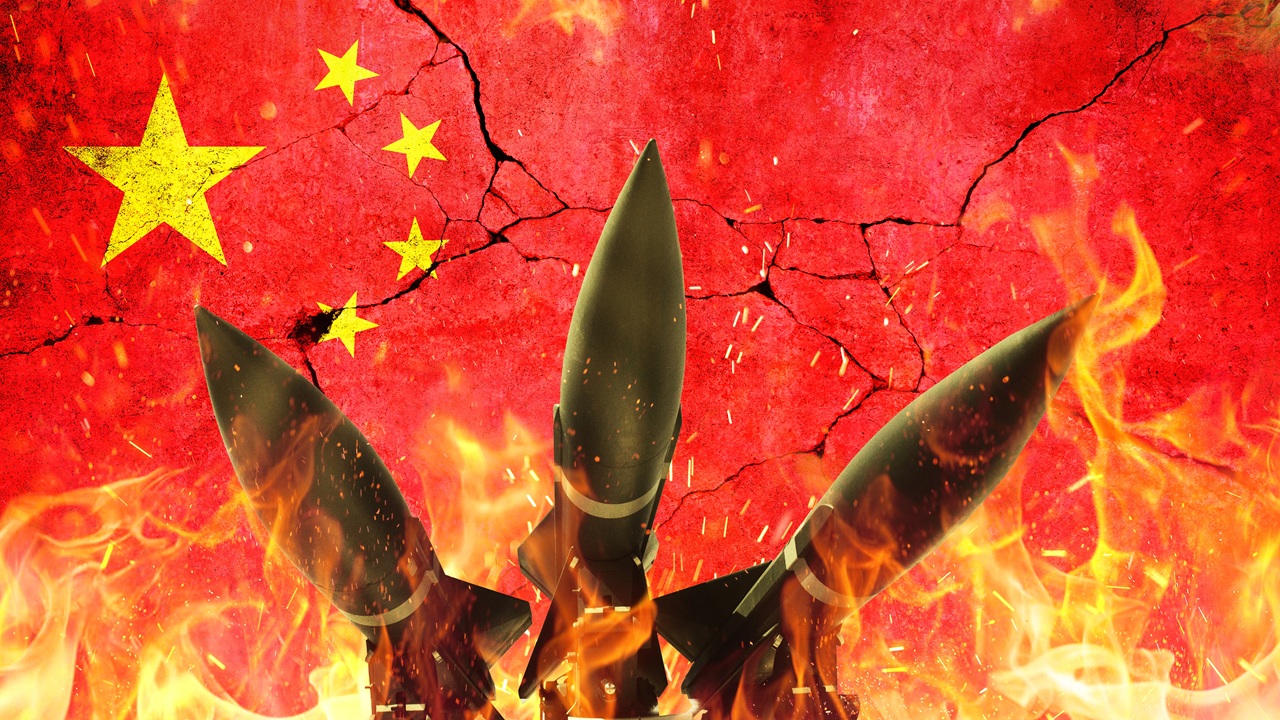
China has intentionally chosen to hide its nuclear doctrine as a core part of its strategy—exponentially increasing the risk of a nuclear catastrophe.
During the Cold War, the United States and Soviet Union, despite their mutual loathing—and the competitive nature of their relationship—endeavored to be open with each other when it came to matters of nuclear weapons. For the most part, both Washington and Moscow worked together to ensure that there were clear lines of communication and relatively clear understanding of each other’s nuclear intentions.
This cooperative model on nuclear issues helps to explain why—despite there being multiple moments in which things could have gone catastrophically wrong—American and Soviet leaders avoided all out nuclear war from 1945 until 1991, when the Soviet Union collapsed under the infeasibility of its own ideology.
Today, however, there is a new (and growing) nuclear weapons state. This is, of course, the People’s Republic of China (PRC). And far from being interested in having a cooperative model when it comes to matters pertaining to nuclear warfare, Beijing seems intent on playing keep-away from the Americans and the wider world. They not only obfuscate their true nuclear weapons capabilities, but neglect even basic safeguards such as maintaining a hotline between themselves and Washington.
The fact is, Beijing is simply not interested in letting the West fully understand its capabilities (and, therefore, its intentions) when it comes to nuclear affairs.
Nuclear Safeguards: The Cold War’s Most Overlooked Success
This persistent obsession with secrecy and opaqueness—a hallmark of China’s ruling communist party—is one of the reasons why President Donald Trump during his first term was compelled to abrogate the 1987 Intermediate Range Nuclear Forces (INF) Treaty with Russia.
It had less to do with hostility toward Moscow (although Russia nonetheless perceived it as hostile) and more to do with the fact that China was not a signatory to the INF Treaty and was not bound by its limitations.
As a result of China’s absence from the INF Treaty, the Chinese military went gangbusters in developing large numbers of increasingly advanced intermediate-range ballistic missiles (IRBMs). Any of those missiles, especially in great numbers, could pose significant threats to the United States military and its allies in the region.
Over the last few years, Western intelligence services have determined that the Chinese have been on a building spree of nuclear weapons and silos. Some have worried that the true number of overall nuclear weapons inside China is far greater than what US intelligence agencies assessed. And now it seems that the Chinese are increasingly trying to mask their mobile nuclear missile launchers as civilian construction cranes.
China Rejects the Rules That Prevent Nuclear War
Transporter-erector-launchers (TELs), which are giant trucks used to transport Chinese nuclear weapons, specifically China’s Dong Feng series of ballistic missiles, are increasingly being disguised by external covers, tarps, and Chinese markings that make it seem as though they aren’t TELs at all. Instead, they appear to be construction equipment belonging to Zoomlion, a major Chinese construction firm.
This is in keeping with China’s overall military-civil fusion (MCF) program that seeks to blend, as the name suggests, together its military and civilian functions into one seamless endeavor. It helps China marshal their resources for one grand strategic objective, while confusing their American rivals, who try to keep their military and civilian domains separate.
Because of the deception involved, if and when a serious geopolitical crisis between the United States and China erupts, the likelihood of miscalculation rises exponentially, as the Americans will be unable to garner proper capabilities and intentions of China’s nuclear missile force—and neither side will be talking to each other. Therefore, the Americans would be forced to assume the worst possible motives and act based on those assumptions. And assuming worst case scenarios during a nuclear crisis is the definition of a nightmare scenario.
Clearly, the PRC is on some kind of a massive military buildup. Given their bellicose rhetoric of late, it would appear that we are in a very dangerous phase wherein the government of China is seriously contemplating major military action of some kind.
Miscalculation Is How Nuclear Wars Begin
While the Americans view nuclear arms as deterrents—and we all want and hope for the Chinese to take similar views of these systems—the outright refusal to communicate openly over these matters by Beijing coupled with these obvious attempts to mask their nuclear forces, indicates that Beijing might be looking to develop true first-strike capabilities (and doctrines).
Therefore, Washington must prepare itself for such contingencies. That is why the Trump administration’s calls for a Golden Dome national missile defense shield are so important (and why the president must not engage in his usual slap-dash approach to such projects).
It is also why the president’s previous calls for dismantling sizable portions of America’s nuclear weapons arsenal (so long as both Russia and China engaged in similar moves) is so very dangerous.
America’s nuclear weapons arsenal is already in decline. The weapons are both aging and nowhere near numerous enough. Add in the fact that the Golden Dome still seems many years off, and the president should be demanding Congress fund an expansion of American nuclear weapons not seen since the heady days of the Cold War.
One thing is clear, though: unless Beijing and Washington can construct similar diplomatic capabilities for managing a nuclear crisis as did the Americans and Soviets during the Cold War, the world may well be doomed to experiencing its first true nuclear war. And that would undoubtedly be the final war of our era.
About the Author: Brandon J. Weichert
Brandon J. Weichert is a senior national security editor at The National Interest. Recently, Weichert became the host of The National Security Hour on America Outloud News and iHeartRadio, where he discusses national security policy every Wednesday at 8pm Eastern. Weichert hosts a companion book talk series on Rumble entitled “National Security Talk.” He is also a contributor at Popular Mechanics and has consulted regularly with various government institutions and private organizations on geopolitical issues. Weichert’s writings have appeared in multiple publications, including The Washington Times, National Review, The American Spectator, MSN, and the Asia Times. His books include Winning Space: How America Remains a Superpower, Biohacked: China’s Race to Control Life, and The Shadow War: Iran’s Quest for Supremacy. His newest book, A Disaster of Our Own Making: How the West Lost Ukraine is available for purchase wherever books are sold. He can be followed via Twitter @WeTheBrandon.
Image: Shutterstock / Alones.
The post How China’s Nuclear Obfuscation Could End the World appeared first on The National Interest.
Источник: nationalinterest.org