

«Данное сообщение (материал) создано и (или) распространено иностранным средством массовой информации, выполняющим функции иностранного агента, и (или) российским юридическим лицом, выполняющим функции иностранного агента»
 Topic: Diplomacy, Drugs, and Terrorism Blog Brand: Silk Road Rivalries Region: Eurasia Tags: Afghanistan, Central Asia, Iran, Pakistan, and Taliban How Central Asia Is “Containing” Afghanistan January 2, 2026 By: Fatemeh Aman
Share
After abandoning hope of influencing the Taliban, Central Asian nations have sought to insulate themselves from Afghanistan’s instability.
For much of the past two decades, regional diplomacy on Afghanistan rested on the belief that outside engagement could gradually stabilize the country. That assumption shaped how neighboring states justified political, economic, and security involvement, even when progress remained limited.
Today, that framework is weakened. Afghanistan’s neighbors largely no longer base their policies on expectations of reform or reintegration. What has replaced it is a narrower, more cautious objective: limiting exposure to instability rather than attempting to change conditions within Afghanistan.
This shift reflects more than temporary fatigue. What has changed is the disappearance of any belief that engagement can alter the Taliban regime’s internal trajectory in the near term. Regional states still engage, but with fewer illusions. The aim is no longer to stabilize Afghanistan itself. It is to manage the effects of its continued fragility. Containment, in this context, is a policy intended to reduce the spillover costs of Afghanistan’s instability without assuming responsibility for the country’s internal political settlement.
The change is clearest in how success is now defined. Political benchmarks and development targets have largely faded. In their place are practical measures to prevent cross-border militant attacks, limit refugee surges, contain narcotics flows, and reduce economic spillover. Afghanistan is increasingly treated less as a partner to be developed and more as a source of risk to be managed.
This evolution is most evident among Afghanistan’s immediate neighbors. Pakistan, Iran, and the Central Asian states all face direct consequences from instability inside Afghanistan. Yet none appears willing to pursue ambitious influence-building strategies. Their policies are defensive. Border management, security coordination, and damage control dominate. Engagement continues, but it is carefully bounded.
Pakistan’s experience illustrates the limits of engagement under these conditions. Despite maintaining channels with Kabul, Islamabad continues to face persistent cross-border militancy and rising security incidents along the Afghan frontier. Pakistani officials have repeatedly pointed to the presence of militant groups operating from Afghan territory.
This has translated into greater reliance on border fencing, periodic closures, and coercive signaling rather than political investment in Kabul. These tensions, rooted in deteriorating Pakistan-Afghanistan relations, have reinforced Pakistan’s focus on deterrence and selective pressure rather than deeper political engagement. For Islamabad, the priority has increasingly shifted from shaping outcomes in Afghanistan to preventing instability from spilling further into its own territory.
Iran’s approach follows a similar logic. Despite periodic diplomatic initiatives and official statements emphasizing regional cooperation, Tehran’s Afghanistan policy is shaped mainly by pressures along its eastern frontier. Refugee flows, drug trafficking, disputes over shared water resources, and cross-border insecurity impose lasting costs. According to UNHCR data on Afghan displacement, millions of Afghans remain in neighboring states, with Iran hosting one of the largest populations.
China and Russia, often portrayed as beneficiaries of Western disengagement, have adopted similarly cautious positions, defined by an avoidance of large economic or security commitments. Both emphasize regional dialogue and oppose policies that deepen Afghanistan’s isolation. Their concern is preventing Afghanistan from becoming a source of transnational threats, including terrorism and trafficking. These risks feature prominently in regional assessments and official oversight reporting, as reflected in security reporting. Reconstruction or political change ranks far lower. Stability, even if imperfect, is treated as preferable to uncertainty emanating from Afghanistan.
The Central Asian republics have also adjusted their outlook. Early optimism about trade corridors and energy connectivity has given way to a more restrained assessment of risk. Engagement today prioritizes border security, limited trade, and coordination with larger regional actors. Concerns over spillover from narcotics trafficking, documented in UNODC reporting on Afghan opium production, have further reinforced this caution.
Diplomacy itself has not disappeared. Its role has changed. Coordination has increased around managing symptoms, even as collective efforts to address root causes have narrowed. Regional meetings and consultations continue, but they now serve mainly as tools to manage shared risks rather than as platforms for collective problem-solving. The emphasis has shifted away from transformation and toward resilience and control. This is diplomacy shaped by experience, not ideology.
The absence of an external anchor has reinforced this trend. During the years of sustained Western military and political involvement, regional states calibrated their policies around US and allied presence, even when they disagreed with Western strategies. That reference point is largely gone. What remains is a fragmented regional environment. States act primarily to protect immediate interests, without assuming responsibility for Afghanistan’s internal direction.
This does not mean all integration efforts have vanished. Some initiatives still frame Afghanistan as a potential trade corridor or economic link, particularly in Central Asia and in discussions involving India, Iran, and Russia. These efforts, however, are tightly constrained and assume that the Taliban’s internal governance will remain unchanged. Afghanistan’s constrained economic outlook, outlined in the World Bank’s country overview, reinforces these limits.
The longer-term risk is that containment becomes self-reinforcing. As neighbors invest more in border controls, deterrence, and insulation, incentives for deeper engagement decline further. Over time, this can lock in a cycle in which Afghanistan’s isolation deepens, regional coordination remains shallow, and instability becomes normalized. Managing risk replaces any effort to address its sources. What begins as pragmatism hardens into resignation.
The consequences of this shift are significant. A containment-focused approach may reduce short-term spillover, but it offers little path toward long-term stability. Treating Afghanistan primarily as a source of risk narrows opportunities for change and deepens isolation.
From the perspective of regional states, however, the alternatives appear limited. Years of engagement have delivered modest results, while the costs of deeper involvement remain high. The move toward containment is an acknowledgment of structural constraints. It reflects a shared judgment that Afghanistan cannot be reshaped from the outside and that internal change, if it comes, will take time.
Afghanistan has not disappeared from regional calculations. It remains a persistent concern. Always present, but never resolved. The danger lies in normalizing this situation. As containment becomes the default, instability risks being accepted as a permanent condition rather than a problem to address.
The era of stabilization has given way to one of management and mitigation. Whether this approach can prevent further deterioration, or merely delay it, remains uncertain. What is clear is that regional diplomacy on Afghanistan has entered a more restrained and sober phase, shaped less by ambition than by necessity.
About the Author: Fatemeh Aman
Fatemeh Aman has written on Iranian, Afghan, and broader Middle East affairs for over 25 years and advised US and non-governmental officials. A former non-resident fellow at the Middle East Institute and senior fellow at the Atlantic Council, a writer, producer, and anchor at Voice of America, and a correspondent at Radio Free Europe/Radio Liberty, her work has appeared in Jane’s Islamic Affairs Analyst, Jane’s Intelligence Review, and the Stimson Center’s Middle East Perspectives. Follow her on X: @FatemehAman.
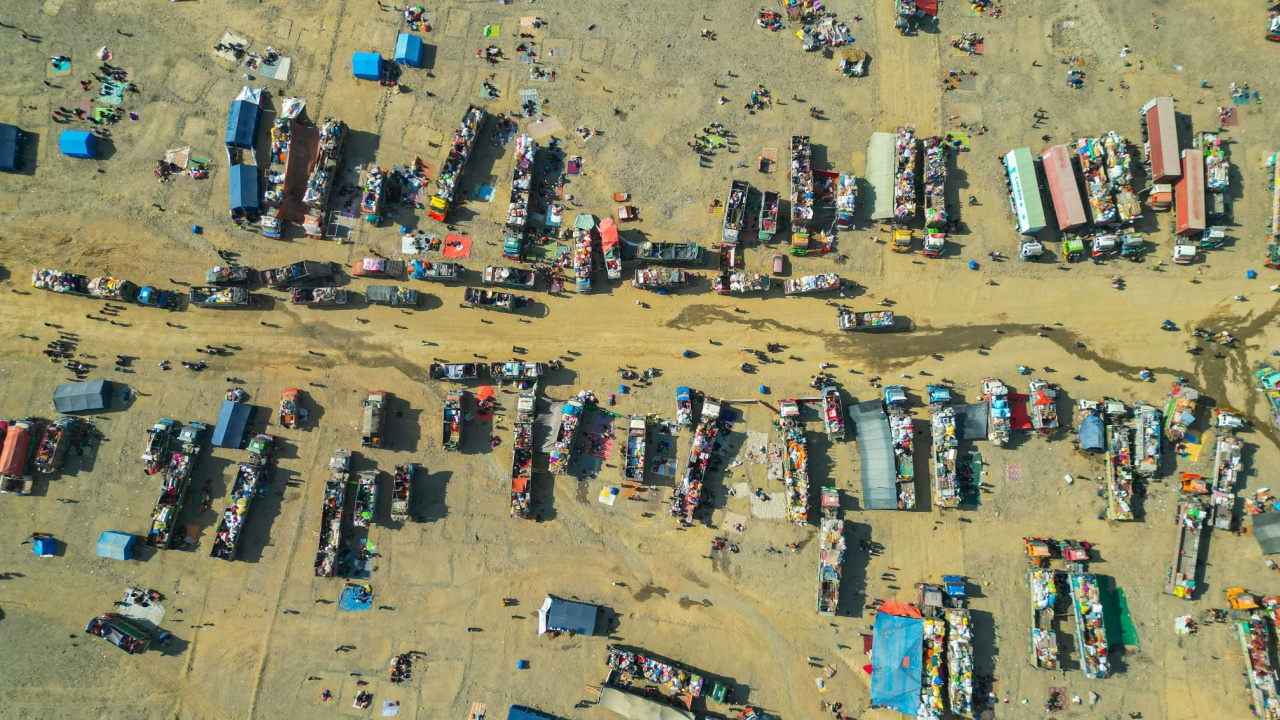
Image: Waheedullah Jahesh / Shutterstock.com.
The post How Central Asia Is “Containing” Afghanistan appeared first on The National Interest.
Источник: nationalinterest.org