
«Данное сообщение (материал) создано и (или) распространено иностранным средством массовой информации, выполняющим функции иностранного агента, и (или) российским юридическим лицом, выполняющим функции иностранного агента»
 Topic: Diplomacy Blog Brand: The Buzz Region: Americas Tags: Alberta, Canada, Donald Trump, Hemispheric Defense, Secession, and United States How Alberta Independence Plays into Trump’s “Hemispheric Defense” Plans January 22, 2026 By: Brandon J. Weichert
Share
Polls suggest that Albertans mostly oppose independence—but grievances against the Canadian central government remain a powerful, and perhaps growing, influence.
After years of arguing with Ottawa over the matter, and of Ottawa trying to prevent it from going forward, the Albertan independence movement has finally executed what amounts to a political miracle. Recently, Albertans were asked to sign a referendum to place independence on the ballot.
The Winter Petition That’s Shaking Ottawa
If turnout—in the freezing winter of Alberta—is any indication, then Alberta is well on its way out of the Canadian confederation and into independence. Lines wrapped around buildings of people waiting to sign the petition.
Of course, appearances can be deceiving. There is a long, long pathway from the referendum being placed on the ballot in Alberta’s next election and actually getting to independence. Recent polling suggests that as many as one-in-five Albertans would vote to secede from Canada, if given the chance. Generally, 30 percent of Albertans believe their province would be better off if it separated from Canada, with 17 percent strongly agreeing.
30 percent, of course, does not a majority make. But it is worth noting that an astonishing 58 percent of Albertans polled see independence as a “real possibility”—meaning that even those who don’t want to see Alberta leave Canada think it could really happen.
At its core, this movement in Alberta is linked to decades of resentment, even from those opposed to separation, toward the Canadian central government in Ottawa.
For the petition to make it to a ballot, the Albertan independence movement requires 177,732 signatures by May 2.
It is important to note here that the United Conservative Party (UCP) of Alberta does not officially support the independence movement. However, many of the policies supported by the UCP of Alberta align well with the independence movement.
For example, Premier Danielle Smith has spent her career in Alberta’s provincial government promoting regional autonomy. As premier, she has challenged federal laws through Canada’s Sovereignty Act, and has taken Alberta out of Canada’s Pension Plan (CPP).
The American Role in the Alberta Debate
The stunning number of people who turned out in support of the referendum in Alberta is causing alarm bells to sound in Ottawa and elsewhere… especially in light of recent US moves against Denmark-controlled Greenland. The Trump administration is clearly wedded to a necessary strategy of Western Hemispheric Defense. That means the United States reasserting its power in its part of the world, including Latin America as well as North America.
In pursuing this strategy, Trump has run afoul of his European allies—notably Denmark, which has claimed ownership over Greenland since they first colonized the land in 1721, a full 55 years before the United States declared independence.
But there are real strategic reasons behind why the Trump administration is asserting US primacy in its own hemisphere: for decades, Denmark and the European members of NATO have failed, either through ignorance or ambivalence, to protect the key passes and natural resources of the High North from the Russian and Chinese, who seek to dominate our region by controlling the north.
Not only is the Trump administration interested in asserting control over Greenland, but Trump has made repeated claims about turning Canada into the 51st state. While that is unlikely to come true, the chances that Alberta could become the 51st state are somewhat higher.
At the start of his second term, leaders of the Trump administration met with representatives from the Albertan independence movement in Washington. The conclusion of that meeting eventuated in an understanding between the leaders of the Albertan independence movement and the Trump administration that, if Alberta legally separated from Canada, Washington would immediately recognize them as an independent nation-state.
Part of that meeting, according to Jeffrey Rath, a barrister in Alberta and the leader of the Alberta Prosperity Project, was to secure a promise from the United States to front $500 billion for a line of credit once independence was official. Such recognition by the world’s purported sole remaining superpower—certainly the most powerful nation in North America—would be instrumental for Alberta securing its potential independence.
But the introduction of a half trillion-dollar line of credit from Uncle Sam would not come without serious strings attached. Given Trump’s repeated claims about making Canada the 51st state, does anyone doubt that that same desire extends to Alberta?
Remember, both Texas and California first declared themselves independent from Mexico in the 1800s, establishing themselves as independent republics—before later voting to join the Union.
These are the same steps that Alberta would take, if they had a successful vote for independence. And it seems hard to believe that Washington would ultimately abide an independent, energy rich Alberta indefinitely at its border.
The Secession Vote Will Likely Fail—but Albertans Could Try Again
To be clear: the odds remain heavily stacked against the Albertan independence movement, just going off polling data and previous trends.
Yet, if one were to look at the trend in terms of attitudes, coupled with dissatisfaction with Canada’s federal government, the likelihood of independence increases over time, if Alberta and Canada are left to their own devices.
With the United States moving hard against places like Denmark-controlled Greenland in the north and Venezuela (and, to a lesser extent, the Panama Canal Zone to the south), an independent Alberta would not stay that way forever. It would eventually be absorbed as part of the US western hemispheric defense strategy—which will last far longer than the Trump administration, seeing as the world system itself is reorganizing away from the post-Cold War consensus.
Even if the Albertan referendum on independence does pass, there is the real possibility that the Trump administration may decide to use some degree of force to absorb Alberta, if the independence movement loses the actual vote that would follow a successful referendum.
Trump, who has a history of both bullying his allies and claiming elections are rigged, may decide that the pro-Canadian elements of the Albertan electorate “stole the election” to keep Alberta from becoming part of the United States.
Of course, this would be an unorthodox move even for Trump. But it’s hardly unimaginable.
If Canada Turns to China, All Bets Are Off
Trump seems committed to absorbing at least the productive parts of Canada. And it will be contingent on what Trump ultimately does in relation to Greenland.
With troops from a variety of European states streaming into Greenland in a rather pitiful show of force—Canada now says it will deploy troops there to deter the United States—and Trump indicating that he “no longer feel[s] an obligation to think purely of Peace” following his loss of the Nobel Peace Prize, if the American president opts to take Greenland by force that will be a clear indicator about whether Trump would respect the outcome of whatever vote occurs regarding Albertan independence.
Another factor that might compel Trump to ignore a negative outcome in the Alberta independence vote would be if Ottawa moved forward with plans to associate Canada closer with China than with the United States, due to dissatisfaction from the Canadian government under Prime Minister Mark Carney over Trump’s treatment of both Carney and Canadian sovereignty.
This is, of course, purely speculative at this point. What is known is that the Alberta independence movement, while it has demonstrated impressive electoral gains and popularity, it has not yet surmounted the issue of gaining enough popular support to reliably win any independence vote.
But one should look at the pending independence vote as the first attempt of many. If unhappiness with the federal Canadian government continues to grow, the Albertans will someday win their independence. What will really matter is what the Americans to the south will do when that day comes.
About the Author: Brandon J. Weichert
Brandon J. Weichert is a senior national security editor at The National Interest. Recently, Weichert became the host of The National Security Hour on America Outloud News and iHeartRadio, where he discusses national security policy every Wednesday at 8pm Eastern. Weichert hosts a companion book talk series on Rumble entitled “National Security Talk.” He is also a contributor at Popular Mechanics and has consulted regularly with various government institutions and private organizations on geopolitical issues. Weichert’s writings have appeared in multiple publications, including The Washington Times, National Review, The American Spectator, MSN, and the Asia Times. His books include Winning Space: How America Remains a Superpower, Biohacked: China’s Race to Control Life, and The Shadow War: Iran’s Quest for Supremacy. His newest book, A Disaster of Our Own Making: How the West Lost Ukraine is available for purchase wherever books are sold. He can be followed via Twitter @WeTheBrandon.
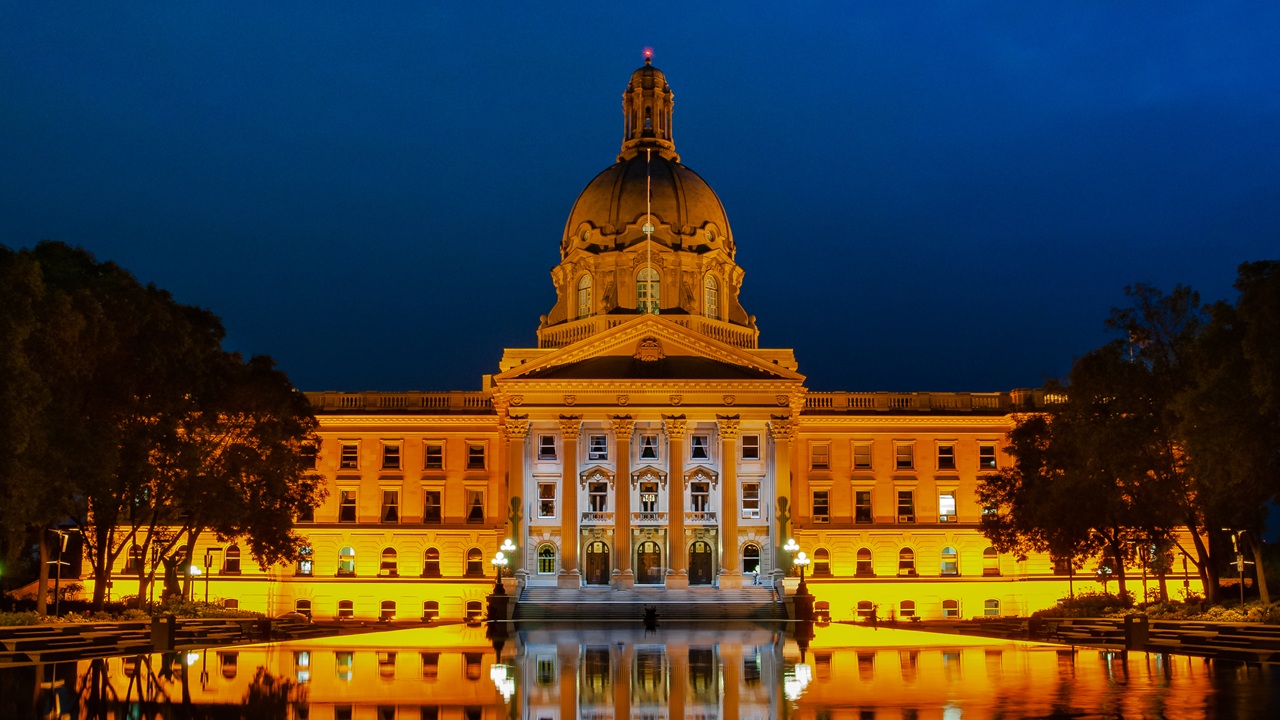
Image: Shutterstock / Orenn.
The post How Alberta Independence Plays into Trump’s “Hemispheric Defense” Plans appeared first on The National Interest.
Источник: nationalinterest.org