
«Данное сообщение (материал) создано и (или) распространено иностранным средством массовой информации, выполняющим функции иностранного агента, и (или) российским юридическим лицом, выполняющим функции иностранного агента»
 Topic: Naval Warfare Blog Brand: The Buzz Region: Asia Tags: Aircraft, Anti-Submarine Warfare, Indo-Pacific, Submarines, United States, and US Navy Here’s How Anti-Submarine Planes Actually Work January 5, 2026 By: Harrison Kass
Share
Spotter planes can no longer directly see enemy submarines. Today, their mission is overwhelmingly acoustic—listening to signals from submarines and narrowing down their likely position before taking action.
Submarines are among the most survivable military platforms, difficult to detect and target. But anti-submarine warfare (ASW) aircraft, providing speed and coverage and persistence across vast ocean areas, can offer a meaningful counter. ASW is not about a single aircraft or a single sensor, but is instead a system-of-systems that integrates aircraft with surface shifts with undersea sensors. Aircraft of course play a critical role, detecting, tracking, and prosecuting.
Why Airborne Anti-Submarine Warfare Matters
Submarines are hard to find. They exploit ocean depth, acoustic complexity, and thermal layers to maintain low observability and high survivability. Diesel-electric submarines are especially quiet at low speeds, making them extremely effective in coastal waters. Nuclear submarines are somewhat louder, trading stealth for virtually unlimited endurance.
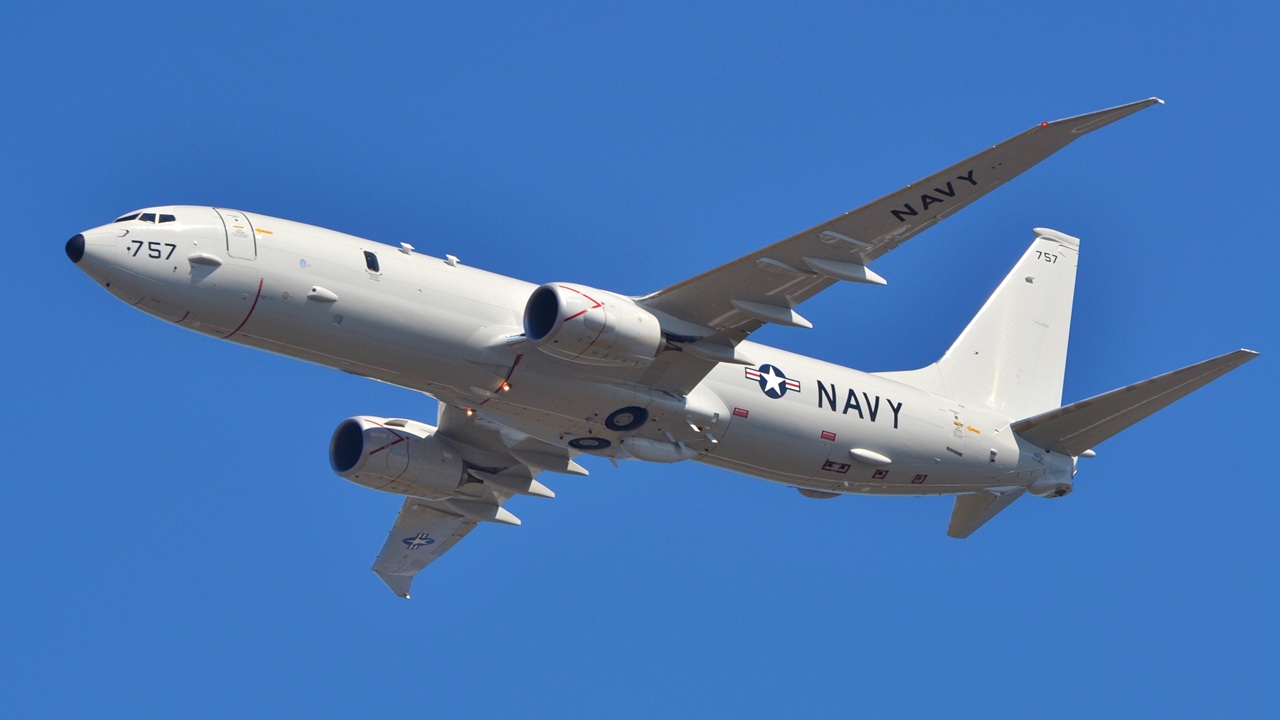
Despite the stealthy nature of submarines, ASW can reduce uncertainty and constraint submarine movement, making the search for adversary submarines more efficient. Various categories of aircraft contribute to the ASW mission. Maritime patrol aircraft (like the P-8 Poseidon) are long range, with heavy sensor payloads. Carrier-based ASW aircraft (like the MH-60R Seahawk) have a shorter range, but are integrated with strike groups. Rotary-wing platforms offer precise localization and attack. Unmanned aerial systems, increasingly relevant, create a persistent, enduring layer.
How Spotter Planes Actually Detect Submarines
ASW aircraft do not fly overhead to directly observe submarines, as they once did. Instead, airborne ASW relies on detecting indirect signatures and narrowing uncertainty over time. The most important tools in this regard are sonobuoys, which are dropped in patterns to listen for (or actively ping) submerged submarines. Passive buoys detect engine noise and propeller signatures, while active buoys emit sound pulses and listen for returns. Aircraft can process sonobuoy data onboard, inferring a submarine’s potion from combining multiple buoy contact points.
Non-acoustic methods are also relevant. “Magnetic anomaly detection” can sense disturbances in the Earth’s magnetic field that a submarine’s hull causes at close range, though this method is far from foolproof. And radar can occasionally identify surface wakes or periscope disturbances. Success often depends on data fusion and pattern analysis over time, not some rupture-like moment of detection.
Once a submarine is localized, an ASW aircraft can prosecute it with lightweight torpedoes, i.e., the Mk 54. These weapons are dropped near the estimated target area before using their own sensors to acquire and track the submarine. Destruction is not necessarily the objective; forcing a submarine to maneuver, slow down, or abandon its missions can be strategically valuable. Aircraft are an excellent option for rapid responses, delivering weapons quickly once a contact is made.
Submarines Are More Relevant than Ever to Modern Warfare
As the Indo-Pacific takes center stage in great power competition, ASW becomes increasingly important. Both the US and China operate nuclear-armed submarines in the vast Indo-Pacific. And as China’s submarine fleet grows, the US will continue placing increased emphasis on ASW capabilities. Aircraft will remain central, as they can monitor chokepoints and provide sealant protection. Aircraft are also central to deterrence.
In the future, expect drones and AI to bear more and more of the ASW burden. The shift towards unmanned aircraft is already underway, allowing for persistent sensor fields without needing to account for pilot endurance. AI-assisted signal processing will also facilitate the identification of submerged submarines. The US goal, now and moving forward, is not necessarily the destruction of enemy submarines, but denial and deterrence; the United States will continue to pressure Chinese submarines persistently.
About the Author: Harrison Kass
Harrison Kass is a senior defense and national security writer at The National Interest. Kass is an attorney and former political candidate who joined the US Air Force as a pilot trainee before being medically discharged. He focuses on military strategy, aerospace, and global security affairs. He holds a JD from the University of Oregon and a master’s in Global Journalism and International Relations from NYU.
Image: Shutterstock / Michael Fitzsimmons.
The post Here’s How Anti-Submarine Planes Actually Work appeared first on The National Interest.
Источник: nationalinterest.org