
«Данное сообщение (материал) создано и (или) распространено иностранным средством массовой информации, выполняющим функции иностранного агента, и (или) российским юридическим лицом, выполняющим функции иностранного агента»
 Topic: Air Warfare Blog Brand: The Buzz Region: Americas Tags: General Electric, Lockheed Martin, Missiles, North America, Ramjets, and United States Have Lockheed and GE Aerospace Finally Fixed America’s Hypersonic Failure? January 23, 2026 By: Brandon J. Weichert
Share
For years, the United States has trailed behind Russia and China in hypersonic weapons. A new engine prototype by Lockheed Martin and General Electric could help it catch up.
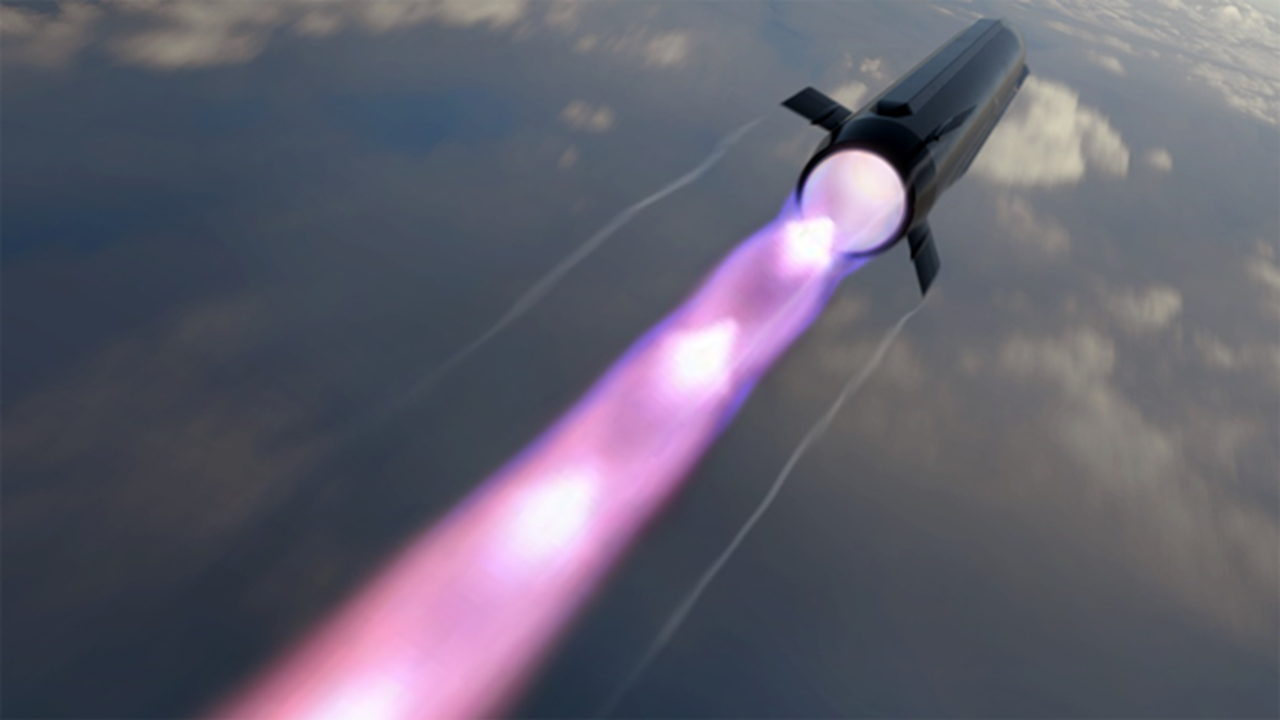
The United States is desperately fighting to catch up with the Russians, the Chinese, and even the Iranians in the domain of hypersonic weapons. Toward that end, Lockheed Martin and General Electric Aerospace have successfully demonstrated a liquid-fuel Rotating Detonation Ramjet (RDR) engine prototype that is meant for hypersonic missiles.
Lockheed Martin & GE Aerospace Test a Radical New Engine
These tests confirm the feasibility of the technology and suggest it could meaningfully improve missile propulsion performance, according to Design and Development Today, an online engineering publication.
Detonation combustion releases energy more efficiently than normal burning engines, potentially giving higher specific impulse and better range. The key to understanding why RDR is an important breakthrough for the GE Aerospace and Lockheed Martin scientists is because, as New Atlas notes, an RDR can ignite and produce thrust at lower speeds than your traditional ramjet. Therefore, the new RDR system would require fewer (or smaller) rocket booster stages to work.
Additionally, GE Aerospace highlights the way in which the design of this system is more compact and lightweight than conventional hypersonic engines. This is important because the lighter and smaller—while being more efficient—the RDR engine is, the farther a hypersonic vehicle utilizing this engine will fly…and, therefore, the more weapons or cargo it can carry.
Why Detonation Beats Traditional Combustion
The core principle behind the RDR is what’s known as a “rotating detonation engine” (RDE) that uses continuous shockwave combustion around a ring-shaped combustion chamber.
Essentially, fuel and oxidizer are injected into an annular chamber. A detonation wave then circulates around the chamber at supersonic speeds, burning the mixture rapidly. From there, a pressure gain cycle (with fewer losses than conventional combustion) is produced—meaning more work per unit of fuel. In other words, this thing is extremely fuel-efficient.
As an aside, “pressure gain cycle” refers to a combustion process where the pressure after combustion is higher than the pressure before combustion—the exact opposite of what happens in most conventional jet engines. This is a key element in the science of propulsion. Most engines lose pressure when they burn fuel. On the flipside, pressure-gain engines create pressure by burning fuel. This extra pressure translates directly into more thrust for the same fuel, or the same thrust with less fuel.
Pressure-gain combustion is not a marginal improvement. It is a structural correction to decades of hypersonic inefficiency. Instead of fighting pressure losses with bigger boosters and hotter materials, engineers are turning combustion itself into a compressor. That’s why this technology scares competitors—and why it matters far beyond that one Lockheed Martin and GE Aerospace test.
Smaller Boosters, Longer Range, Lower Cost
Another aspect of this engine is that there are no moving parts in the combustor, making it lighter and more reliable than a turbine.
RDR aims to combine the air-breathing efficiencies of ramjets with detonation combustion’s higher performance while reducing the traditional reliance on large booster stages. Because this system is more fuel efficient, smaller, and lighter, it is possible that engineers will be able to mass-produce these engines at lower unit costs than current hypersonic engines—because the simpler combustion system and smaller boosters reduce complexity.
That’s a huge win for Team America as it struggles to catch up (and move ahead) of its rivals in China and Russia. If detonation combustion is successful across a wide range of speeds and altitudes, missiles could sustain hypersonic flight longer and engage more distant targets without sacrificing payload.
It isn’t only GE Aerospace and Lockheed Martin that are analyzing this new capability. RDRs sit within a broader milieu of hypersonic research, as noted above. NASA, JAXA, and other defense labs are feverishly investigating RDEs. Other research is exploring dual-mode engines (operating as ramjet and scramjet), potentially enabled by detonation combustion. Venus Aerospace is exploring detonation engines for high-speed flight and space access.
No Moving Parts, No Excuses
So, Lockheed/GE’s research will likely feed the next-generation hypersonic aircraft and reusable high-speed propulsion—not just missiles, though that is the most near-term focus.
There remain challenges for this technology.
One of the biggest problems faced by engineers is the stable detonation control. In effect, they’re struggling to maintain steady waves at varying speeds and constantly changing conditions.
Another headache plaguing the Lockheed/GE team is the thermal load problem. Essentially, hypersonic airflow and combustion create extreme temperatures that complicates things for those designing this new engine.
Lastly, the team is struggling to integrate the system with inlets and air-breathing cycles. Adaptive inlets are needed for detonation. The recent demonstration of this technology is significant. It’s still early in the development maturation curve, though, and there is still a long way to go before operational development.
In the interim, the Russians, Chinese, and Iranians are making working hypersonic weapons. Lockheed and GE can’t move fast enough.
About the Author: Brandon J. Weichert
Brandon J. Weichert is a senior national security editor at The National Interest. Recently, Weichert became the host of The National Security Hour on America Outloud News and iHeartRadio, where he discusses national security policy every Wednesday at 8pm Eastern. Weichert hosts a companion book talk series on Rumble entitled “National Security Talk.” He is also a contributor at Popular Mechanics and has consulted regularly with various government institutions and private organizations on geopolitical issues. Weichert’s writings have appeared in multiple publications, including The Washington Times, National Review, The American Spectator, MSN, and the Asia Times. His books include Winning Space: How America Remains a Superpower, Biohacked: China’s Race to Control Life, and The Shadow War: Iran’s Quest for Supremacy. His newest book, A Disaster of Our Own Making: How the West Lost Ukraine is available for purchase wherever books are sold. He can be followed via Twitter @WeTheBrandon.
Image courtesy of GE Aerospace.
The post Have Lockheed and GE Aerospace Finally Fixed America’s Hypersonic Failure? appeared first on The National Interest.
Источник: nationalinterest.org