
«Данное сообщение (материал) создано и (или) распространено иностранным средством массовой информации, выполняющим функции иностранного агента, и (или) российским юридическим лицом, выполняющим функции иностранного агента»
 Topic: Trade Blog Brand: Silk Road Rivalries Region: Eurasia Tags: Central Asia, China, European Union (EU), Kyrgyzstan, Russia, Sanctions, and Ukraine War Explaining Kyrgyzstan’s Economic Leap January 6, 2026 By: Aigerim Turgunbaeva
Share
The Ukraine War has turned Kyrgyzstan into a key intermediary for Russian imports, but economic growth is unevenly shared.
In Central Asia, Kyrgyzstan—a mountainous, landlocked country of 7 million people—has long relied on remittances and gold exports to sustain its economy. In recent years, however, the country has experienced an unexpected surge in economic growth. Preliminary figures indicate GDP growth of 10.2 percent during the first 11 months of 2025, while year-end projections from the World Bank and the IMF range from approximately 6.8 percent to 8.5 percent. These figures place Kyrgyzstan among the fastest-growing economies in the region. If current growth rates continue, Kyrgyzstan could begin to close the gap with Kazakhstan’s GDP per capita within the next five years.
A significant share of this growth is directly linked to Russia’s invasion of Ukraine and the Western sanctions that followed. As sanctions restricted Russia’s access to Western markets, Moscow increasingly turned to Bishkek as a convenient intermediary.
Re-exports of machinery, electronics, and goods with potential dual-use applications—many originating in China or the European Union—flowed through Kyrgyzstan alongside remittances, infrastructure financing, and cryptocurrency transactions that help sustain Russia’s wartime economy. Russia has relied not only on Kyrgyzstan’s financial system but also, to varying degrees, on Armenia and smaller volumes routed through Kazakhstan, Uzbekistan, and Tajikistan.
“Because of sanctions, the country has effectively become a kind of offshore hub for Russian companies using Kyrgyzstan’s financial system to resolve their problems,” as one Kyrgyz economist noted for Reuters.
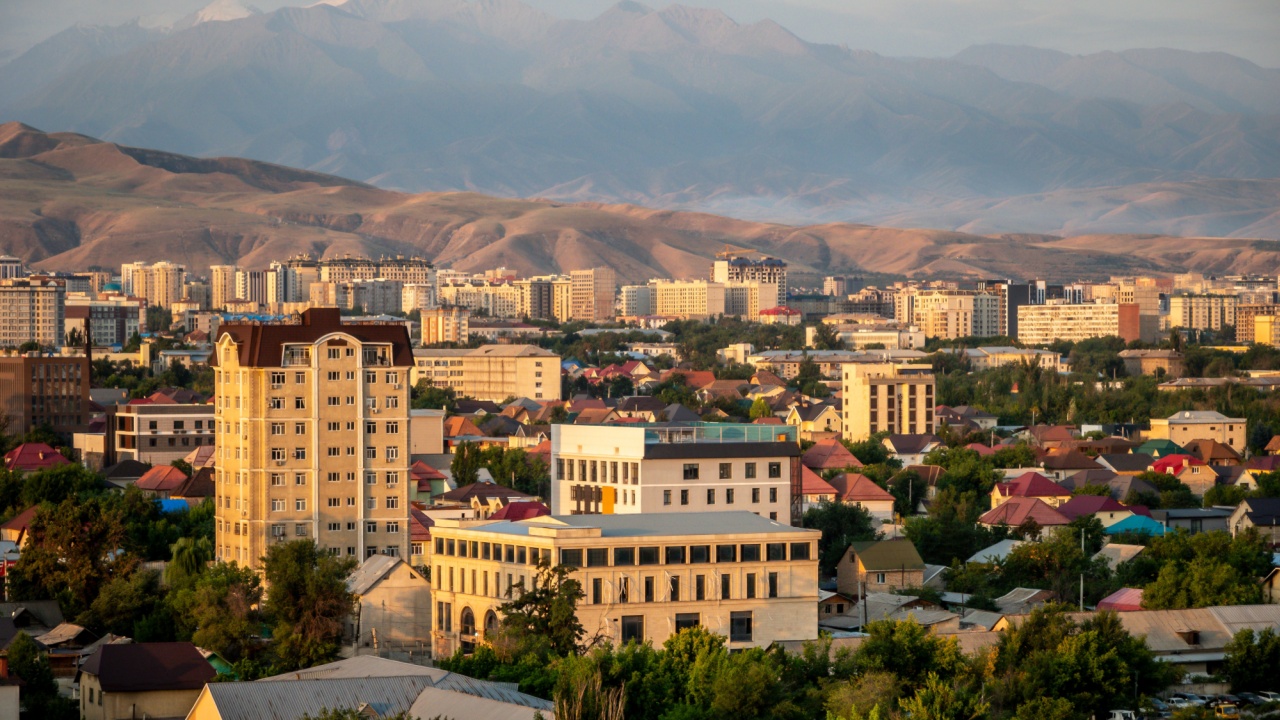
The changes are visible in Bishkek. Markets crowded with Russian entrepreneurs buzz alongside the rapid expansion of logistics infrastructure on the city’s outskirts. Logistics has emerged as one of the fastest-growing sectors since the start of the war. Class A logistics centers are now under construction in the capital, and demand continues to rise. In August 2025, authorities announced the development of a 1.7-hectare logistics hub in Bishkek, creating 31 new jobs. Most cargo flows north to Russia, carrying goods imported from China and the European Union.
Yet this economic upswing comes with clear risks. Growing dependence on Moscow, the threat of secondary sanctions, and doubts about the long-term effectiveness of Western restrictions all loom large.
Since Russia’s invasion of Ukraine in 2022, Kyrgyzstan’s economy has expanded at a pace unmatched by most of its neighbors. Pre-war growth averaged a modest 4–5 percent annually, but it rose to 8.9 percent in 2023 and 9.0 percent in 2024. While this has increased per capita income, the proportion of the country living below the poverty line is still 25 percent. Rising inflation has offset many of the gains for ordinary citizens, particularly those on fixed or low incomes. By December 2025, inflation reached 8.3 percent, or 9.2 percent year-on-year, driven by rising prices for food, utilities, fuel, and other essentials.
Analysts at the Eurasian Fund for Stabilization and Development expect inflation to slow to 6.4 percent in 2026, although they caution that persistent inflationary pressure remains. Annual increases in electricity tariffs, high food prices, and fuel costs continue to weigh on households. While financial institutions have reported record profits and the construction sector has expanded by nearly 29 percent, salaries for teachers and medical workers remain low, underscoring the uneven distribution of growth.
The deepening economic ties with Russia are difficult to ignore. Trade turnover, which stood at roughly $2 billion in 2021, grew to $3.3 billion by 2023 and may reach $5 billion in 2025. During the first six months of the year alone, direct Russian capital inflows totaled $110 million, flowing into banks, real estate, and industrial facilities. The Russian-Kyrgyz Development Fund, established in 2015 but significantly expanded after the war began, plans to issue more than $160 million in concessional loans this year, primarily to enterprises servicing Russian demand.
Re-exports represent the most visible—and controversial—element of this boom. Sanctions have restricted Russia’s access to a wide range of machinery, electronics, vehicles, and other goods with potential military or dual-use applications. As a member of the Eurasian Economic Union, Kyrgyzstan benefits from simplified access to the Russian market and limited border controls. After 2022, imports from China and the European Union surged. EU imports alone increased from $310 million in 2021 to almost $3 billion in 2024, with a substantial portion subsequently redirected to Russia.
The scale of this shift is illustrated by trade data from 2022, when Kyrgyz exports of machinery and mechanical equipment to Russia increased by more than 41,000 percent—from under $20,000 before the war to over $8 million. While such dramatic percentage growth has since moderated, absolute trade volumes remain far above pre-war levels. Several government officials and banking sector representatives contacted for this article declined to comment on the scale of these flows, citing political sensitivities.
Remittances and migration add another layer to the picture. Despite volatility in the ruble, remittances from Kyrgyz labor migrants in Russia still account for 17 percent of GDP. Even amid increased pressure on Central Asian migrants—particularly after the Crocus City Hall attack—many continue to return to Russia and accept the conditions imposed by its labor market. The impact of the war itself, including reports of forced mobilization of Central Asian citizens, has not yet significantly altered macroeconomic indicators. However, the issue is increasingly discussed in private and expert circles.
Cryptocurrency has emerged as an additional channel. Kyrgyzstan’s access to inexpensive hydropower and its relatively underdeveloped regulatory framework have attracted Russia-linked crypto exchanges and mining operations. These structures allow ruble-denominated funds to be converted into stablecoins beyond the reach of Western banking systems. In February 2025, the Kyrgyz-based crypto exchange Grinex launched a new ruble-pegged stablecoin, A7A5, designed to facilitate cross-border transactions under sanctions.
According to a Financial Times report, transactions worth $9.3 billion passed through the token within four months. A7A5 was backed by deposits held at Promsvyazbank, a Russian defense-sector bank sanctioned by the United States, the United Kingdom, and the European Union. This activity prompted targeted Western sanctions, although industry participants say parts of the sector continue to operate with limited disruption.
The influx of capital has generated a positive response from the Kyrgyz government. Higher tax revenues, declining unemployment, and official narratives of progress have bolstered domestic support. After years of instability marked by the pandemic and abrupt political change, the current economic growth and visible stability have temporarily reassured much of the population.
This boom, however, has unfolded alongside significant political transformation. President Sadyr Japarov, who rose to power amid the unrest of 2020, consolidated authority by replacing the parliamentary system with a strong presidential model. Parliamentary elections in November 2025, criticized for limited political competition, delivered a legislature dominated by pro-presidential forces. Combined with the influence of State Security Committee head Kamchybek Tashiev, this configuration allows for rapid decision-making with minimal institutional resistance.
Such a political environment has facilitated closer economic alignment with Moscow. Liberal rules governing re-exports, cryptocurrencies, and capital inflows face little domestic opposition, enabling Bishkek to function as a reliable partner in sanctions circumvention. This alignment extends beyond economics. New laws restricting media and civil society mirror Russia’s “foreign agent” legislation, signaling converging political approaches. In many cases, Kyrgyz policymakers have adapted Russian legal templates rather than developing their own mechanisms.
China further complicates the picture. Its Belt and Road Initiative overlaps with Russian projects, including the planned China-Kyrgyzstan-Uzbekistan railway, while Chinese companies dominate import flows feeding Russia-oriented supply chains. This dynamic allows Kyrgyzstan to balance its two largest neighbors, extracting benefits from both while mitigating the risks of overdependence on either.
Recent diplomatic visits further illustrate Kyrgyzstan’s delicate balancing act. Leaders from Central Asia who visited Washington under the “C5+1” summit were promptly called to Moscow for informal meetings with Russian officials. Meanwhile, in spring 2025, the first summit in Samarkand saw EU leaders pledge €12 billion in investments across various projects. This sequence of high-level engagements underscores how Kyrgyzstan navigates competing pressures from global powers while securing opportunities for economic growth.
Still, the model carries clear vulnerabilities. Heavy reliance on Russian trade and capital exposes the economy to abrupt shifts. A change in the trajectory of the war in Ukraine or tighter Western enforcement could sharply curtail re-export flows. Inflation continues to erode household incomes, while the benefits of growth remain unevenly distributed. Russian arrivals and rising demand have driven up rents in Bishkek, fueling quiet resentment among local residents.
More fundamentally, the drift toward authoritarian governance raises questions about sustainability. Economic growth has become a cornerstone of regime legitimacy, and a downturn linked to Russia could undermine the support Japarov has cultivated through nationalist rhetoric and visible development projects. The US and UK sanctions imposed on Kyrgyz crypto firms in 2025 serve as a reminder of how quickly external pressure can disrupt this fragile equilibrium.
For Western policymakers, Kyrgyzstan’s experience underscores the limits of sanctions. While transatlantic measures have damaged Russia’s military-industrial base, Central Asian rerouting highlights persistent loopholes. Acting as a transit hub, financial shelter, and crypto gateway, Kyrgyzstan continues to supply Russia with goods and funds that blunt the impact of sanctions. Subsequent actions by the United States, the United Kingdom, and the European Union have disrupted individual networks but have not halted the overall flow.
Kyrgyzstan’s wartime boom illustrates a broader reality. Sanctions can constrain major powers, but their effectiveness depends on enforcement beyond the primary target. Small states on the geopolitical periphery do not merely endure great-power rivalries; they adapt to them and often capitalize on the space between competing interests. Bishkek’s rise is not an anomaly but a sign of a multipolar Silk Road moment, where economic opportunity frequently outweighs geopolitical alignment.
About the Author: Aigerim Turgunbaeva
Aigerim Turgunbaeva is a freelance journalist based in Bishkek, Kyrgyzstan, focusing on Central Asian geopolitics, human rights, and economic trends. Her articles have appeared in outlets such as Reuters, Al Jazeera, The Diplomat, and The Guardian. She is also a contributor at the Central Asia-Caucasus Institute with the American Foreign Policy Council and a fellow at the Turan Research Center. With more than 10 years in the field, she offers real, firsthand perspectives on how authoritarianism, foreign money, and global relations intersect in the region.
Image: Shutterstock.com.
The post Explaining Kyrgyzstan’s Economic Leap appeared first on The National Interest.
Источник: nationalinterest.org