
«Данное сообщение (материал) создано и (или) распространено иностранным средством массовой информации, выполняющим функции иностранного агента, и (или) российским юридическим лицом, выполняющим функции иностранного агента»
 Topic: Diplomacy, Military Aid, and Terrorism Blog Brand: Silk Road Rivalries Region: Asia Tags: Afghanistan, Asim Munir, Donald Trump, India, Pakistan, South Asia, and United States Donald Trump’s Pakistan Reset Is Not the End of “India First” December 31, 2025 By: Maheen Safian
Share
Relations with Pakistan still lack the necessary depth for a strategic re-orientation of US South Asia policy.
The year 2025 saw a shift in US-Pakistan relations not seen since 9/11. The same country that was placed on the FATF grey list for four years has now been a close operational partner to US CENTCOM in the Iranian security theater and Afghan counter-terrorism operations. With bilateral trust restored, Trump even requested that Islamabad provide forces in Gaza as part of his 20-point Gaza plan to disarm Hamas. Earlier this month, Pakistan received a $686 million F-16 deal from the Trump administration during the final month of 2025.
All the while, US-India relations are at their most strained in recent decades. 2025 has been marked by botched trade negotiations, Indian irritation at Trump’s claim to have played a mediating role in the India-Pakistan ceasefire in May, growing US-Pakistan military dialogue, and India’s continued purchases of Russian oil (despite Trump’s public attempts to broker a Ukraine peace deal).
What has caused this shift, and does it mark the end of America’s “India First” policy? Additionally, is this renewed dynamic fragile or durable enough to carry into 2026 and beyond?
In the United States, Pakistan was blamed for the collapse of the Afghan government in 2021 through its support for the Taliban and the Haqqani Network. The Pakistani government sharply denied these allegations. Regardless, the US Senate passed defense bills that severely restricted military aid. In June of 2018, Pakistan was placed on the Financial Action Task Force grey list due to alleged reports of terrorist financing.
In 2025, Pakistan was able to accomplish its most necessary component to ensure a positive trajectory to the US relationship- redeem its security credibility. The four-day India-Pakistan crisis in May helped propel Pakistan’s military capabilities onto the global radar. The intense aerial dogfights showed that, despite longstanding domestic issues, the country was able to hold its own against India, even claiming to have downed 5 Indian fighter jets (although this number is disputed by India).
Later in the year, Pakistani airstrikes on Taliban targets inside Afghanistan showed that, despite regional dependencies, the state will use hard power if needed to dismantle terror networks, such as Tehrik-e-Taliban Pakistan (TTP).
In June, Pakistani forces were able to capture a high-value terrorist who was the mastermind of the Abbey Gate attack. Pleased, the then-CENTCOM commander General Michael Kurilla told the House Armed Services Committee in June, “the actions of our Pakistani partners that led to the arrest and extradition of Mohammad Sharifullah…highlights Pakistan’s value as a partner in countering CASA terror EXOPs threats worldwide, and it will only increase as the Taliban continues to face security challenges within its borders.”
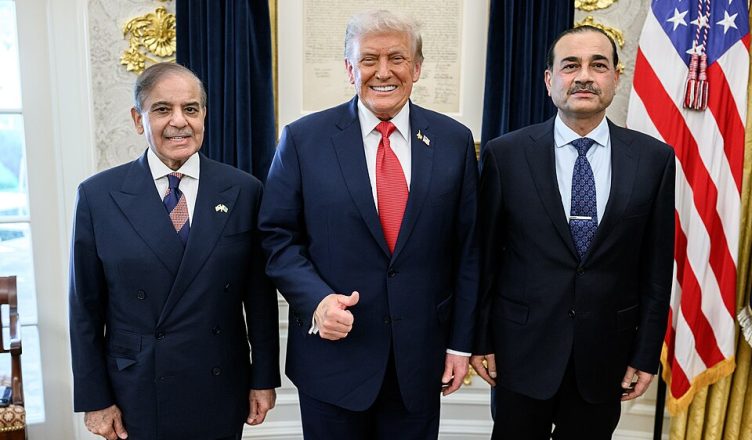
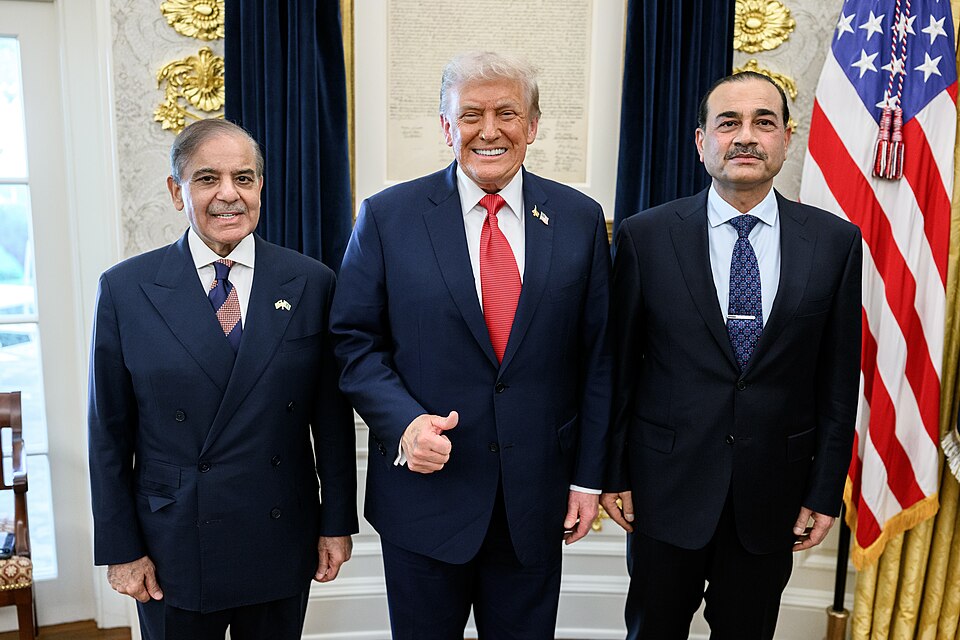
These remarks to US lawmakers were accompanied by several high-level meetings between the two nations in 2025. Pakistan’s Army Chief, Asim Munir, was welcomed by Trump to the White House for the first time. Two other visits were held: one included a high-level meeting attended by the Prime Minister Shehbaz Sharif, and the other featured Asim Munir attending the outgoing US CENTCOM General Kurilla’s change-of-command ceremony. This acceleration and building of security trust has not been seen in over 10 years and has also culminated in Trump requesting Pakistan to contribute forces and planning for his 20-point Gaza plan.
However, a partnership between two countries based mainly on security and military alignment is not long-lasting. The vulnerability of Pakistan’s position in Washington’s inner circle is dependent upon the fragility of Afghanistan, Iran, and counterterrorism theatres. This relationship is one of strategic utility and immediate value. If these theaters stabilize in 2026, Asim Munir won’t be appearing in Washington and CENTCOM board rooms as much as he did in 2025. Likewise, the US-India relationship is deep enough to take a few diplomatic hits, as Trump understands.
While news and optimistic remarks from economic sectors hint at a significant step towards a foundation, it still needs many years of bilateral dialogue. Critical minerals and cryptocurrency remain too sector-specific; greater diversity is required to solidify the relationship.
The story of 2025 US-Pakistan relations is one of utility-based transactions, a hallmark characteristic of the Trump administration. To ensure these relations continue on their upward trajectory into 2026, a much more substantive, foundational relationship must emerge.
About the Author: Maheen Safian
Maheen Safian is the senior events coordinator at the Middle East Institute. She aids in the coordination and execution of all MEI programming and events. Prior to this position, she served as a student-level sustainable development advisor at the Pakistan Mission to the UN. She holds a Bachelor of Arts in International Studies from the School of International Service, American University with a primary degree focus in American Foreign Policy and National Security, and a secondary focus in Peace and Conflict Resolution.
Image: White House / Public Domain.
The post Donald Trump’s Pakistan Reset Is Not the End of “India First” appeared first on The National Interest.
Источник: nationalinterest.org