
«Данное сообщение (материал) создано и (или) распространено иностранным средством массовой информации, выполняющим функции иностранного агента, и (или) российским юридическим лицом, выполняющим функции иностранного агента»
 Topic: Naval Warfare Blog Brand: The Buzz Region: Eurasia Tags: Ghost Fleet, North Korea, Nuclear Reactors, Russia, Ships, and Submarines Did Russia Try to Move Two Submarine Nuclear Reactors into North Korea? January 11, 2026 By: Brandon J. Weichert
Share
Last year, a Russian “shadow fleet” vessel transported two submarine nuclear reactors to an uncertain destination in the Far East—but it never arrived.
Rumors abound about the true extent and nature of the so-called “shadow fleet”—that collection of ships that skulks about the world’s oceans, carrying the sanctioned goods of one rogue regime to another.
The vast majority of “shadow fleet” ships are connected in one way or another to Russia, which has remained an international pariah since its invasion of Ukraine in 2022—yet has both a large shipping fleet and a collection of partners abroad willing to continue to do business with it under the table.
Most recently, there have been seizures of container ships and oil tankers both in Europe and off the coast of Venezuela that allegedly belong to this amorphous fleet engaged in global skullduggery. Indeed, going after the shadow fleet has been a key element of the Trump administration’s overall strategy for weakening Russia, China, Iran, and North Korea—as well as their allies, like Venezuela—without directly militarily engaging these countries.
The Mysterious Sinking of the Ursa Major
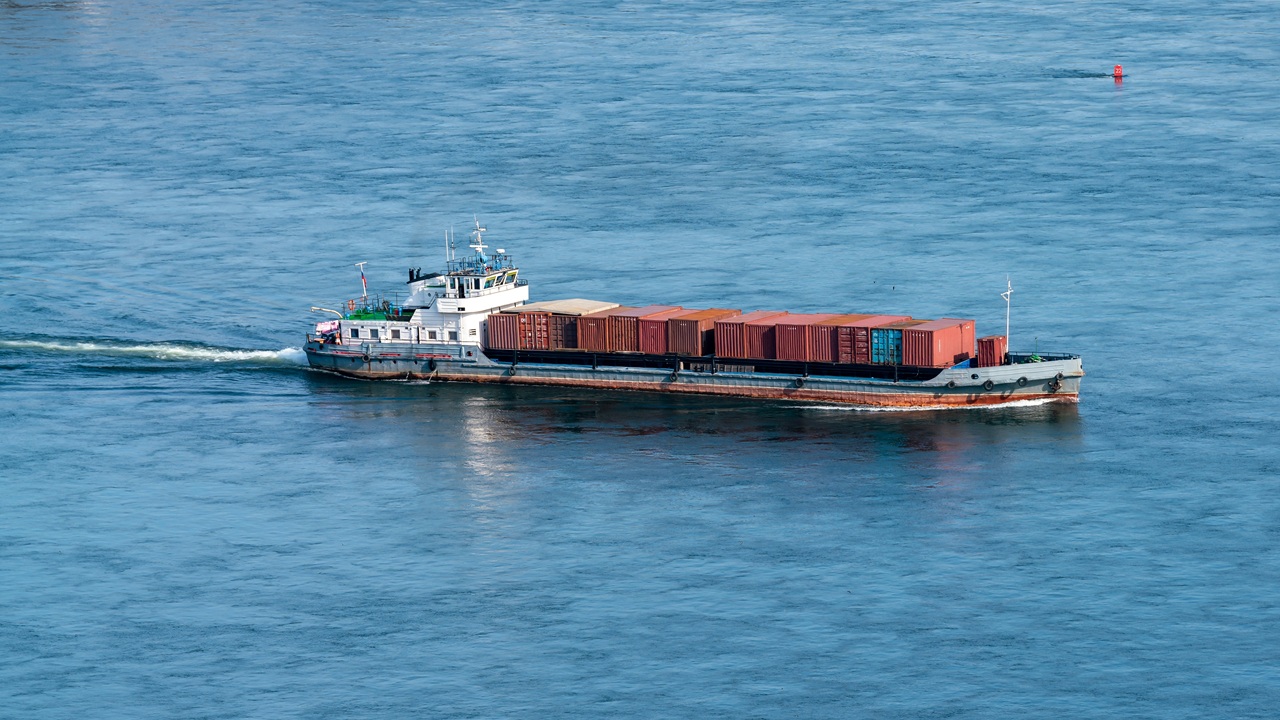
There are now reports coming out that should concern everyone. Last year, one of these Russian shadow fleet cargo ships, the Ursa Major, sank in the Mediterranean Sea following an explosion on board.
Of course, such events happen from time to time—but what made the Ursa Major’s story particularly intriguing is that it was transferring the components for a nuclear submarine reactor from St. Petersburg, where the reactor was built, to the Russian Pacific port of Vladivostok. At least, Vladivostok was the destination on paper. But investigators do not believe that the Far East port was really the Ursa Major’s final destination. In fact, it is far more likely that the reactors’ intended final destination was North Korea—which may have prompted a third party to ensure that their final destination was the bottom of the ocean instead.
As the Ursa Major sank near Spain, Spanish authorities are charged with investigating its explosive sinking in the Mediterranean. Those investigators believe the ship did not sink by accident. They’re talking about the prospects of a torpedo being fired at the ship in the waters between Spain and Algeria.
Weighing around 70 tons each, the Russian-made submarine nuclear reactors were likely being transferred to North Korea because of the submarine technology development deal signed between Russia and North Korea as part of the wider alliance that has grown between the two Eurasian military powers.
North Korea has been a decisive partner of Russia’s during the Ukraine War, providing weapons, ammunition, and even troops to the war effort. In exchange, Russia has increasingly assisted the rapid technological advancement of North Korean military systems—including North Korea’s turgid submarine program.
The Sinking Is Part of a Wider Breakdown Between Russia and the West
There has long been a belief that certain things were off-limits in the Russo-American/NATO relationship. One was that the two sides would never be directly involved in the killing of the other side’s personnel.
In Ukraine, however, it is no secret that US and NATO intelligence routinely provide precise targeting data on Russian targets and troops that the Armed Forces of Ukraine then uses for combat purposes.
At the same time, the notion that the Russians would willingly provide some of their most advanced weapons and military technologies to a country like North Korea was once considered anathema. If the reporting from the Spanish investigators is true, then this signals a total shift—breakdown, even—in the best standards and practices that have long defined the Russo-American relationship and prevented global catastrophe.
Even at the highest points of tension during the Cold War, both sides judiciously strove to prevent a total rupture in their relations. That’s because both the United States and the Soviet Union were run by far more sober and responsible statesmen than the groups running the opposing factions in the Ukraine War.
Russia Is Playing Nuclear Roulette with North Korea
Sadly, it seems that both sides now are intent on ignoring whatever red lines once existed between the two nuclear-armed powers. The fact that Russia is plying North Korea with increasingly sophisticated submarine, missile, and other technologies as repayment for North Korea’s cynical support of Russia during the Ukraine War is bad enough. That Moscow might have risked surreptitiously moving two nuclear reactors to North Korea for their growing submarine capability is the stuff of nightmares.
This is one of those genies that, once let loose, cannot be put so easily back into the bottle. The same holds true for the Western approach to the Ukraine War. After all, the only reason that Moscow and Pyongyang are such bosom buddies is expressly because of the maximalist position that NATO has taken on Ukraine’s status—guaranteeing it the right to join NATO after the war, a step that simply incentivizes Russia to continue the war indefinitely.
The West has driven Russia into closer ties with America’s greatest, most implacable enemies, and the intractable Western position on Ukraine has clearly driven the Russians temporarily insane. One must hope that cooler heads in Washington and Moscow prevail, no further attempts to move nuclear reactors into North Korea are made, and diplomacy between Washington, Moscow, and Pyongyang is restored.
About the Author: Brandon J. Weichert
Brandon J. Weichert is a senior national security editor at The National Interest. Recently, Weichert became the host of The National Security Hour on America Outloud News and iHeartRadio, where he discusses national security policy every Wednesday at 8pm Eastern. Weichert hosts a companion book talk series on Rumble entitled “National Security Talk.” He is also a contributor at Popular Mechanics and has consulted regularly with various government institutions and private organizations on geopolitical issues. Weichert’s writings have appeared in multiple publications, including The Washington Times, National Review, The American Spectator, MSN, and the Asia Times. His books include Winning Space: How America Remains a Superpower, Biohacked: China’s Race to Control Life, and The Shadow War: Iran’s Quest for Supremacy. His newest book, A Disaster of Our Own Making: How the West Lost Ukraine is available for purchase wherever books are sold. He can be followed via Twitter @WeTheBrandon.
Image: Shutterstock / Vectorina.
The post Did Russia Try to Move Two Submarine Nuclear Reactors into North Korea? appeared first on The National Interest.
Источник: nationalinterest.org