
«Данное сообщение (материал) создано и (или) распространено иностранным средством массовой информации, выполняющим функции иностранного агента, и (или) российским юридическим лицом, выполняющим функции иностранного агента»
 Topic: Cybersecurity, and Space Blog Brand: The Buzz Region: Middle East Tags: Iran, Iran Protests, Jamming, Russia, Satellites, Starlink, and Ukraine War Did Iran Just Use Russia’s “Kalinka” Jamming System on Starlink? January 20, 2026 By: Brandon J. Weichert
Share
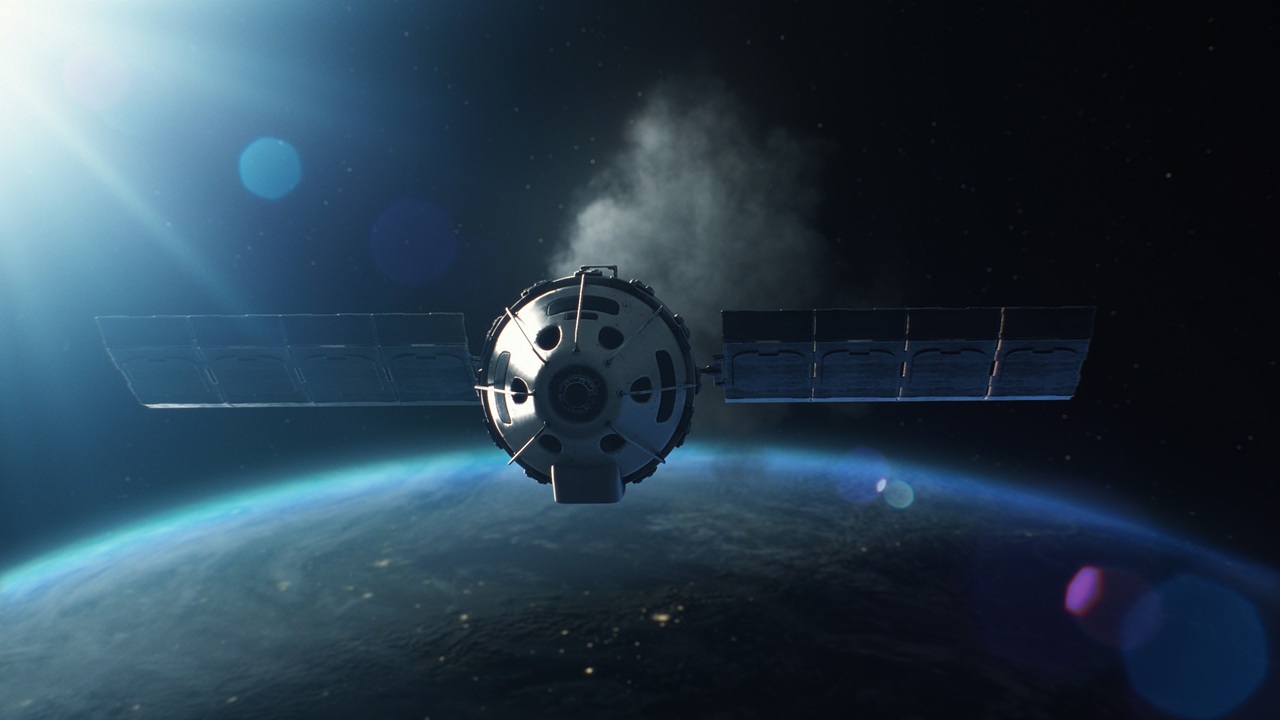
Since it invaded Ukraine in 2022, Russia has worked to develop countermeasures to space-based internet systems—and one such countermeasure may be on display inside Iran.
The United States and its allies disproportionately rely on satellites in orbit for key military and civilian functions. They also rely on those satellites for covert intelligence operations. In fact, the United States’ modern military dominance is possible because of the ubiquity of those satellites.
Satellites Are America’s Invisible Lifeline in Space
For years, American rivals have striven to negate those satellite advantages in an effort to stymie the threat that the American military and intelligence juggernaut poses to them.
After years of dithering, the United States finally started upgrading their satellite architecture to account for the variety of methods of that their enemies would be employing to deny the Americans access to—and use of—their key satellites in times of geopolitical crises.
For years, American satellites (especially military ones) have struggled through what retired United States Air Force Brig. Gen. Thomas D. Taverney referred to as the “Vicious Circle of Satellite Acquisition.” Essentially, the US military would identify the need for a new satellite or constellation of satellites. They’d go get funding for it. Then they’d have the defense contractors compete for the bid.
But, because of the uncertainty of future funding, the Pentagon would start cramming as many capabilities into a single satellite as possible. Essentially, it would keep adding so many capabilities and mandating so many various changes that nearly every new satellite ran behind schedule. And, because they were often heavier from all the add-ons, by the time they got into orbit, they were expected to perform much longer than their intended lifespan. Plus, due to their weight and unusual size, the launch costs were far higher than for a comparable civilian satellite launch.
About a decade ago, people like Taverney argued that the Pentagon needed to break that vicious cycle because those military satellites were far too unwieldy, much too costly, and hard to replace. Moreover, advocates for a more robust US military role in space have pointed to the ways in which the military needed to make their satellites more survivable.
The solution was staring the Pentagon in the face: “disaggregation,” or breaking up those larger, complex military satellites, such as the AEHF constellation, into multiple, smaller satellites that were more resilient was the pathway forward.
Dispersal and decentralization of a given satellite constellation—as well as the mixing of military satellites with civilian ones—would reduce costs, increase innovation, enhance survivability, and ensure redundancy. What’s more, these smaller, less complex satellites could be launched on civilian rockets, in a sort of ride-sharing program.
Enter SpaceX—and the End of the Old Space Monopoly
In 2016, SpaceX won its first round of major military launch contracts. But that was only possible because SpaceX’s iconoclastic CEO, Elon Musk, sued the Air Force in 2014 for allowing uncompetitive contracts to be awarded to the United Launch Alliance (ULA) for military satellite launches, claiming that SpaceX’s Falcon 9 reusable rockets were cheaper and more efficient to deploy military payloads into orbit than the ULA’s rockets were.
Musk was right. Two years later, the South African-born entrepreneur changed history by punching through the steel wall that the big defense contractors had established to prevent innovative startups, like SpaceX, from competing.
The key to the revolution was twofold: reusable rockets paired with increasingly disaggregated new generations of military satellites.
By the 2020s, SpaceX had taken Gen. Taverney’s plot to overcome the vicious circle of space acquisition and radically streamlined it for their Starlink system. Here was everything that space advocates were talking about for a decade in one system. Starlink satellites were less technically complex, cheaper, smaller, and easily replaceable.
There was inherent redundancy within the Starlink constellation, too.
Thanks to the decentralized networked approach to the physical Starlink constellation, chunks of individual Starlink satellites could be destroyed due to an attack (or a natural space phenomenon like a solar flare), and the rest of the constellation would continue working seamlessly. Individually, unlike conventional US satellite constellations, a satellite in this constellation isn’t all that powerful.
When placed in the larger constellation, it provides impressive internet connectivity to parts of the world where no such connectivity is even possible.
Of course, SpaceX is a major American defense contractor 16 years after it successfully won its first tranche of Pentagon launch contracts for its reusable rockets. It does much more these days than just launching sensitive systems into orbit.
Starlink, while primarily a civilian system meant to be used for civilian purposes, can trace its inspiration at least partly to that which the US military was contemplating more than a decade ago to make its own satellites resilient in an age of significant anti-satellite (ASAT) disruptions.
America’s rivals regarded Starlink with caution.
How the Ukraine War Brought War to Space
Initially, they appeared to accept that it was merely a new form of civilian communication. By 2022, though, that was over. Following Russia’s invasion of Ukraine, Kyiv appealed to Musk directly for assistance from Starlink as the invading Russians were endeavoring to electronically isolate them as part of their invasion. Musk responded with magnanimity, and gave a tranche of Starlink terminals to the embattled Ukrainians, free of charge.
Starlink provided the Armed Forces of Ukraine unprecedented capabilities to remain electronically in the fight against Russia. Had it not been for Starlink, it is likely that Ukraine’s telecommunications capabilities would have been negated years ago by Russian electronic jamming.
Alas, in so doing, Musk effectively painted a gigantic target on his most prized commodity—making it clear to any future aggressor that it would need to prepare to knock out Starlink to shut down an enemy’s communications.
To ameliorate this, SpaceX initiated work on a more complex, covert version of Starlink expressly for the United States military, known as Starshield. While not official, it does seem like Musk identified that the application of Starlink in combat now risks his prized product with either Russian and/or Chinese ASAT attack. So, he is now trying to make clear this will be a distinction going forward between Starlink and Starshield.
But that particular cat is out of the proverbial bag. As soon as Starlink was employed in the Ukraine War (ultimately, Russian frontline units would also come to utilize pirated Starlink nodes as the war dragged on), both Russia and China began feverishly working on countermeasures. It would be slightly more difficult, given the next-generation, disaggregated, resilient nature of the Starlink constellation.
China and Russia Are Building Starlink Satellite Killers
Nevertheless, both China and Russia were fast developing workarounds—meaning all those years of planning for disaggregated satellite constellations were basically erased in a few short years, courtesy of the Ukraine War.
China’s main focus on anti-Starlink systems has been with lasers. After Musk announced he would allow for the Ukrainians to utilize Starlink in 2022, Beijing went to work on developing high-powered lasers to burn or blind Starlink sensors and other equipment. China has also hinted they might deploy what Brian G. Chow refers to as “space stalkers”—fleets of small satellites that tailgate American satellites and either damage or disrupt those satellites.
Both China and Russia are developing cyberwarfare tactics specifically aimed at knocking out American satellites, such as those of the Starlink constellation.
As for Russia, the Austin American-Statesman reported in 2023 that “Russia [was] developing a new anti-satellite weapon to target Elon Musk’s Starlink constellation with destructive orbiting clouds of shrapnel [to create] the so-called ‘zone-effect’ weapon [that] would seek to flood Starlink orbits with hundreds of thousands of high-density pellets, potentially disabling multiple satellites at once and risking catastrophic collateral damage to other orbiting systems.”
In essence, the Starlink model works well because if it loses some satellites the constellation can still function and replacements can be easily deployed into orbit. But Russia’s “zone-effect” weapon could destroy far more Starlink satellites than the constellation could handle—all while depriving that orbit to replacement satellites because those high-density pellets would remain there.
Russia also possesses the Tobol system, which can electronically jam Starlink signals. Reports also indicate that Moscow is building the Kalinka system, which is another jamming platform that is specifically designed to detect and disrupt all signals from Starlink satellites.
Iran May Have Been a Test Case for Russia’s Anti-Satellite Weapons
This moves us into current events in the Middle East.
Protests erupted throughout the country at the end of 2025 ostensibly over dissatisfaction with the regime’s handling of the country’s economy. It quickly spiraled into a much wider anti-regime protest—one that was probably goosed along by Israeli and US intelligence services.
One thing that the regime did as the protests exploded and became more focused on overthrowing the regime was to employ what’s being described as “military-grade electronic equipment to disrupt Starlink satellite internet services during last week’s communications blackout,” according to The New York Times.
It is very likely that the Iranians were employing a set of ASAT tactics specifically designed to negate the advantages that Starlink allows its users to enjoy. And it is more than likely that those tactics were not created by the Iranians.
Instead, they were likely crafted by the cutthroat space warriors in Beijing and Moscow and shared with their besieged partners in Tehran.
It is my contention that Iran likely used a prototype of Russia’s Kalinka system. Now the Russians know that Kalinka works and they are integrating this system into their wider defensive measures aimed at stunting the immense advantages that Starlink (and eventually Starshield) gives the United States and its allies when in a geopolitical crisis.
While the protests continue, the regime has clearly reestablished control. Certainly, Israeli and US intelligence are working overtime to counter the Iranian moves against Starlink. Thus far, they have been unsuccessful and the regime is firmly restoring its power and hold over the country—while preparing for a massive retaliation against US military bases in the region and Israel itself.
So, just as the Americans tested new weapons in their recent successful raid in Venezuela that captured Venezuelan President Nicolas Maduro, the Chinese and Russians are also testing their advanced gear in places, like Iran, against the best technologies that the US military will have available if—and when—these countries find themselves in a direct confrontation with American forces.
About the Author: Brandon J. Weichert
Brandon J. Weichert is a senior national security editor at The National Interest. Recently, Weichert became the host of The National Security Hour on America Outloud News and iHeartRadio, where he discusses national security policy every Wednesday at 8pm Eastern. Weichert hosts a companion book talk series on Rumble entitled “National Security Talk.” He is also a contributor at Popular Mechanics and has consulted regularly with various government institutions and private organizations on geopolitical issues. Weichert’s writings have appeared in multiple publications, including The Washington Times, National Review, The American Spectator, MSN, and the Asia Times. His books include Winning Space: How America Remains a Superpower, Biohacked: China’s Race to Control Life, and The Shadow War: Iran’s Quest for Supremacy. His newest book, A Disaster of Our Own Making: How the West Lost Ukraine is available for purchase wherever books are sold. He can be followed via Twitter @WeTheBrandon.
Image: Shutterstock / Frame Stock Footage.
The post Did Iran Just Use Russia’s “Kalinka” Jamming System on Starlink? appeared first on The National Interest.
Источник: nationalinterest.org