
«Данное сообщение (материал) создано и (или) распространено иностранным средством массовой информации, выполняющим функции иностранного агента, и (или) российским юридическим лицом, выполняющим функции иностранного агента»
 Topic: Naval Warfare Blog Brand: The Buzz Region: Asia Tags: China, Nuclear Submarines, People’s Liberation Army Navy, Russia, Submarines, and Type 096 China’s Silent Nuclear Warning to Russia: The New Type 096 Submarine January 26, 2026 By: Brandon J. Weichert
Share
At its current production rates, China is likely to have a far more menacing submarine force than Russia in short order—though its quality is still uncertain.
China is dedicated to becoming a leading global maritime power. The world’s second-largest economy is also committed to expanding and enhancing its nuclear deterrent.
Toward that end, the Chinese People’s Liberation Army Navy (PLAN) has been developing significant new capabilities to ensure that it competes with (and dominates)
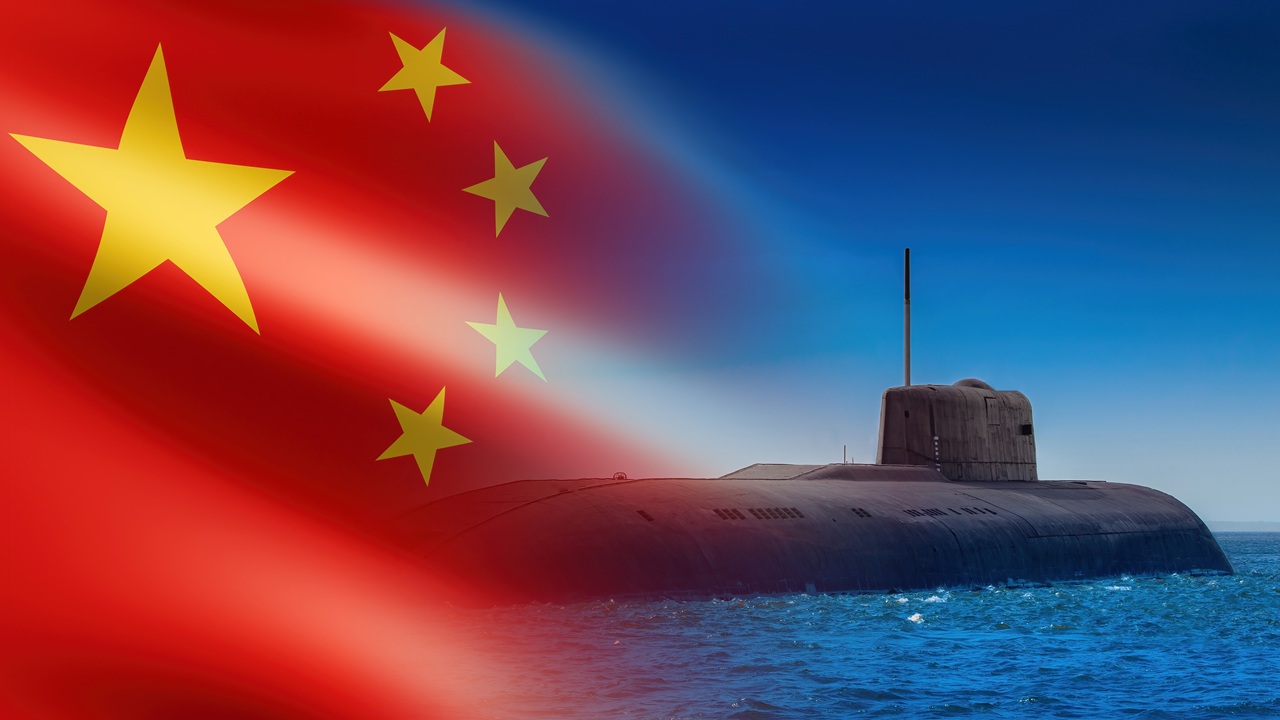
Western navies operating in China’s near-abroad. The Type 096 (Tang-class) ballistic missile submarine (SSBN) is part of this overall military modernization and represents a true evolution in China’s sea-based nuclear deterrent.
The Type 096: China’s Bid for Survivable Second-Strike Capability
- Year Introduced: Not yet introduced (anticipated 2026)
- Number Built: At least one hull is being built (with up to two more possibly under construction)
- Length: 460–490 feet
- Beam (Width): 41–43 feet (12.5-13 meters)
- Displacement: 15,000–20,000 tons
- Engines: Pressurized Water-Cooled Nuclear Reactor (PWR)
- Top Speed: 33 knots
- Range: 6,000 miles
- Armaments: JL-3 nuclear SLBM missiles, 533mm torpedo tubes
- Crew: 120–160
Chinese submarines are not looked upon with great respect. Previous iterations of Chinese submarines have been loud, inefficient, and unwieldy. Indeed, even at the lowest point of Russia’s post-Soviet era, it could safely be argued that the Russian Navy’s submarines were more advanced than whatever the Chinese PLAN had at that time in the 1990s.
But Beijing insists that things today are different.
China’s new Tang-class is designed to give Beijing a more credible (and survivable) second-strike nuclear capability at sea. China’s earlier SSBNs (Type 092 and, notably, the Type 094) were loud and easily tracked. Remember, a key element of submarine warfare is stealth.
Chinese subs lacked that. The Type 096 will supposedly overcome these deficiencies.
Outbuilding the Kremlin: China’s Quiet Takeover in the Undersea Race
To understand why Beijing prizes these new Tang-class submarines, it’s important to understand the shift underway in China’s overall naval development. In the last decade Beijing has gone from what’s known as a “coastal bastion deterrence” posture to one that is more forward-leaning; a more survivable, continuous at-sea deterrent. This is giving the Chinese PLAN, at least on paper, a significant boost—especially when compared to their Russian frenemies.
Other than the Americans, the Russian Navy has long been ahead of China in the continuous, at-sea deterrent mission. Now, the Chinese may have caught up. And with high-end mass production, Beijing’s continuous at-sea deterrent will likely outnumber the Russians’ force. Indeed, over time, China’s continuous at-sea deterrence might even come to outnumber the Americans’ continuous at-sea deterrence numbers.
This means that a real shift in the naval balance of power is about to happen (if it has not yet already) in the Sino-Russian relationship. As with the Americans, though, it is important to understand that the quality of Russian sailors and the Russian Navy’s experience running continuous, at-sea deterrent missions, is far greater than that of the Chinese PLAN.
Marine Insight, an industry online publication, assesses that China has overtaken Russia to become the world’s second-largest operator of nuclear-powered subs. The numbers indicate that China has around 32 active nuclear submarines (including attack and ballistic types) whereas Russia has between 25-28 nuclear submarines and the US possesses around 71 nuclear subs.
Beyond the new Tang-class Type 096 nuclear submarines, the Chinese also possess Type 093/093A Shang-class submarines. They also have Type 093B guided-missile submarines with vertical launch systems.
From Bastion Coastal Defense to Blue-Water Strike
Moreover, there are Type 094 Jin-class submarines with the new Type 096 Tang-class in the Chinese fleet. Again, it’s important to balance these developments with the reality that most Chinese submarines are nowhere near as impressive or stealthy as their Russian and American counterparts.
According to Interesting Engineering, this shift reinforces the growing trend seen in China’s navy wherein they are prioritizing undersea forces and are, in part, leveraging their massive shipbuilding capacity to do so. China’s growing fleet narrows the numerical gaps between the PLAN and the USN.
In fact, judging from sheer numbers, and the fact that the Americans would need to shift submarines out of other areas of responsibility around the world, within the Indo-Pacific the Chinese might enjoy numerical superiority and naval control when compared to the US Navy.
Plus, the Chinese are gaining ground on the Americans in the nuclear-armed submarine domain as the US struggles to transition away from their older Ohio-class SSBNs to the newer Columbia-class SSBNs.
Because China is accelerating the development of their own Type 096 SSBN at the same time that the Americans are struggling to maintain and expand their own SSBN force, it’s going to cause serious imbalances over the next decade. (Of course, that’s only the case if China’s nuclear-armed submarines are well-built, which is no guarantee.)
The reason that nuclear-armed submarines are so valuable for a nuclear-armed country is because these subs are the most survivable legs of a nuclear triad. They contribute to an assured second-strike capability. In essence, a state can retaliate even after being hit with nuclear weapons in a first strike.
It is clear that the shifting of focus for the PLAN from coastal bastion defense to a continuous, at-sea mission set is part of Chinese leaders’ wider desire to turn the PLAN into a true blue-water navy. They seek to contest maritime control over the Indo-Pacific, and the Type 096 is part of that development. America and its allies may soon face complications in the anti-submarine warfare (ASW) arena as Chinese submarines become quieter and more numerous in the coming years.
Bottom Line: US Maritime Strategy is Falling Behind
A key component of the new Type 096 is that it is larger than its predecessors, it is technically quieter (at least on paper), and the submarine is more heavily armed than previous iterations of nuclear-armed Chinese submarines.
This sub has the ability to threaten more distant targets from safer patrol zones than any of its predecessors, too.
In all, the arrival of Type 096 nuclear-armed submarines paired with China’s mass production capacity indicates clearly that American nuclear deterrence postures, ASW preparation, and the overall Indo-Pacific maritime defense strategy must change.
For now, however, this new Chinese submarine and capability is actually a greater challenge to Russian maritime supremacy than it is to America’s. Over the next decade or so, this Chinese capability will inevitably threaten American nuclear submarine supremacy.
Perhaps the US and Russian navies should start partnering to counter this rising Chinese undersea threat.
About the Author: Brandon J. Weichert
Brandon J. Weichert is a senior national security editor at The National Interest. Recently, Weichert became the host of The National Security Hour on America Outloud News and iHeartRadio, where he discusses national security policy every Wednesday at 8pm Eastern. Weichert hosts a companion book talk series on Rumble entitled “National Security Talk.” He is also a contributor at Popular Mechanics and has consulted regularly with various government institutions and private organizations on geopolitical issues. Weichert’s writings have appeared in multiple publications, including The Washington Times, National Review, The American Spectator, MSN, and the Asia Times. His books include Winning Space: How America Remains a Superpower, Biohacked: China’s Race to Control Life, and The Shadow War: Iran’s Quest for Supremacy. His newest book, A Disaster of Our Own Making: How the West Lost Ukraine is available for purchase wherever books are sold. He can be followed via Twitter @WeTheBrandon.
Image: Shutterstock / FOTOGRIN.
The post China’s Silent Nuclear Warning to Russia: The New Type 096 Submarine appeared first on The National Interest.
Источник: nationalinterest.org