
«Данное сообщение (материал) создано и (или) распространено иностранным средством массовой информации, выполняющим функции иностранного агента, и (или) российским юридическим лицом, выполняющим функции иностранного агента»
 Topic: Air Warfare Blog Brand: The Buzz Region: Asia Tags: Aircraft Carriers, China, Fighter Jets, Indo-Pacific, J-20 Mighty Dragon, People’s Liberation Army Air Force, and US Navy China’s J-20S Fighter Jet Is Now a Carrier Killer January 24, 2026 By: Brandon J. Weichert
Share
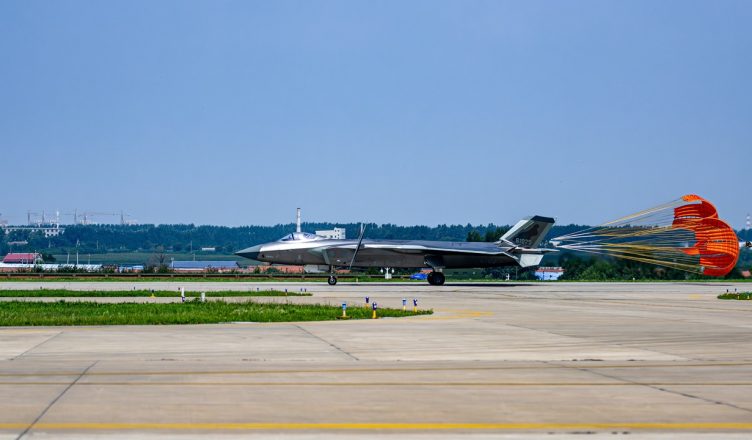
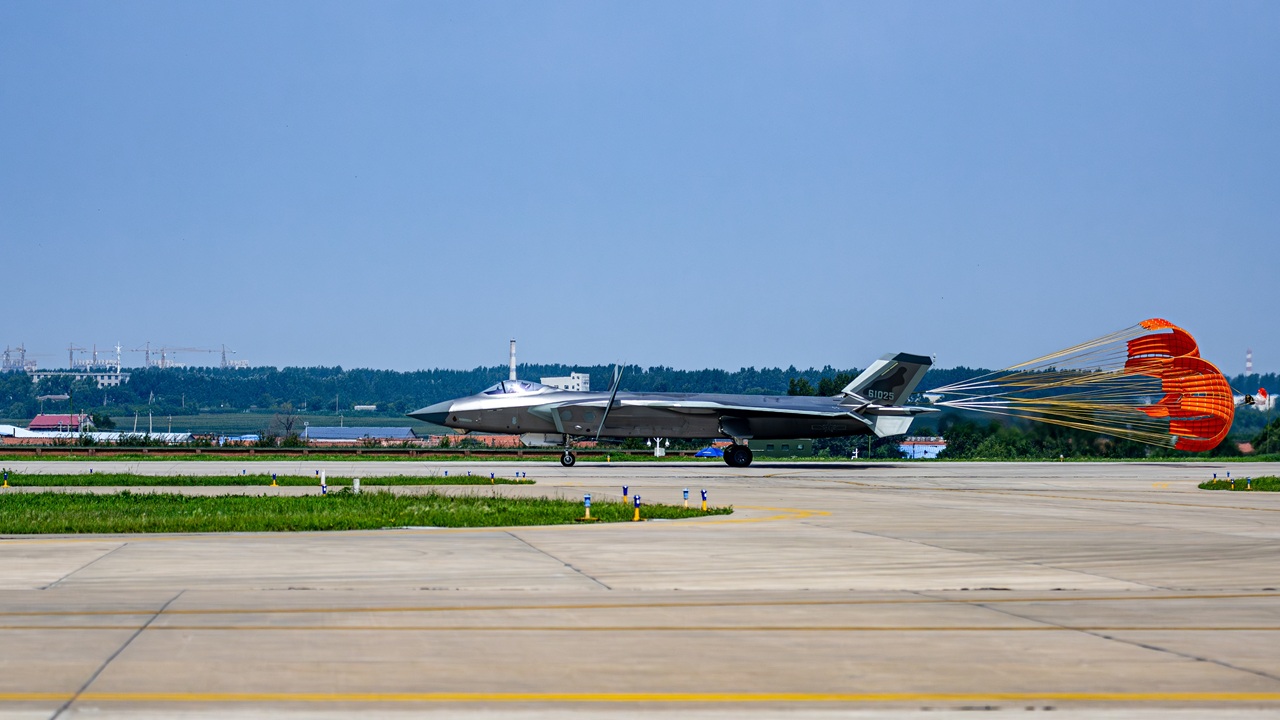
China’s J-20S—a two-seat upgrade of the J-20 “Mighty Dragon” fighter—has been designed for one, and only one purpose: to hunt down US aircraft carriers in the Pacific.
China has been touting their Chengdu J-20 Mighty Dragon fifth-generation air superiority as a counterweight to the US-made F-22 Raptor fifth-generation air superiority fighter. Indeed, Beijing has claimed that the J-20 system is already superior—though doubts abound.
Beijing’s “Mighty Dragon” vs. America’s Aircraft Carriers
Not only is China touting their J-20 as the better version of the Raptor, but it is also showcasing its two-seater, navalized variant, the J-20S.
Beijing has given the J-20S a pivotal role in its regional anti-access/area-denial (A2/AD) strategy, which is specifically tailored for stunting the power projection of the United States Armed Forces into the First Island Chain.
The most interesting part of the J-20S is its second seat. From that second chair, an additional crewmember can manage sophisticated command-and-control of long-range maritime strikes, oversee the sensor fusion and battlespace management while in combat, operate the Manned-Unmanned Teaming (MUM-T) with drones, and utilize networked targeting of surface ships.
Bear in mind that the Chinese have a robust and sophisticated overwatch of basically the entire Indo-Pacific region. In fact, reports indicate that China married an artificial intelligence (AI) capability to its reconnaissance satellites—and tracked an American carrier leaving port in the East Coast of the United States all the way to its intended destination on the far side of the world.
In essence, the second chair could turn the J-20S into a quarterback aircraft that becomes a flying sensor hub used to coordinate highly effective missile and drone swarms against other aircraft or warships as part of a wider distributed kill web. No one knows what weapons the J-20S will fire, but given its obvious A2/AD mission, we can anticipate that these weapons will be long-range air-launched anti-ship missiles, possibly even China’s hypersonic cruise missile.
What Does It Take to Sink an Aircraft Carrier?
More importantly, the J-20S will need to sink an American carrier on its own. Thus, it will need to be proficient in locating the carrier, tracking it persistently, and feeding targeting data to missiles, submarines, and land-based launchers. As USNI News notes, this is a critical node in a layered carrier-killing architecture rather than a lone assassin.
Currently Beijing is making significant changes to its existing J-20 fleet. Some are dubbing it the “Super J-20.” China is enhancing their J-20 fleet with more powerful AESA radars, improved maritime target discrimination, and greater resistance to jamming. There has been a wider rollout of the WS-15 engine, providing better supercruise performance, and increased electrical power for sensors and AI.
Speaking of which, all the new J-20s will have onboard AI sensor fusion, allowing for faster decision-making in contested environments that will enable the J-20 to act as the lead node in networked warfare. Many Chinese analysts, according to the South China Morning Post, frame this development as being essential for any successful handling of a Taiwan contingency.
As for the J-20S maritime variant of the J-20, these birds are going to give the Americans real headaches at sea. They’re designed to operate alongside stealth drones (MUM-T), integrate seamlessly with the KJ-3000/KJ-600 airborne early warning aircraft, and anchor an air-sea denial bubble over the Taiwan Strait.
China isn’t just building or developing a regional architecture meant to keep US carriers away from their areas of operation—all while imposing air superiority over Taiwan at the start of any conflict—they’ve already built the system. Now, they’re just expanding it.
In effect, the J-20S is not merely an F-22 knockoff, but a stealthy carrier killer. This system has totally reshaped the battlefield already. And that should worry any American who simply assumes American carriers can operate with near impunity near Taiwan—especially as we move closer to the 2030s.
About the Author: Brandon J. Weichert
Brandon J. Weichert is a senior national security editor at The National Interest. Recently, Weichert became the host of The National Security Hour on America Outloud News and iHeartRadio, where he discusses national security policy every Wednesday at 8pm Eastern. Weichert hosts a companion book talk series on Rumble entitled “National Security Talk.” He is also a contributor at Popular Mechanics and has consulted regularly with various government institutions and private organizations on geopolitical issues. Weichert’s writings have appeared in multiple publications, including The Washington Times, National Review, The American Spectator, MSN, and the Asia Times. His books include Winning Space: How America Remains a Superpower, Biohacked: China’s Race to Control Life, and The Shadow War: Iran’s Quest for Supremacy. His newest book, A Disaster of Our Own Making: How the West Lost Ukraine is available for purchase wherever books are sold. He can be followed via Twitter @WeTheBrandon.
Image: Shutterstock / Xiao Wei.
The post China’s J-20S Fighter Jet Is Now a Carrier Killer appeared first on The National Interest.
Источник: nationalinterest.org