
«Данное сообщение (материал) создано и (или) распространено иностранным средством массовой информации, выполняющим функции иностранного агента, и (или) российским юридическим лицом, выполняющим функции иностранного агента»
 Topic: Air Warfare Blog Brand: The Buzz Region: Asia Tags: Air Defense, Anti-Drone Technology, China, Drones, People’s Liberation Army, and United States China’s “Hurricane 3000” Could Reshape Anti-Drone Warfare Forever January 20, 2026 By: Brandon J. Weichert
Share
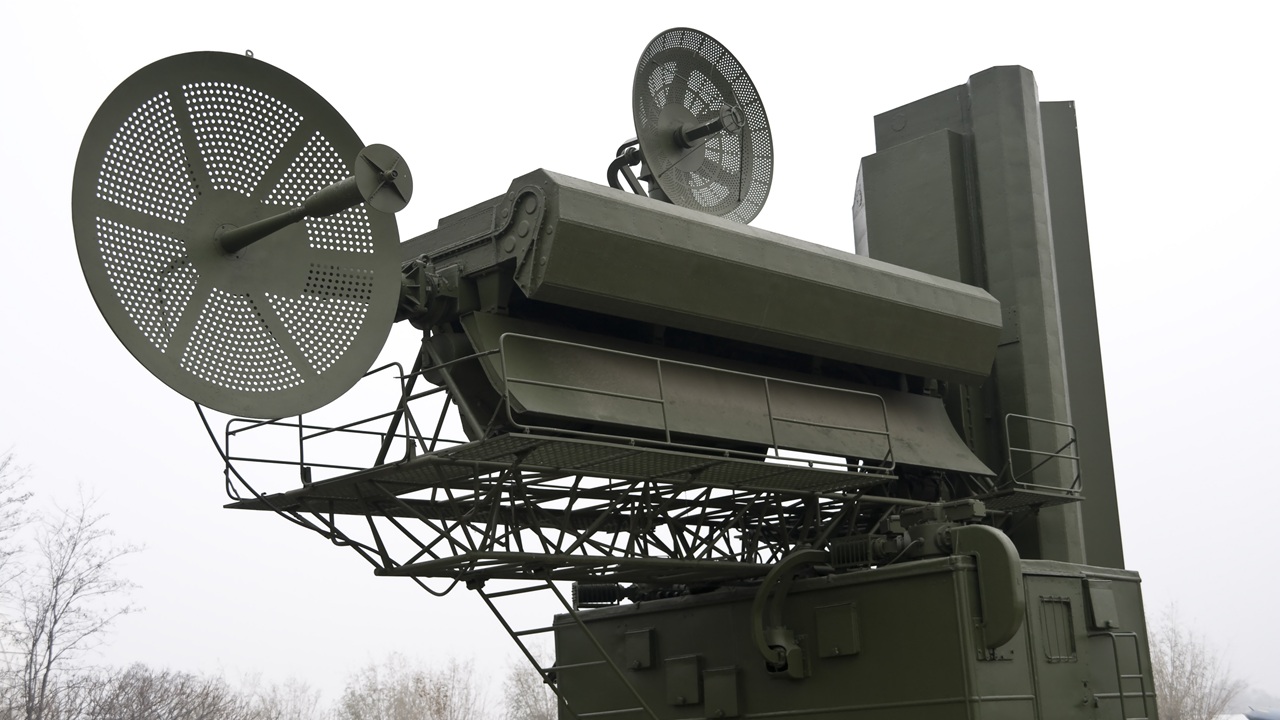
The Hurricane 3000 anti-drone system is apparently unique in that it can shoot down swarms of drones at once—a major advance for China, and an ominous sign for the United States.
China will not stop producing new weapons systems. It is part of Beijing’s ongoing bid to compete with—and ultimately displace—the United States as the dominant world power. One such new system that the Chinese are touting is the Hurricane 3000, a vehicle-mounted high-power microwave (HPM) weapon, jointly developed by state-owned firms NORINCO and China South Industries Group.
At a time when drone warfare is all the rage—and counter-drone technology is constantly being developed—the Hurricane 3000 hits different. That’s because this system is really designed to counter drone swarms. And that’s the real threat of current drones. They can mass and be used to overwhelm defensive lines.
Meet the Hurricane 3000: China’s Microwave Weapon
So, the Hurricane 3000 operates on the principle that it’s not enough to defend against one or a few drones. NORNCO/China South Industries Group’s designers wanted to ensure they could defend against large numbers at once.
The only way to conceivably achieve such a herculean task is to employ directed energy that is dispersed over wide area at once. This would effectively burn out the onboard electronics of drones operating in a swarm simultaneously.
By employing intense bursts of focused microwave energy, Hurricane 3000 overloads and disrupts the onboard electronics of drones. This includes flight control, navigational, sensor, and onboard data links. Electromagnetic pulses are the key to this technology.
Such a system is not only more efficient than kinetic interceptors, it is likely cost-effective (since the system is not limited to physical ammunition but is instead only limited by energy use).
Chinese designers then took this system and mounted it on the chassis of an eight-by-eight heavy truck, with its power source, cooling systems, and a planar microwave emitter (plus associated radar and optical gear).
China publicly displayed their Hurricane 3000 earlier this month and, according to Army-Recognition, has now operationalized the weapon. It’s being integrated into actual Chinese units. This system is part of a broader modernization push being undertaken by China’s People’s Liberation Army (PLA) that offers what’s known as a “soft kill” that avoids debris and collateral damage.
The Hurricane 3000 is not a system onto itself. In a way, it is a “system of systems”—an important piece of a much larger complex web of air defenses primed to stop enemy drones from wreaking havoc on Chinese forces in war.
So, this system will operate alongside missiles, lasers, and an assortment of other electronic warfare (EW) weapons.
Further, the primary goal of the Hurricane 3000 is wide area denial (rather than just local-point defense). This indicates a shift toward broader battlefield control. When combined with the panoply of other sophisticated Chinese AD systems, as per Interesting Engineering’s reportage on the topic, it would appear that China has developed a significant anti-drone capability.
Should the United States and its partners, like Taiwan, find themselves in a shooting war with the Chinese, many of the offensive strategies they’re planning to use against Chinese forces—notably offensive drones—might need to be rethought if the Hurricane 3000 is mass produced and deployed in large numbers against Taiwan and their American allies.
My colleague from the Asia Times, Gabriel Honrada, elaborates on this issue by observing that Chinese doctrine in a Taiwanese contingency calls for the rapid neutralization of Taiwanese and allied intelligence, surveillance, and reconnaissance (ISR) drones. This move by China would undoubtedly significantly degrade situational awareness and delay effective responses to Chinese aggression.
The Hurricane 3000 and China’s A2/AD Endgame
I concur with Honrada’s claim that the Hurricane 3000 fits in with China’s broader anti-access/area-denial (A2/AD) posture. That posture, by the way, is one of the main factors behind the Pentagon’s recent Overmatch Briefing assessment that concluded any war with China over Taiwan would end in a US military defeat. China’s robust (and still growing) regional A2/AD capabilities are a primary reason for this hypothetical victory over US forces.
On the flip side, the United States and other Western militaries are developing similar systems. THOR, Leonidas, are but two of the systems. Yet these platforms are still under development and are in the prototype phases. Here is another example of where the Chinese have simply leapfrogged the Americans.
High-Powered Microwave weapons underscore that high-end conflict will revolve around dominance of the electromagnetic (EM) spectrum. Jamming, spoofing, hardening, and DEWs are now all core warfighting domains.
Several years ago, there was a suggestion floating around the Pentagon to create an EM Force to do for the EM spectrum what organizations, like Space Force or the Air Force do for their respective warfighting domains: defend it and ensure the US military has uncontested access to those domains.
That idea went nowhere. A decade later, it is clear that such a suggestion should have been taken more seriously than it was. Beijing certainly recognized the value of being able to use the EM spectrum and to disrupt it. Let’s hope that oversight by the US doesn’t end up costing us (or our allies) in a real war with China.
About the Author: Brandon J. Weichert
Brandon J. Weichert is a senior national security editor at The National Interest. Recently, Weichert became the host of The National Security Hour on America Outloud News and iHeartRadio, where he discusses national security policy every Wednesday at 8pm Eastern. Weichert hosts a companion book talk series on Rumble entitled “National Security Talk.” He is also a contributor at Popular Mechanics and has consulted regularly with various government institutions and private organizations on geopolitical issues. Weichert’s writings have appeared in multiple publications, including The Washington Times, National Review, The American Spectator, MSN, and the Asia Times. His books include Winning Space: How America Remains a Superpower, Biohacked: China’s Race to Control Life, and The Shadow War: Iran’s Quest for Supremacy. His newest book, A Disaster of Our Own Making: How the West Lost Ukraine is available for purchase wherever books are sold. He can be followed via Twitter @WeTheBrandon.
Image: Shutterstock / yuyangc.
The post China’s “Hurricane 3000” Could Reshape Anti-Drone Warfare Forever appeared first on The National Interest.
Источник: nationalinterest.org