
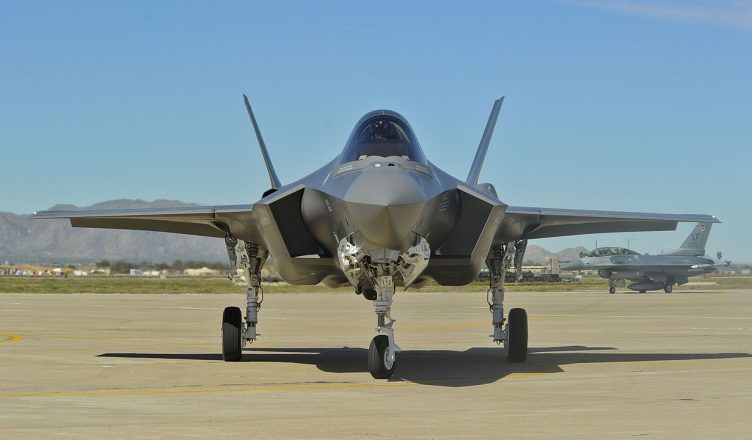
«Данное сообщение (материал) создано и (или) распространено иностранным средством массовой информации, выполняющим функции иностранного агента, и (или) российским юридическим лицом, выполняющим функции иностранного агента»
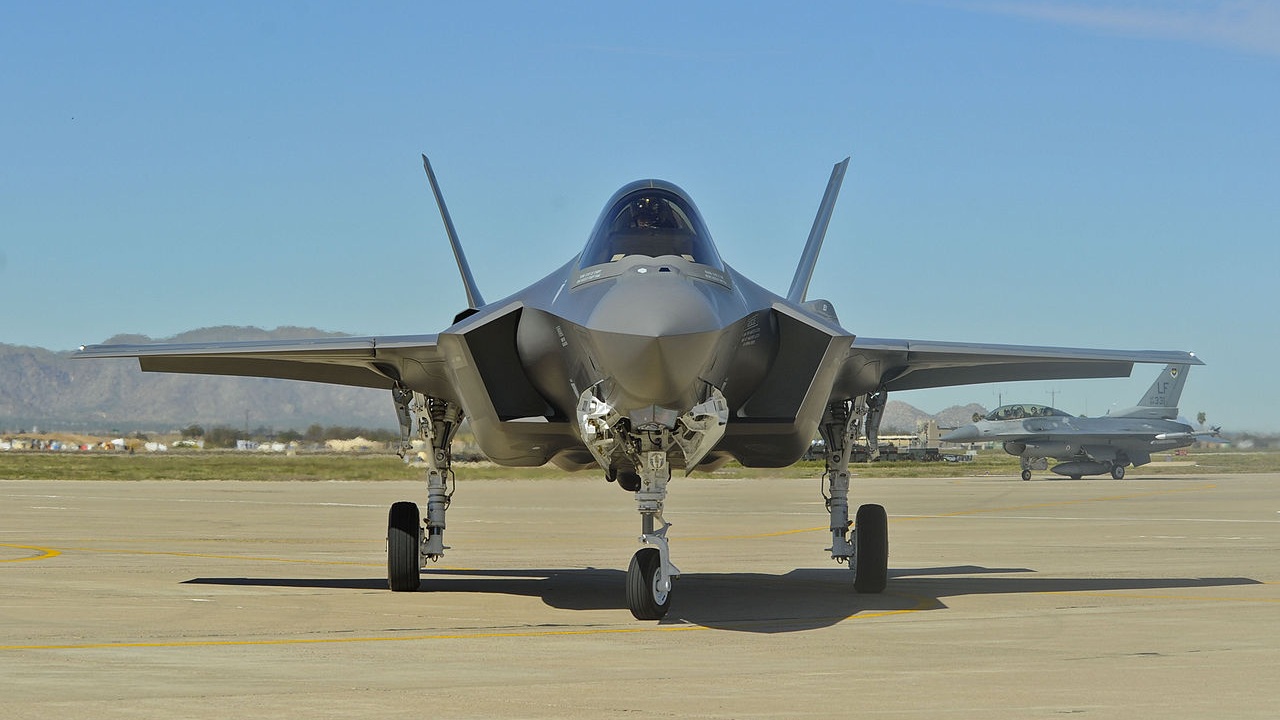 Topic: Air Warfare Blog Brand: The Buzz Region: Europe Tags: Defense Industry, F-35 Lightning II, NATO, Supply Chains, and United States America Doesn’t Put a “Kill Switch” on F-35 Exports. It Doesn’t Need One. January 28, 2026 By: Brandon J. Weichert
Share
The F-35’s supply chains and software are already so dependent on the United States that a “kill switch” is essentially redundant.
There are concerns in Europe, notably Germany, that US-made systems, such as the F-35 Lightning II fifth-generation multirole stealth warplane, might be subject to a “kill switch”—an electronic backdoor by which the United States could remotely disable the aircraft if its erstwhile NATO allies were to use them in ways that displeased Washington.
While there is little evidence to suggest that a literal kill switch exists for the F-35s sold to American allies, the Americans can still do much to weaken—or shut down—another country’s F-35 program in other ways.
The “Kill Switch” That Doesn’t Exist—and the One That Does
This is all coming to light due to the recent fundamental shifts in US foreign policy toward Europe, especially vis-à-vis Greenland and the Ukraine War. Euronews reported recently that German officials have publicly raised the alarm about a rumored control of a “kill switch” on F-35 jets sold to Europe.
This is probably nonsense. Instead, the real kill switch is in the absolute dependence on US defense firms for software, maintenance, and data links for the effective operation of these fifth-generation warplanes.
Those data links are especially important for the useful operation of the F-35, which has often been described as little more than a flying computer chip. Indeed, one individual I spoke with who is a trained F-35 pilot explained to me that without effective data linkage, the F-35 loses much of its advantages.
In the case of Europe’s F-35s, these systems are the apotheosis of the interoperability among European militaries and the United States that the original founders of NATO envisioned.
Link-16, GPS, and the Digital Lifelines of Modern Airpower
Specifically, Link-16 and GPS access are key for the proper functioning of Europe’s F-35s, as they connect these birds to the larger, interoperable NATO defense networks and allow for precision guidance and strike during combat.
And don’t forget the importance of the key software, logistics support, and even the overall supply chain for maintaining Europe’s fleet of F-35s. It all runs from and through the United States. So long as relations are good between the various European members of NATO, this is not a problem.
But let’s just look at the recent (and ongoing) contretemps between Washington and Copenhagen over the fate of Greenland.
According to The Aviationist, a popular online industry publication, systems like ALIS and ODIN, which are part of the overarching logistical, maintenance, and mission data support functions for ensuring the F-35 operates effectively are all sourced from the United States. It wouldn’t take much for Washington to interrupt support for these essential services that maintain the F-35’s fighting prowess.
ALIS and ODIN: The (Broken) Backbone of Global F-35 Sustainment
ALIS, which stands for “Autonomic Logistics Information System”, was planned as the core logistical infrastructure for the global F-35 fleet, according to the Lockheed Martin official website.
Conceptually, ALIS integrates maintenance and date prognostics, supply chain and parts tracking, mission planning and debriefing data, and aircraft health reporting and technical information. ALIS was designed to run on local servers and client hardware that interacted with the aircraft and ground personnel, per National Defense Magazine.
Then there’s the Operational Data Integrated Network (ODIN). The Joint Strike Fighter (JSF) official military webpage elaborates that ODIN was the next-generation replacement for ALIS, designed to overcome ALIS’ assessed shortcomings. JSF states that ODIN is a “cloud-native,” meaning that much of its software and data environment exists in modern cloud servers rather than isolated, local servers.
Due to this, ODIN’s designers believe that the system is more flexible, user-friendly, secure, and faster to update than ALIS.
While both systems have similar mission sets, the two platforms are structurally distinct. The Government Accountability Office explains that ALIS was built around local data servers, client workstations, aircraft interfaces (the F-35 can download its health and sensor data and upload that same information via data links when on the ground), prognostics engines, and supply chain plus parts management.
ALIS has been criticized for being heavy, with slow hardware and outdated software stacks. There are also data inaccuracies, missing records, and frequent manual workarounds that need to be employed.
The GAO reports that ALIS is hard to deploy in expeditionary or shipboard environments, too, due to its size and weight.
ODIN, meanwhile, is where things tend to get interesting from a software perspective. It maintains the same high-level functions as ALIS, but it employs major architectural enhancements.
For instance, it is a Cloud-Hosted Backend, and its hardware is smaller and ruggedized compared to ALIS. These systems can also connect to aircraft and act as local nodes to the battle cloud. Web/cloud applications make this system infinitely user friendly.
What’s more, the ODIN system allows for seamless software updates. It operates in an integrated data environment.
Software Is the New High Ground in Warfare
Software is key to the functioning of the F-35.
As anyone who has ever used a computer understands, software—notably for complex systems, like the F-35—must be constantly updated. The source code and updates are controlled by Washington and Europe is disallowed from updating or changing the software on their F-35s without explicit approval from the United States. That alone is an astonishing exploitable security vulnerability.
Recently, Denmark outlined a plan to rotate around 1,000 of their forces through Greenland in the ensuing months after Trump’s recent eruption over Greenland’s status as a territory of Denmark. That force is not just a Danish element. It includes other NATO members, notably France. The Danish Royal Navy has deployed a warship to Greenland, while the French Navy has supposedly deployed submarines off the coast all meant to deter the Americans from militarily absorbing the island into their country.
Airpower, of course, is an essential component of modern warfare. Copenhagen knows this. What’s more, they’re aware of the fact that their F-35 fleet (and the rest of Europe’s) are completely vulnerable to disruptions imposed by the United States, should hostilities over Denmark become more than just diplomatic posturing.
These technical and logistical dependencies are wonderfully convenient, when all is well in the transatlantic alliance. But they become massive weaknesses when a fight breaks out among the allies.
Germany’s Sudden Discovery of Strategic Vulnerability
It is interesting, too, that Germany is the nation decrying these American-created vulnerabilities in Europe’s airpower. After all, Germany has long been the beating economic heart of the European economy.
Even today, as that economic miracle has faded after the destruction of the Nord Stream II Pipeline connecting Russian natural gas to thirsty European consumers via Germany and the Baltic Sea, Germany is now leading the rearmament push in Europe (ironic, NATO was supposedly created to “Keep the Americans in, the Russians out, and the Germans down”).
Berlin is clearly concerned about the overwhelming influence that America’s defense contractors have over European markets.
In fact, with Germany’s economy in the doldrums since losing access to cheap Russian energy sources—and with rearmament the new buzzword in Europe today—Germany seems to be banking on becoming a potent player in Europe’s arms market. By emphasizing both the Russian threat in the East and now the threat of American duplicity, Berlin could try to carve out a competitive spot against the Americans for Europe’s arms markets.
The True Cost of Buying American
There is no (verified) hidden kill switch embedded within US-made military platforms, such as the F-35 that lets the Pentagon instantly turn off allied weapons. What does exist is an extreme dependency in Europe upon US-controlled software infrastructure, supply chains, and policy preferences that lean in the direction of the United States and its security interests.
This explains why some commentators, such as the controversial Steve Bannon often describe Europe as “vassals” of the United States. However derisive that may sound to European ears, judging from the German concerns being voiced in this piece, it sounds an awful lot like the Europeans are realizing how vulnerable they truly are.
Whether the Europeans can fundamentally alter this imbalance in the near-term is unknown. Until that imbalance is remedied, however, the Europeans will have to play-nice with the Americans lest they find out the hard way how vulnerable to American whims they are.
About the Author: Brandon J. Weichert
Brandon J. Weichert is a senior national security editor at The National Interest. Recently, Weichert became the host of The National Security Hour on America Outloud News and iHeartRadio, where he discusses national security policy every Wednesday at 8pm Eastern. Weichert hosts a companion book talk series on Rumble entitled “National Security Talk.” He is also a contributor at Popular Mechanics and has consulted regularly with various government institutions and private organizations on geopolitical issues. Weichert’s writings have appeared in multiple publications, including The Washington Times, National Review, The American Spectator, MSN, and the Asia Times. His books include Winning Space: How America Remains a Superpower, Biohacked: China’s Race to Control Life, and The Shadow War: Iran’s Quest for Supremacy. His newest book, A Disaster of Our Own Making: How the West Lost Ukraine is available for purchase wherever books are sold. He can be followed via Twitter @WeTheBrandon.
Image: Wikimedia Commons.
The post America Doesn’t Put a “Kill Switch” on F-35 Exports. It Doesn’t Need One. appeared first on The National Interest.
Источник: nationalinterest.org