

«Данное сообщение (материал) создано и (или) распространено иностранным средством массовой информации, выполняющим функции иностранного агента, и (или) российским юридическим лицом, выполняющим функции иностранного агента»
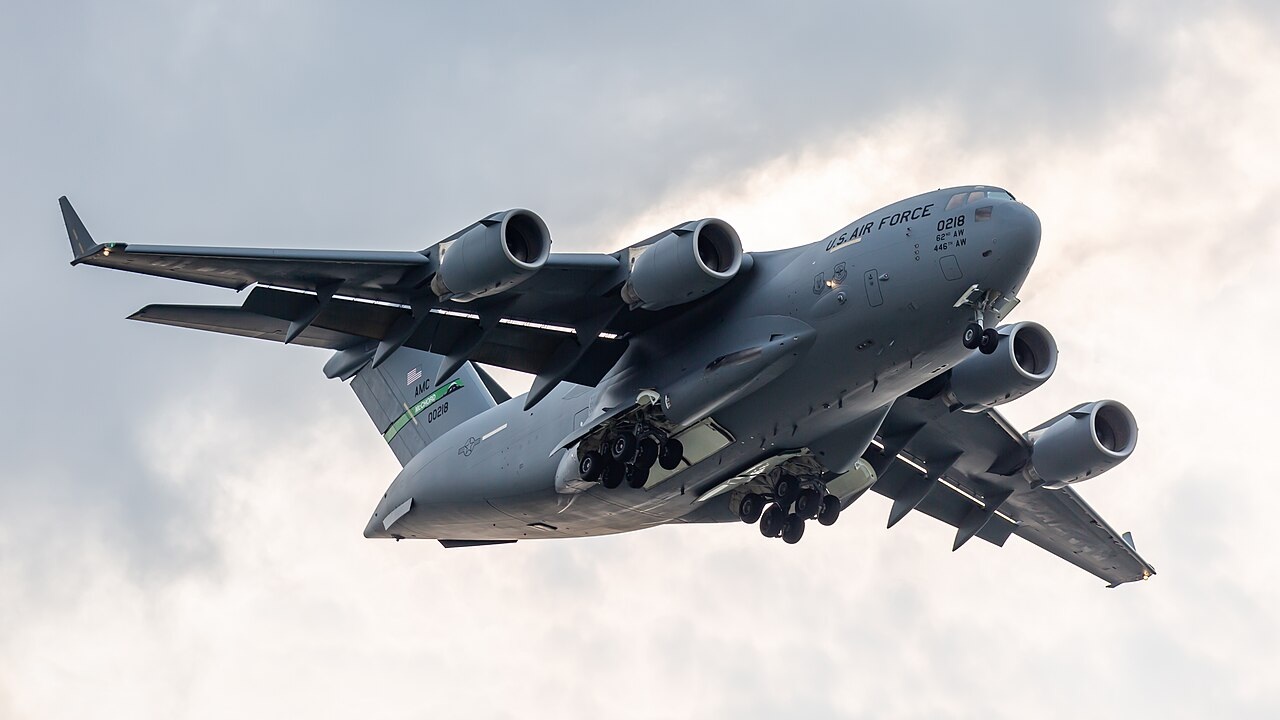
A C-17 Globemaster transport aircraft approaches Kadena Air Base in Okinawa, Japan, in March 2019. The United States operates around 220 Globemasters today, likely insufficient to meet the demands of a major conflict—particularly as the aircraft age and are given additional mission sets. (Wikimedia Commons/Balon Greyjoy)
Why the US Air Force Needs More C-17 Globemasters October 21, 2026 By: Wilson Beaver, and Chase Ouellette
Share
Add TNI as a Preferred Source on Google
For decades, the United States has contended with smaller adversaries without the ability to disrupt US aerial logistics. It will not have that luxury in a great-power conflict with China.
In a potential conflict with China, the United States would need to rapidly mass men and equipment throughout the Western Pacific, covering vast distances in a far more challenging geographic environment than the Middle Eastern or European theaters. The success of such efforts will hinge on the airlift capacity of the Air Force—and in particular on the size of the C-17 Globemaster fleet.
The airlift capacity currently offered by US C-17s is plainly insufficient to support large-scale combat operations across the sprawling Pacific theater. To ensure that US forces will be able to stay in the fight against China, the United States must restart C-17 production.
Why the C-17 Globemaster Matters
The C-17 Globemaster is a transport aircraft that delivers large equipment, supplies, and troops to airfields all over the world. It is the second-largest US cargo plane in service, behind only the C-5M Super Galaxy, but is considerably newer than the Super Galaxy and is expected to last far longer.
Boeing, the C-17’s manufacturer, delivered 223 of the aircraft to the US Air Force between 1993 and 2013, out of a total of 279 built for all customers. Today, the Air Force operates 157 active-duty C-17s, with the remaining aircraft being assigned to National Guard and Air Force Reserve units.
Following the completion of the Air Force order, production of C-17s for export continued at Boeing’s Long Beach plant until 2015. The production line was finally closed upon the delivery of the final batch of four Qatar-bound C-17s; it has remained dormant since.
Recent conflicts have placed considerable pressure on the Air Force’s limited C-17 inventory. Between February 28 and June 30, US Transportation Command conducted more than 1,500 air missions into the Middle East. This flight count included frequent periods of high-tempo airlift operations, during which 30 to 40 cargo flights ferried military equipment and personnel into the Middle East each day.
Air Force C-17s are the linchpin of any major movement of troops and equipment. In the weeks leading up to Operation Absolute Resolve, the seizure of Venezuelan leader Nicolas Maduro from Caracas, open-source data identified 83 C-17 flights arriving at Caribbean bases over a 16-day period. At least 160 transport aircraft were observed moving through Europe, the Mediterranean, and the Middle East in the 13 days before the Operation Midnight Hammer strikes of June 2025.
The intense demand for this overworked transport force is likely to grow in future years. New requirements for mobile radars and improvements to existing weapons systems point to a growing cargo catalogue that C-17s will be tasked with transporting.
In addition to carrying new C-17-standardized cargo, Air Force officials envision employing the aircraft as a strike platform. The deployment of palletized munitions from C-17s may provide US forces with a flexible and affordable way to saturate enemy airspace. However, each combat patrol performed by C-17s will eat away at the Air Force’s aggregate airlift capacity.
America Doesn’t Have Enough C-17s for a Great-Power War
Put simply, as the C-17 fleet ages and its maintenance needs grow, the Air Force is being asked to do more with less. This comes at a time when the nation’s strategic airlift force is already reaching its limits. In 2024, the commander of US Transportation Command testified that a single large-scale combat operation would consume America’s existing airlift capacity.
A conflict with China would demand an airlift far more substantial than the one observed during Operation Epic Fury. US forces fighting in the Western Pacific would depend on consistent deliveries of reinforcements, weapons systems, and munitions into contested and austere environments. China’s heavy investment in A2/AD capabilities will further compound the logistical burden on America’s C-17 fleet. A 2025 transfer of a single Patriot battalion from Asia to the Middle East reportedly took 73 C-17 flights to complete, for example.
Sustaining combat operations in the Pacific also poses challenges to America’s C-17 fleet that have been absent from past airlift operations. The C-17s used during Epic Fury and Midnight Hammer could stage cargo at European bases located near Central Command but beyond the reach of Iranian fires. The Pacific offers few comparable major logistics hubs beyond the range of Chinese missiles.
The lack of such bases will exacerbate the strain placed on US airlift capacity and the need for Agile Combat Employment, in which US air assets are widely dispersed to complicate adversarial targeting and increase survivability. C-17s operating from more distant stations will spend additional time in transit, reducing the number of missions each aircraft can complete over a given period.
The C-17 force available at the start of a conflict with China will also decline as time goes on. Chinese targeting of airfields throughout the first and second island chains is likely to destroy a certain number of C-17 airframes on the ground, although the Air Force is certainly engaged in measures to reduce this threat. C-17s operating closer to the Chinese mainland would also be forced to contend with opportunistic Chinese fighters preying on the vulnerable transport aircraft.
America Can Still Restart the C-17 Production Line
The US has been working diligently recently to ensure that it possesses the requisite warfighters, technology, and equipment required to defend the first island chain. However, these assets can only make an impact if they make it to the fight. To do so, the logic is clear: the United States needs to expand its C-17 fleet.
Restarting the C-17 production line is essential to building the airlift capacity required to sustain flight operations across the Pacific theater. Past small-scale conflicts with inferior adversaries have permitted the US to overlook this requirement. Today, it must once again be prepared to fight a prolonged campaign in the Western Pacific against the rapidly expanding Chinese military.
Reopening the assembly line in Long Beach will not be an easy task. Boeing’s skilled labor force for this system has probably dispersed across California in the 11 years since the plant’s closure. Furthermore, the supply chains providing the materials for C-17 production will need to be re-established. Machinery and industrial equipment will also need to be re-sourced or retooled.
Nevertheless, it is vital that this long process begins now. The Air Force would need expanded airlift capacity the moment conflict were to break out along the first island chain. Delaying action until a crisis emerges may mean failure to deliver the airlift capacity the joint force requires when it is needed most.
About the Authors: Wilson Beaver and Chase Ouellette
Wilson Beaver is a senior policy advisor for defense budgeting at The Heritage Foundation. Before he joined Heritage in 2023, Wilson was a policy advisor on the Senate Small Business Committee, working on defense innovation grant research security as part of the SBIR and STTR Extension Act of 2022. Prior to that, Wilson served as a non-commissioned officer and team leader in the US Army. During his time in the Army, Wilson served as a paratrooper in the 173rd Infantry Brigade Combat Team (Airborne). Wilson holds master’s degrees in Foreign Service from Georgetown University and in International Security from George Mason University, and a bachelor’s degree in International Studies from Louisiana State University.
Chase Ouellette is a member of the Heritage Foundation’s Young Leaders Program. He earned his Bachelor of Arts degree in Political Science from the University of Notre Dame in May 2026. Chase has also worked as a congressional intern for Rep. Troy Balderson (R-Ohio) and as an intern for Jon Husted’s Senate campaign team.
The post Why the US Air Force Needs More C-17 Globemasters appeared first on The National Interest.
Источник: nationalinterest.org