

«Данное сообщение (материал) создано и (или) распространено иностранным средством массовой информации, выполняющим функции иностранного агента, и (или) российским юридическим лицом, выполняющим функции иностранного агента»
 Topic: Oil and Gas Blog Brand: Energy World Region: Europe, and Middle East Tags: China, Energy Security, Iran War, Liquefied Natural Gas (LNG), and Qatar LNG: A Bridge Over Troubled Water? April 7, 2026 By: Anna Mikulska
Share
LNG disruptions from the Iran War have exposed gas as an unreliable bridge fuel, accelerating diversification toward energy security, redundancy, and alternative power sources.
The attacks on the Pars field in Iran and the counterattacks on Qatari liquefied natural gas (LNG) trains inflicted serious physical damage on critical infrastructure. The damage can be repaired, albeit over a period of years. Markets will adjust as new supply comes online and as measures are employed to conserve or substitute for constrained natural gas supply. But the broader security calculus has changed. For the second time in four years, natural gas–importing countries face the prospect of shortages, high costs, and fuel switching.
What Happened and Why Does It Matter
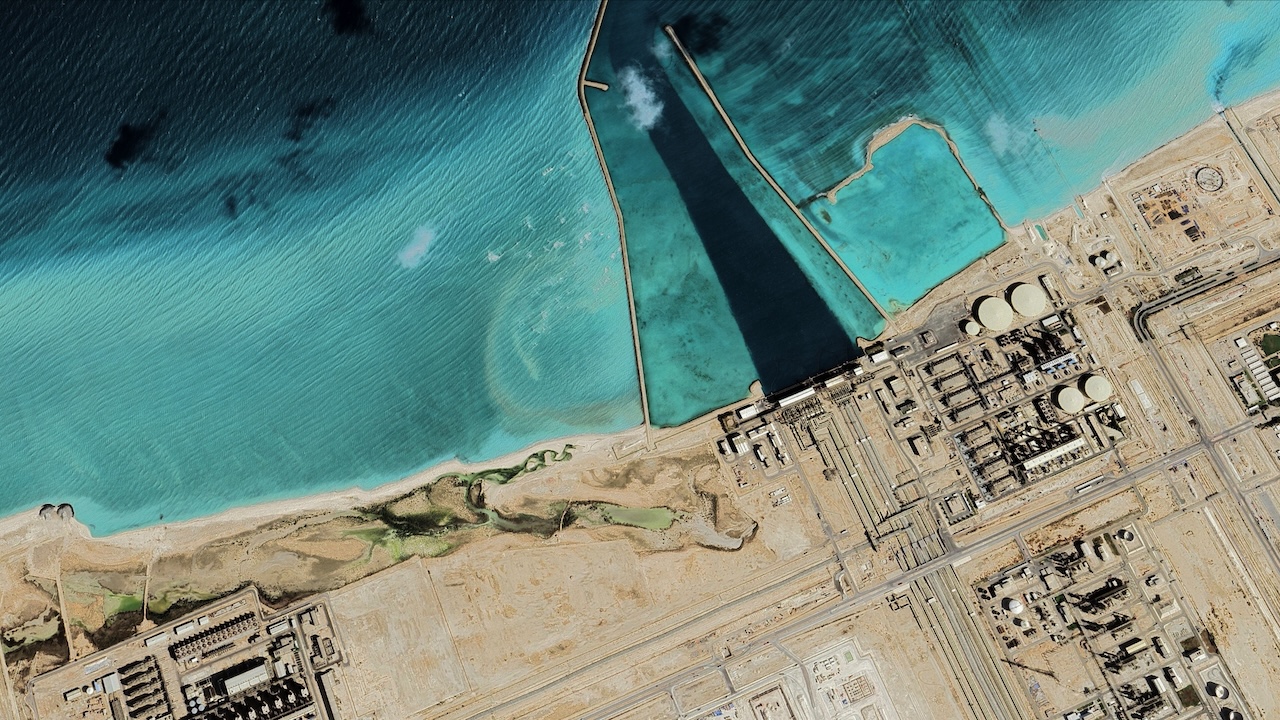
Strikes on Iran’s South Pars field disrupted what was mostly domestic production. But retaliatory attacks on Qatar’s Ras Laffan complex not only halted LNG output from one of the world’s largest exporters, but they also took out 17 percent of Qatar’s LNG production capacity for anywhere between three and five years. That amounts to roughly 2.5 percent of global LNG capacity. While that share may appear small, in a tight LNG market with little spare capacity and no real buffer, even relatively modest losses can trigger outsized price and supply shocks, particularly if the conflict results in additional long-term capacity losses.
Almost immediately after, Qatar announced force majeure on contracts with customers tied to the impacted LNG trains, including Italy, Belgium, South Korea, and China, all of which now must look for alternative supply not only in the short term but in the longer term as well.
Spot prices responded rapidly. In Europe, Title Transfer Facility (TTF) rose from about $8.5 per million British thermal units (MMBtu) before the conflict to roughly $22/MMBtu, directly after the Ras Laffan attacks. In Asia, the Japan Korea Marker (JKM) surged from around $10/MMBtu to $26/MMBtu. These prices subsided, albeit only slightly, thanks in no small part to the end of the heating season and the storage-filling season not yet in full swing. Currently, JKM stands at about $20/MMBtu while TTF is in the $15-16/MMBtu range. The spread favors delivery to Asia, with China reselling record volumes of previously purchased gas to its neighbors.
That dynamic is likely to change, as Europe enters the storage-filling season. European storage levels are currently among the lowest seen in recent years, and the region remains exposed to tight LNG balances. Europe imported about 9 percent of its LNG from Qatar in 2025. Any lost contracted volumes of Qatari LNG will add to Europe’s heavy dependence on spot LNG purchases, which is currently already at 30 percent, about twice the typical spot market exposure other countries have. If the EU does not waive or soften its legal storage-filling requirements (that 90 percent of natural gas storage needs to be filled between October 1 and December 1), the JKM-TTF spread will likely narrow, with Europe again becoming the main destination for LNG cargoes, albeit at highly inflated prices.
The Varied Effects of the LNG Disruption
The effects of LNG export disruptions will be complex and multifaceted, with different reactions among importers depending on their levels of wealth and flexibility.
One of the major adjustment mechanisms in any gas shortage is fuel switching. Indeed, importers in Asia are already preparing to switch to coal. For some, this is likely to be a short-term adjustment. But over time, this may also accelerate efforts to diversify power generation portfolios more broadly, including through nuclear energy, both conventional and small modular reactors, as well as geothermal and renewables. The underlying lesson is straightforward: systems that rely too heavily on imported gas without redundancy remain exposed.
Poorer countries, however, may move away from imported natural gas for longer. For them, coal often remains the most accessible domestic or regional substitute, at least until other options become scalable and affordable. As shortages deepen, demand destruction will also intensify, with industrial users curtailing consumption and governments mandating conservation.
The Winners and the Losers of the Iran War’s LNG Disruption
As usual, market disruptions of this kind will produce both losers and winners. On the surface, Asian importers appear to be the most exposed, given that they hold most Qatari contracts and absorb the first shock. But Europe may be in a worse structural position due to its regulatory obligations and more limited immediate fuel-switching capacity.
Russia stands to benefit from the increased demand and from any softening in attitudes toward Russian LNG and pipeline exports. This includes longer-term implications as Arctic LNG 2 becomes more viable and Power of Siberia 2 becomes more likely to move forward, allowing Russia to redirect gas that once served Europe toward China. In fact, China’s new five-year plan, published in early March, committed to advancing early work on the pipeline after years of reluctance.
At the same time, as Qatari gas begins to carry a more visible security premium, US LNG will strengthen its position as a reliable and market-driven source of supply. That, in turn, is likely to support stronger-than-expected production growth going forward, as permitted LNG projects become more likely to secure customers and reach final investment decision.
Finally, the effects of the current disruption cut directly against the idea of natural gas as a bridge fuel. Instead, they underscore the need for a more diversified approach to energy and for a stronger country-level focus on what is available, affordable, and accessible—in short, on energy security. That approach is likely to matter even more in what can only be described as a de-globalizing world, where interconnected markets are increasingly subject to security premiums and where redundancy is required to offset the risk of future supply disruptions.
About the Author: Anna Mikulska
Anna Mikulska is a senior vice president and Head of Research & Strategic Intelligence at CGCN Group, advising government and corporate leaders on the intersection of energy, security, and technology. She is also a nonresident fellow at Rice University’s Baker Institute. Previously and a senior fellow at Delphi Global Research Center. Previously, she was a research staff member at the Science and Technology Policy Institute and a fellow at the Kleinman Center for Energy Policy at the University of Pennsylvania.
The post LNG: A Bridge Over Troubled Water? appeared first on The National Interest.
Источник: nationalinterest.org