

«Данное сообщение (материал) создано и (или) распространено иностранным средством массовой информации, выполняющим функции иностранного агента, и (или) российским юридическим лицом, выполняющим функции иностранного агента»
 Topic: Air Warfare Blog Brand: The Buzz Region: Middle East Tags: Defense Industry, Iran, Iran War, Iron Dome, Israel, Israel Defense Forces (IDF), and Operation Epic Fury Israel’s Defense Industry Is Preparing for a Long-Term War March 20, 2026 By: Stavros Atlamazoglou
Share
Despite Israel’s small size, it has developed a robust defense industry—and has set aside $1 billion for ongoing munitions production for the war on Iran and its allies.
Israel is pushing its defense industry to accelerate production to meet the high demand for munitions caused by the war with Iran.
Last week, Israeli Ministry of Defense Director General Amir Baram visited the country’s three main defense companies, Elbit Systems, Rafael Advanced Defense Systems, and Israel Aerospace Industries (IAI), to highlight the importance of munitions production even while at war.
The senior Israeli defense official emphasized that replenishing the country’s strike and interceptor munitions is a main priority.
“Months of preparation and early readiness have enabled the IDF to operate with virtually no constraints in Iran and Lebanon,” Baram said during his visit to the Elbit facility. “At the same time, we are now working to replenish all munitions expended in order to be prepared for any scenario. The decisions we made to expand and accelerate production lines in Israel before the operation will now allow us to take production rates to the next level.”
Israel Is Stepping Up Munitions Production for the Iran War
In the first two weeks of the conflict, the Iranian military and Hezbollah struck Israel over 400 times with ballistic missiles, kamikaze drones, and rockets. The IDF has intercepted hundreds of other munitions, while the US and its Arab allies have also shielded Israel from thousands of other missiles and loitering munitions.
The Israeli government recently approved nearly $1 billion for urgent defense procurement to replace dwindling munition stocks.
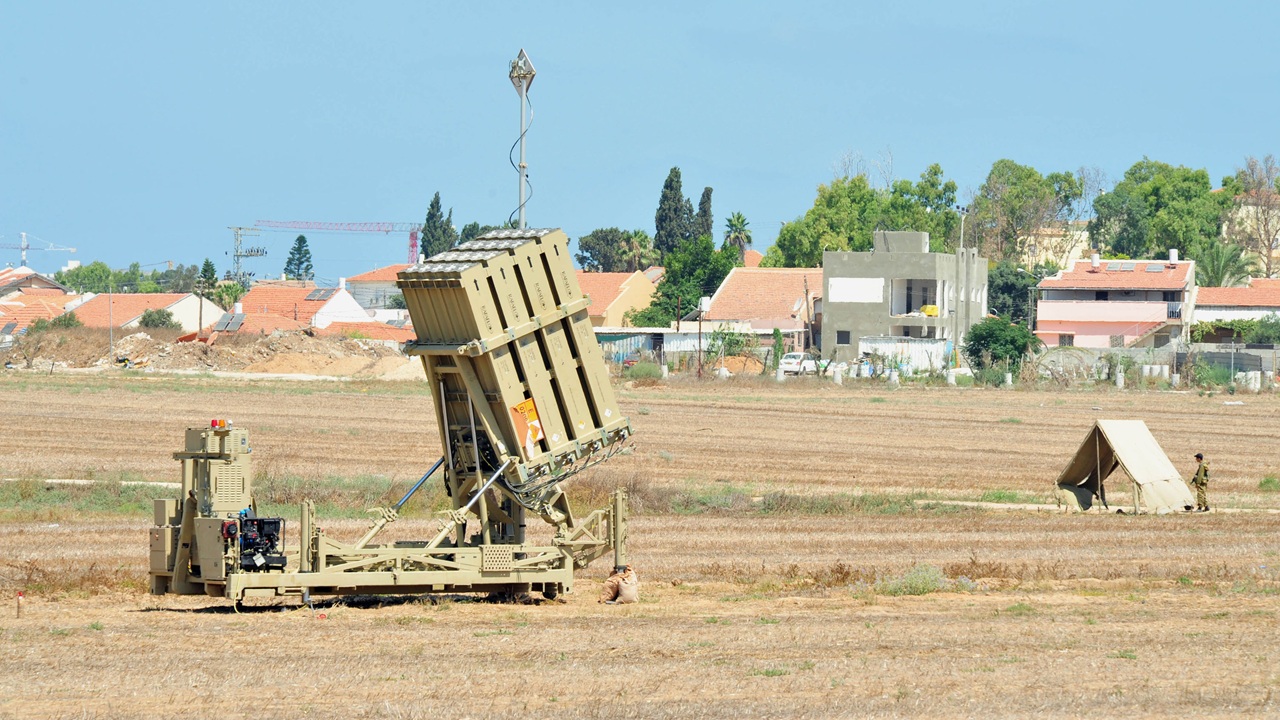
The ongoing military operations against Iran are the second time Israel has gone to war in less than a year. The 12-Day War against Iran during the summer was an intense affair involving all the resources of the IDF. The Israeli Air Force conducted extensive strike operations in Iran, launching hundreds of munitions. At the same time, Israel’s air defense system, particularly the famous Iron Dome short-range layer, expended hundreds of interceptors in an effort to shield urban centers from incoming Iranian ballistic missiles and one-way attack unmanned aerial systems.
As a result of its efforts in June 2025, Israel went into the current war with depleted munition stocks.
During a visit to the Rafael facility, Baram stated that the “historic achievements” in Iran are partly the result of the country’s defense industry.
“Decades of research, development, and testing have provided the State of Israel with groundbreaking capabilities unmatched by any other nation,” he said.
Although the Israeli defense official exaggerated in saying that no other nation rivals Israel’s defense production capabilities—indeed, it receives billions of dollars in military assistance from the United States every year—he was not wrong to highlight the importance of the defense industry in sustained operations against conventional adversaries.
Defense Acquisitions Is a Real Challenge—Large or Small
The war against Iran highlights the importance of a streamlined defense acquisition policy and the need for a robust defense industry that can meet the demands of sustained, large-scale operations. This is an important lesson for the US military as well.
For over 20 years, the US engaged in military operations against insurgents and terrorists in the Middle East and Africa. Operations against weaker enemies did not put real strain on the Pentagon’s readiness and defense acquisition process. But operations against an adversary with a proper military, regardless of whether that military is weaker, drain resources at a much faster rate. Operations against a near-peer adversary, such as China or Russia, will be the real test.
About the Author: Stavros Atlamazoglou
Stavros Atlamazoglou is a seasoned defense journalist specializing in special operations and a Hellenic Army veteran (national service with the 575th Marine Battalion and Army HQ). He holds a BA from the Johns Hopkins University and an MA from the Johns Hopkins’ School of Advanced International Studies (SAIS). His work has been featured in Business Insider, Sandboxx, and SOFREP.
The post Israel’s Defense Industry Is Preparing for a Long-Term War appeared first on The National Interest.
Источник: nationalinterest.org