

«Данное сообщение (материал) создано и (или) распространено иностранным средством массовой информации, выполняющим функции иностранного агента, и (или) российским юридическим лицом, выполняющим функции иностранного агента»
 Topic: Naval Warfare Blog Brand: The Buzz Region: Middle East Tags: Aircraft Carriers, Iran, Iran War, Operation Epic Fury, United States, US Navy, and USS Gerald R. Ford (CVN-78) Why the USS Gerald R. Ford Was Perfect for Operation Epic Fury March 8, 2026 By: Harrison Kass
Share
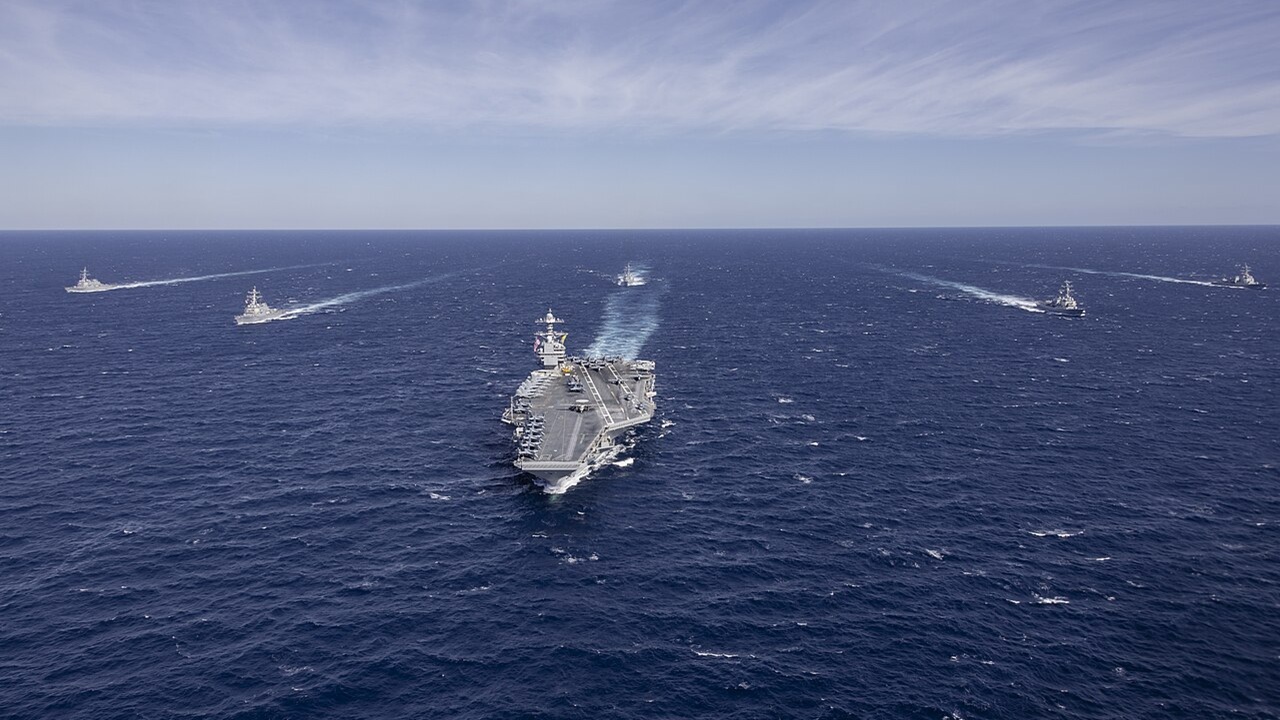
The Ford is now stationed in the eastern Mediterranean, but its air wing is well within reach of Iran.
Used in Operation Epic Fury to launch F/A-18E/F Super Hornets and F-35C Lightning II jets, the USS Gerald R. Ford (CVN-78) is the lead ship of the US’s newest carrier class. The first new carrier design in decades, since the Nimitz-class debuted in the 1970s, the Ford is intended to anchor US naval air power through the mid-21st century, serving as a symbol of both American industrial ambition—and procurement controversy.
The Ford Class Is the Most Powerful Aircraft Carrier Ever Built
- Year Commissioned: 2017
- Length: 1,106 ft (337 m)
- Beam (Width): 256 ft (78 m)
- Displacement: ~100,000 long tons (112,000 t)
- Propulsion: Two Bechtel A1B PWR nuclear reactors; four propeller shafts
- Top Speed: ~30 knots (35 mph, 56 km/h)
- Range: Unlimited; approx. 25 years before nuclear refueling
- Armaments: Two RIM-162 ESSM launchers; two RIM-116 RAM launchers; three Phalanx CIWS systems; four Mk 38 25mm machine guns; four .50 caliber machine guns
- Crew: 4,539, including air wing
The Ford improves on its predecessor Nimitz class in multiple ways. The most prominent of these is its EMALS (Electromagnetic Aircraft Launch System) aircraft launching systems, which replaces steam catapults. The EMALS system offers a smoother launch profile, adjustable power settings, and (theoretically) creates less stress on aircraft. The AAG (Advanced Arresting Gear) is innovative, too, replacing hydraulic arresting gear with digitally controlled energy absorption that is designed to accommodate lighter UAVs and heavier aircraft alike.
The Ford’s nuclear reactors are designed for these launches. Each produces more electrical output than the comparable Nimitz reactors, and were designed to support future high-energy systems—potentially even railguns or directed energy weapons.
The US Navy Is Still Ironing Out the Ford Class
The Ford-class was commissioned because the Nimitz-class hulls, the first of which was commissioned in 1975, are beginning to age out. Lifecycle replacements are becoming unavoidable, prompting the development of new ships. And with a desire to reduce crew size and long-term operating costs, the Navy invested in a new design—something capable of producing the electrical power to support modern and future systems, like directed energy weapons, advanced radar, and EM systems. Ford was also designed with an eye towards a higher sortie generation rate for high-end conflicts.
The core design philosophy centered around efficiency. The flight deck was reconfigured for ease of movement; the weapons elevators were improved; and crews were reduced through automation. The Ford is advertised as having an increased sortie rate relative to Nimitz (with a target increase of 25 percent) and is scheduled to serve for the next 50 years, until around 2070.
But the Ford was loaded with innovative features, which has made the development, and transition period, more trying than expected. Major innovations are myriad. But these have come with a downside: cost overruns and delays plagued the program. Initial projected costs were much lower than the final figure, with the Ford-class lead ship costing roughly $13 billion. EMALS and AAG development issues delayed operational readiness, and the weapons elevator certification was delayed. Arguably, the Ford attempted to jam too much new tech into a single platform all at once, but proponents of the design argue the steep learning curve will be worthwhile in the long run.
The Ford Might Want to Think Twice About Going Near China
The Ford’s use in Epic Fury highlighted the strategic value of the aircraft carrier as a floating sovereign airbase, enabling power projection without host-nation basing. When the Ford was deployed to the Middle East it sent a signal to the region—and gave the US an operational strike option that has been demonstrated repeatedly during the initial phase of Epic Fury.
However, Iran’s ability to retaliate directly against a US super carrier is limited. A stronger adversary, i.e., China, with their A2/AD systems, could severely complicate carrier deployment—potentially raising survivability issues for a ship representing arguably the most concentrated example of military investment in a single platform ever.
About the Author: Harrison Kass
Harrison Kass is a senior defense and national security writer at The National Interest. Kass is an attorney and former political candidate who joined the US Air Force as a pilot trainee before being medically discharged. He focuses on military strategy, aerospace, and global security affairs. He holds a JD from the University of Oregon and a master’s in Global Journalism and International Relations from NYU.
The post Why the USS Gerald R. Ford Was Perfect for Operation Epic Fury appeared first on The National Interest.
Источник: nationalinterest.org