

«Данное сообщение (материал) создано и (или) распространено иностранным средством массовой информации, выполняющим функции иностранного агента, и (или) российским юридическим лицом, выполняющим функции иностранного агента»

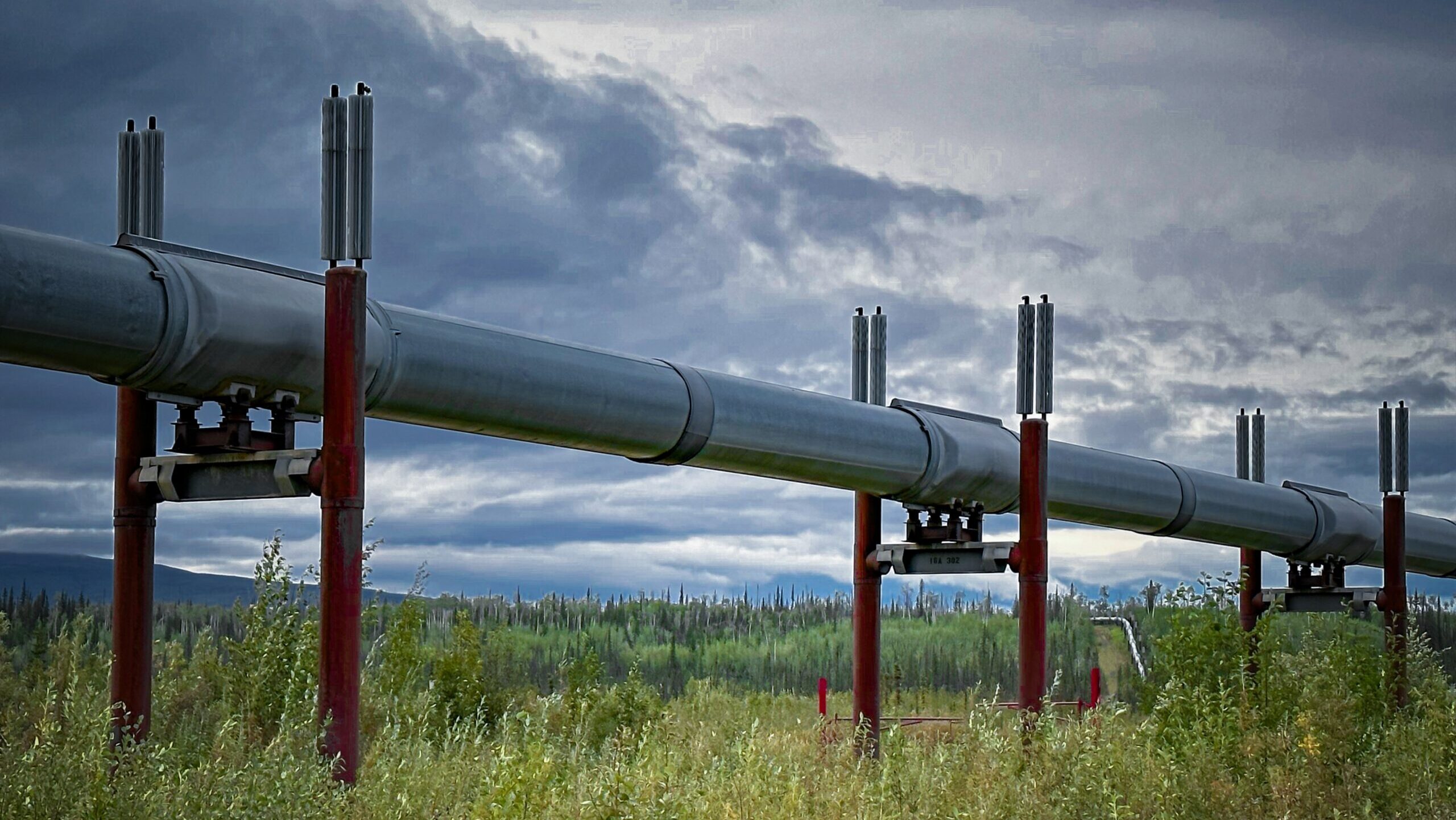
The Trans-Alaska pipeline near the Yukon River Camp in Alaska. South Korea is committed to buying $100 billion worth of US energy products, and President Donald Trump has pushed for South Korean participation in the Alaska LNG project. (Shutterstock/Promenade Pix)
Topic: Oil and Gas Blog Brand: Energy World Region: Americas, and Asia Tags: Alaska, Liquefied Natural Gas (LNG), North America, South Korea, Tariffs, and United States Trade Optics Versus Market Fundamentals: Can US LNG Win in South Korea? March 3, 2026 By: Anne-Sophie Corbeau
Share
South Korea’s $100 billion US energy pledge is achievable, but contracting significant volumes of US LNG may conflict with domestic long-term decarbonization targets.
With 65 billion cubic meters (bcm) imported in 2025, South Korea ranks as the third-largest liquified natural gas (LNG) importer, behind China and Japan. Yet, only a small fraction of these volumes came from the United States. Given the sheer scale of its LNG demand, the country represents a significant potential prize for US LNG exporters. Under the bilateral trade deal concluded in mid-2025, South Korea agreed to purchase “up to $100 billion worth of US energy products,” but that does not automatically translate into new LNG contracts.
A Growing but Highly Concentrated LNG Market
Like Japan, South Korea is almost fully dependent on LNG imports. Unlike its neighbour, however, South Korea’s LNG imports have increased by around 40 percent over the past decade, driven by rising electricity demand and the gradual decline in coal-fired generation. More than half of total gas consumption is consumed in the power sector.
The market remains heavily concentrated. State-owned Korea Gas Corporation (KOGAS) imports the majority of LNG. However, the share of private importers such as SK E&S and POSCO, which procure LNG for their own power and industrial use, has steadily increased. Although these companies cannot resell into the wholesale market, they represented a chunky quarter of LNG imports in 2025.
Diversification is central to South Korea’s import strategy, given its complete dependency on imports and recent supply shocks. In 2025, South Korea imported LNG from 21 of the 26 exporting countries active worldwide. Nevertheless, supply remains partly concentrated: 63 percent of imports came from just three countries (Australia, Qatar, and Malaysia), mostly under long-term contracts. That may call for further diversification at a time when the world is looking once again at oil and LNG transiting through the Strait of Hormuz. Meanwhile, the United States accounted for only 9 percent of South Korea’s LNG imports in 2025‚—a relatively minor share given that it represents one-quarter of global LNG exports.
South Korea’s $100 Billion Energy Commitment: Substance vs Optics
In 2024, the US trade deficit with South Korea reached $66 billion, prompting President Donald Trump to impose a 25 percent tariffon South Korean exports. A trade agreement reached in July 2025 reduced tariffs to 15 percent and included commitments by South Korea to purchase $100 billion worth of US energy and invest $520 billion in the United States ($150 billion in US shipbuilding and $200 billion in other specific sectors).
The $100 billion energy pledge appears more impressive than it really is. This agreement spans four years, covers all forms of energy—oil, liquified petroleum gas (LPG), and LNG. Unlike the European Union’s (EU) unrealistic commitment, South Korea’s pledge appears within reach. According to the Korea International Trade Association, South Korea imported around $93.2 billion worth of US energy between 2021 and 2024, implying an incremental increase of only $6.8 billion over the next four years.
As in the EU’s case, there is a strong focus on LNG. Prior to 2025, South Korean companies had signed only three 20-year LNG contracts with US exporters: KOGAS and POSCO with Cheniere and SK E&S with Freeport, respectively. While the trade agreement does not formally require new LNG contracts, it creates political momentum for expanding US LNG procurement. In 2025, POSCO signed a heads of agreement (HoA) for 1 million tonnes per annum (mtpa) from Alaska LNG over 20 years, while KOGAS signed a 10-year supply agreement with Trafigura for 3.3 mtpa (mostly from US LNG sources), and in 2026, Hanwha Aerospace signed a 20-year supply agreement with Venture Global for 1.5 mtpa. Combined, existing and new agreements would represent almost 12 mtpa, around one-quarter of Korea’s current LNG demand.
The Alaska LNG Project: Strategic Priority, Commercial Uncertainty
The Alaska LNG project has been a key priority for President Trump. Although the trade deal does not formally include Alaskan LNG purchases nor participation in the 807-mile pipeline bringing gas from the North Slope to Southcentral Alaska, the US administration has strongly pushed Northeast Asian countries (and companies) to support the project, citing geographic proximity and improved supply security.
Beyond the HoA signed late 2025, POSCO will supply steel for the pipeline, and has made a pre-Final Investment Decision (FID) in the project. However, most Korean companies, like their Japanese peers, question the economics of the project. The estimated cost of $44 billion predates the introduction of tariffs on steel. Additionally, the project’s remote location and the scale of pipeline construction make it likely that the project will face delays and cost overruns, similar to those experienced in Australia a decade ago.
South Korea’s Divergent Trajectories: Long-Term LNG Demand and Rising Commitments
In 2025, South Korea unveiled its 11th Basic Plan for Electricity Supply and Demand to 2038. The plan anticipates a continuous increase in power demand, growing by about 20 percent from 2023 levels. Meanwhile, it also expects a sharp increase in carbon-free generation (nuclear and renewables) from 39.1 percent in 2023 to 53 percent in 2030 and to 70.7 percent in 2038. This would result in gas-fired generation halving from approximately 158 terrawatt hours (TWh) in 2023 to 74 TWh by 2038. Such targets may prove optimistic: this implies the doubling of renewables deployment against past trends, new nuclear construction, and the scale-up in ammonia and hydrogen (to 46 TWh), but the strategic direction is clear: a reduction in fossil fuel generation during the 2030s.
South Korea Is Still Committed Despite the Supreme Court’s Decision on Tariffs
In the days after the Supreme Court’s decision to invalidate the tariffs that President Trump put in place in 2025, representatives of the Korean government indicated the intention to still move ahead with the planned $350 billion investment. However, like many other governments in the world, the country is now closely monitoring future US tariff developments.
About the Author: Anne-Sophie Corbeau
Anne-Sophie Corbeau is a global research scholar at Columbia University’s Center on Global Energy Policy, where she leads the Center’s research on hydrogen and natural gas, and is a visiting professor at SciencesPo.
The post Trade Optics Versus Market Fundamentals: Can US LNG Win in South Korea? appeared first on The National Interest.
Источник: nationalinterest.org