

«Данное сообщение (материал) создано и (или) распространено иностранным средством массовой информации, выполняющим функции иностранного агента, и (или) российским юридическим лицом, выполняющим функции иностранного агента»

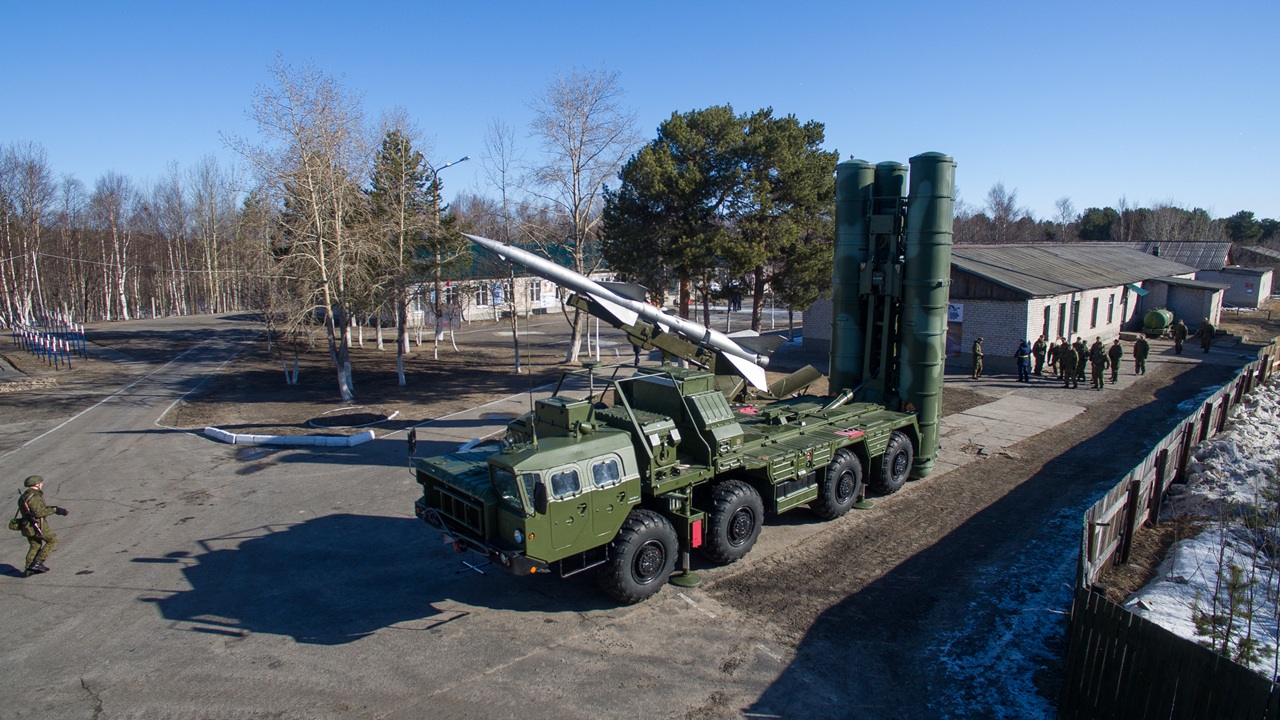
An S-400 “Triumf” anti-air missile battery on display in Severodvinsk, Russia, in April 2017. The S-400 is Russia’s premier air defense system. (Shutterstock/Kuleshov Oleg)
Topic: Air Warfare Blog Brand: The Buzz Region: Americas Tags: A2/AD, Air Defense, China, Russia, Surface-to-air Missiles, and United States What Exactly Is an “Integrated Air Defense System”? March 1, 2026 By: Harrison Kass
Share
IADS systems are the backbone of “anti-access/area denial” (A2/AD) networks, which all major world powers are pursuing in order to defend their airspaces.
An Integrated Air Defense System (IADS) is sometimes imagined by outsiders as merely a collection of missiles covering a certain area. In truth, a modern IADS is far more.
Designed to detect, track, and destroy aircraft, cruise missiles, and sometimes ballistic missiles, a modern IADS is a networked defensive ecosystem that combines radars, surface-to-air missiles (SAMs), command-and-control (C2), and electronic warfare. In high-end conflict, defeating the enemy’s IADS is often the first objective of any air campaign.
The Core Components of an Integrated Air Defense System
The core components of an IADS system are its sensors, SAMs, C2, and electronic warfare systems.
- Sensors: Sensors are the eyes of the system and themselves include various components. Early warning radars enable long-range detection, tracking aircraft hundreds of miles out. Fire control radars offer precision tracking and guide missiles to the target. Passive sensors detect emissions and have the benefit of being harder to jam. Modern IADS may also incorporate airborne early warning aircraft and over-the-horizon radar.
- Surface-to-Air Missiles: SAMs typically use a layered defense model. Long-range systems, like the S-300/S-400 are paired with medium-range systems, and short-range point defense systems. Combined, the various range systems provide a more comprehensive coverage. Some systems are mobile, too, increasing resilience, reducing vulnerability to counterstrikes. Modern missiles are active radar seeks with high maneuverability and extended range envelopes, making SAMs a deadly component of modern IADS.
- Command and Control: C2 is the integration layer, where sensor data is fused and targets are assigned. This prevents redundancy, enabling coordinated engagement and efficient use of interceptors. Without C2 integration, air defenses would become isolated batteries rather than a coherent network.
- Electronic Warfare: Electronic warfare is the final component of an IADS system’s operation, enabling jamming, radar deception, and false target generation. EW is designed to confuse incoming aircraft and complicate missile guidance, improving the IADS network’s survivability.
When put together, the IADS works in tandem. Early warning radar detects an inbound aircraft; the data is transmitted to a central command node; the target is assigned to the optimal SAM battery; fire control radar locks on, and the missile is launched; and other batteries remain passive in order to preserve survivability against aerial threats.
How Can Modern Air Forces Beat IADS?
Modern IADS is increasingly mobile and increasingly networked. Data fusion enhances the lethality of the system, aided through integration with fighter aircraft and ballistic missile defense. Many countries are investing heavily in modern IADS, including Russia, China, and Iran. Indeed, A2/AD strategies are built around dense IADS.
To defeat IADS, air forces must rely on SEAD (Suppression of Enemy Air Defenses) or DEAD (Destruction of Enemy Air Defenses). Tactics for defeating IADS systems include anti-radiation missiles, which detect radar and home in on it, blinding IADS; stand-off cruise missiles, which can be fired from beyond the range of IADS SAMs; electronic jamming; stealth penetration; and cyber disruption. The first 72 hours of a conflict are often heavily focused on IADS neutralization.
Strategically, IADS changes the air power calculus, raising the cost of entry and forcing stand-off warfare. Dense IADS can protect strategic assets and delay air superiority. But IADS is also resource intensive and vulnerable if network nodes are destroyed. IADS is all about integration across sensors and shooters across a network. In other words, the most effective way to disrupt IADS isn’t always destroying an individual launcher, but to disrupt network integration.
Basically, in any major war, IADS is the first obstacle. Air dominance is vital—and air dominance depends on defeating or bypassing IADS. And as missile ranges increase and networking improves, IADS will remain central to great-power competition.
About the Author: Harrison Kass
Harrison Kass is a senior defense and national security writer at The National Interest. Kass is an attorney and former political candidate who joined the US Air Force as a pilot trainee before being medically discharged. He focuses on military strategy, aerospace, and global security affairs. He holds a JD from the University of Oregon and a master’s in Global Journalism and International Relations from NYU.
The post What Exactly Is an “Integrated Air Defense System”? appeared first on The National Interest.
Источник: nationalinterest.org