

«Данное сообщение (материал) создано и (или) распространено иностранным средством массовой информации, выполняющим функции иностранного агента, и (или) российским юридическим лицом, выполняющим функции иностранного агента»
 Topic: Naval Warfare Blog Brand: The Buzz Region: Arctic Tags: Arctic Circle, China, Finland, Icebreakers, Russia, United States, and US Coast Guard Why Do “Icebreaker” Ships Matter So Much? February 1, 2026 By: Harrison Kass
Share
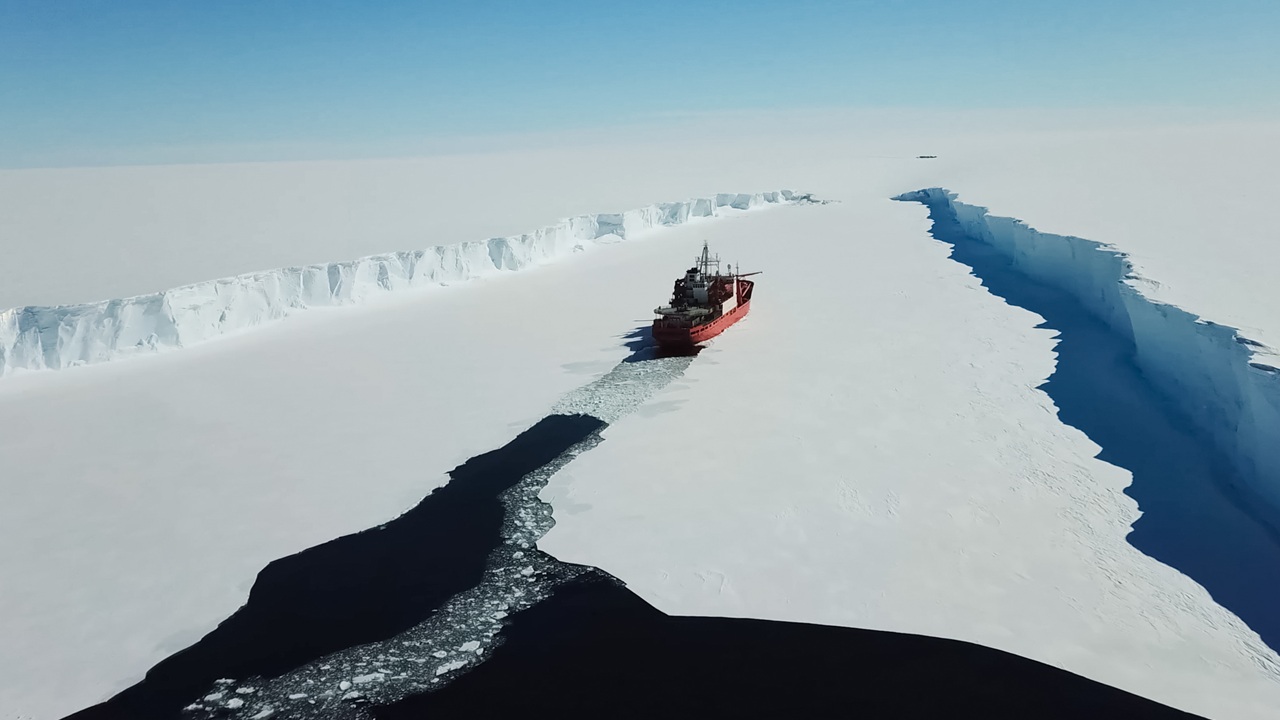
As global warming continues and sea lanes open in the Arctic, the world’s major powers are pouring money into the construction of icebreaker ships.
Icebreaker ships are the unsung enablers of Arctic activity. Without them, polar trade, science, and military presence would be either seasonal or impossible year-round. And as the Arctic ice retreats, icebreakers are only becoming more important, strategic assets rather than niche tools.
What Is an Icebreaker Ship?
An icebreaker is exactly what it sounds like—a specialized ship designed to operate in ice-covered waters. It breaks ice by riding up onto the ice and crushing it with its weight. The ship’s hull is reinforced, designed for strength on ice, rather than to cut through the water like a conventional ship. The ability to move through ice gives icebreakers the unique opportunity to navigate, escort, and access areas that normal vessels could not get to on their own.
Early icebreakers emerged in the late 19th century for polar exploration and trade. The vessels became strategically important during World War II and the Cold War, when the Soviet Union invested heavily to support Arctic shipping and northern bases. After the Cold War, there was a lull in icebreaker activity—until recently, when climate change and shifting geopolitics have renewed interest and reliance on the technology.
How Are Icebreakers Different from Regular Ships?
From a technical perspective, icebreakers feature a hull of thick, reinforced steel, with a sloped bow that rides up on the ice. For propulsion, high torque at low speed is used. Some models even feature nuclear power for virtually unlimited endurance.
Different icebreakers have different ice class ratings, which define how thick and dense the ice through which the ship can break is. Regardless of the model or ice class ratings, icebreakers are built for strength, not speed.
What Are Icebreakers Used For?
Icebreakers are used for a variety of Arctic tasks, including:
- Escorting commercial ships through otherwise impenetrable ice;
- Supporting scientific research and climate monitoring;
- Supplying remote Arctic communities;
- Enabling naval and coast guard presence; and
- Search and rescue in polar regions (in emergency scenarios, and in coordination with other tools such as aircraft).
All the Great Powers Have Invested in Icebreakers
Owing to its vast size and position along the Arctic, Russia has by far the world’s largest icebreaker fleet—with dozens of ships, including nuclear-powered heavy icebreakers. Russian icebreakers form the backbone of Arctic shipping along the Northern Sea Route. The United States has a small fleet by comparison, relying heavily on a handful of aging Coast Guard vessels. Canada has a moderate fleet focused on sovereignty patrol and resupply. Finland, another Arctic nation, has a smaller fleet, but is a world leader in icebreaker design and construction. And China, while not bordering the Arctic, is investing in its own icebreaker fleet, sending a clear signal of the perceived importance of Arctic operations in the future. In short, the world’s leading nations recognize that without icebreaking support, surface ships cannot patrol year-round and logistics chains collapse.
Strategically, control of the Arctic routes depends on icebreaking capacity. So icebreakers serve to underpin territorial claims, resource extraction, and freedom of navigation. Disparities in icebreaker fleets translate directly into geopolitical leverage. And in the future, as melting ice increases traffic, the need for icebreakers will only increase; demand will rise for heavier icebreakers and dual-use civilian/military platforms. Icebreakers will increasingly be viewed as infrastructure vessels, not just a luxury capability.
While icebreakers don’t project power directly, they do make power projection possible. As the Arctic opens, nations without icebreakers will remain spectators in an increasingly vital region.
About the Author: Harrison Kass
Harrison Kass is a senior defense and national security writer at The National Interest. Kass is an attorney and former political candidate who joined the US Air Force as a pilot trainee before being medically discharged. He focuses on military strategy, aerospace, and global security affairs. He holds a JD from the University of Oregon and a master’s in Global Journalism and International Relations from NYU.
Image: Shutterstock / LuYago.
The post Why Do “Icebreaker” Ships Matter So Much? appeared first on The National Interest.
Источник: nationalinterest.org