

«Данное сообщение (материал) создано и (или) распространено иностранным средством массовой информации, выполняющим функции иностранного агента, и (или) российским юридическим лицом, выполняющим функции иностранного агента»
 Topic: Air Warfare Blog Brand: The Buzz Region: Middle East Tags: Air Defense, Airstrikes, Iran, Operation Midnight Hammer, Persian Gulf, and United States Could Iran Defend Itself Against American Airstrikes? Here’s What to Know January 31, 2026 By: Harrison Kass
Share
Iran simply cannot maintain total control of its airspace during a US incursion—but its legacy air defense systems are still deadly, and could inflict pain on a reckless attacker.
President Donald Trump’s deployment of the USS Abraham Lincoln near Iran has refocused attention on Tehran’s air defense capabilities. With US airpower massed nearby, how effectively can Iran deter intrusion into their territory? In other words, can its somewhat older air defensive systems stand up to the most sophisticated air power in the world?
What Are Iran’s Air Defenses Good For?
Iran’s air defense posture is designed primarily to deter US and Israeli strikes, raising the costs of attack, rather than denying access outright. Accordingly, Iranian doctrine emphasizes layered defenses, dispersal, and survivability rather than air superiority. Iran would like to be able to control the skies above its own land, but against the United States and Israel, understands that this is likely beyond its capacity. Instead, it aims to complicate strike planning, inflict losses, and delay operations. To that end, air defenses are integrated with missiles, drones, and asymmetric retaliation.
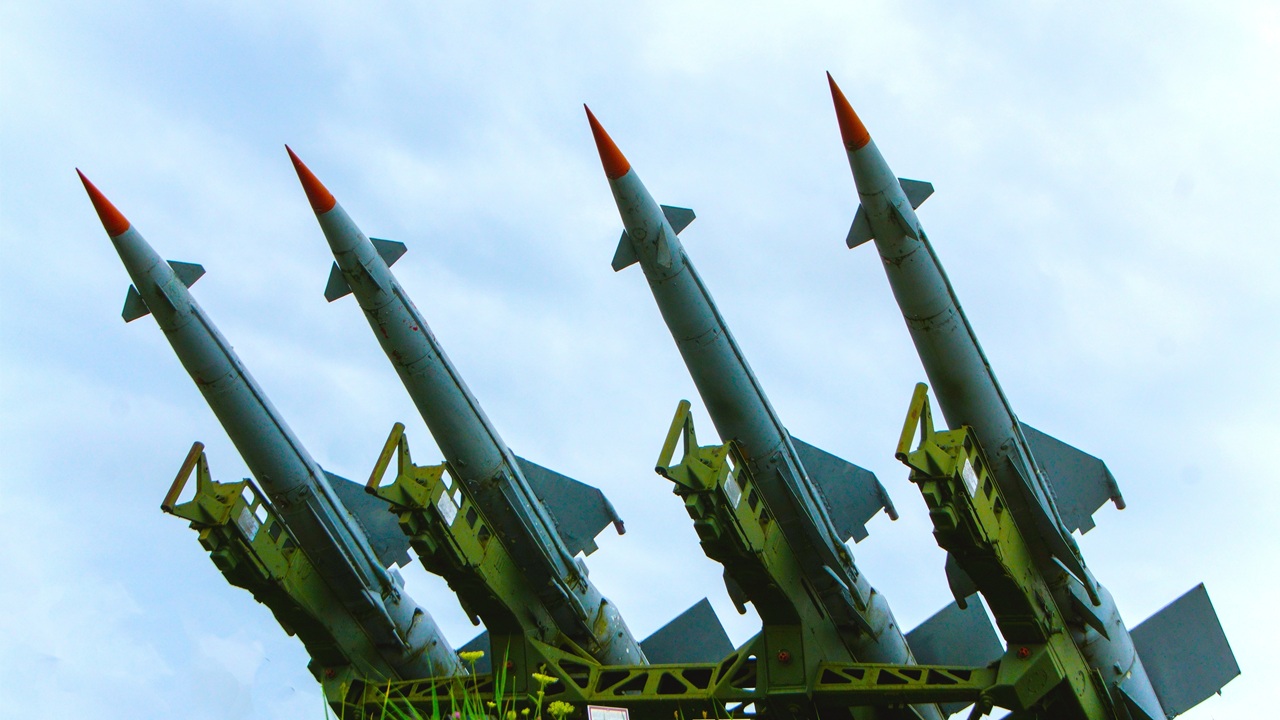
Iran possesses a layered variety of long-, medium-, and short-range defenses. Supplying long-range coverage is the S-300 and Bavar-373 SAM systems. The S-300 was acquired from Russia, providing high-altitude coverage, but is limited in numbers and likely prioritized near key sites. The Bavar-373 is an indigenous system modeled conceptually on the S-300. The system claims long-range engagement capability but the real-world performance remains unproven.
For medium- and short-range defensive coverage, Iran relies on older Soviet-era and Chinese-derived systems, which have received indigenous upgrades over the years, improving their survivability. The shorter range systems are used to protect radar sites, missile batteries, and command nodes. The emphasis with these systems is on redundancy over outright sophistication.
Iran also operates a mix of fixed radars, mobile systems, and passive sensors. The network is designed to detect incursions early and cue missile batteries. But the network is vulnerable to electronic warfare, kinetic suppression, and cyber disruption. Iran has improved the domestic integration of sensors and shooters. But still lacks the seamless fusion seen in Western IADS. Centralized nodes represent potential single points of failure; naturally, US doctrine targets these systems early.
Could Iran’s Air Defenses Actually Shoot Down Any US Planes?
Iran’s air defenses can be successful across a narrow band of objectives. Specifically, Iran can threaten non-stealth aircraft, drones, and cruise missiles; Iran can force attackers to fly complex routes, expend standoff weapons, and conduct extended suppression campaigns. But Iran cannot achieve air superiority or reliably counter stealth aircraft or sustain defense against prolonged US SEAD operations. In sum, the Iranian systems are highly vulnerable once exposed.
The United States would likely focus initial strikes on radar, command centers, and key SAM sites. Stealth aircraft, electronic warfare, and cruise missiles launched from air and sea would be used prominently in the earlier phases of the conflict. The carrier air wing, operating from the USS Abraham Lincoln, would be a part of a broader joint campaign.
Ultimately, Iran’s air defenses are about deterrence through punishment—not outright denial. Even limited success, such as downing a drone, would carry political value; Tehran is counting on escalation risk to constrain US decision-making.
While Iran’s air defenses are formidable regionally, they would be mismatched against US high-end air power. The defensive structure raises the cost of US action—but does not prevent US action. All Iran can do is slow the US down, force them into a more complex attack scheme, and let the political consequences loom large.
About the Author: Harrison Kass
Harrison Kass is a senior defense and national security writer at The National Interest. Kass is an attorney and former political candidate who joined the US Air Force as a pilot trainee before being medically discharged. He focuses on military strategy, aerospace, and global security affairs. He holds a JD from the University of Oregon and a master’s in Global Journalism and International Relations from NYU.
Image: Shutterstock / index74.
The post Could Iran Defend Itself Against American Airstrikes? Here’s What to Know appeared first on The National Interest.
Источник: nationalinterest.org