

«Данное сообщение (материал) создано и (или) распространено иностранным средством массовой информации, выполняющим функции иностранного агента, и (или) российским юридическим лицом, выполняющим функции иностранного агента»
 Topic: Air Warfare Blog Brand: The Buzz Region: Americas Tags: Department of Defense (DoD), Drones, Fuel Cells, Hydrogen, North America, and United States Why the Pentagon Is Eyeing a Hydrogen-Powered Drone January 25, 2026 By: Brandon J. Weichert
Share
A fuel cell-powered drone can operate longer than a battery-powered one, and more quietly than a gas-powered one—giving it a decisive edge in aerial operations.
The United States Defense Innovation Unit (DIU)—one of the absolutely coolest parts of America’s elephantine defense apparatus—recently approved a hydrogen-powered unmanned aircraft system for its Blue CAS Cleared List. This is the highest tier of DIU’s category rankings for unmanned systems in development, ensuring rapid procurement and deployment by the US armed forces.
It is part of an ongoing effort to enhance the American drone warfare capabilities which, in the last decade, have declined significantly when compared to the drone warfare capabilities and tactics of US rivals, notably Russia.
DIU’s Blue UAS program vets drones for cybersecurity, supply-chain safety, and rapid fielding, according to the Defense Innovation Unit’s official page.
Meet the Z1: The Hydrogen Drone the Pentagon Now Trusts
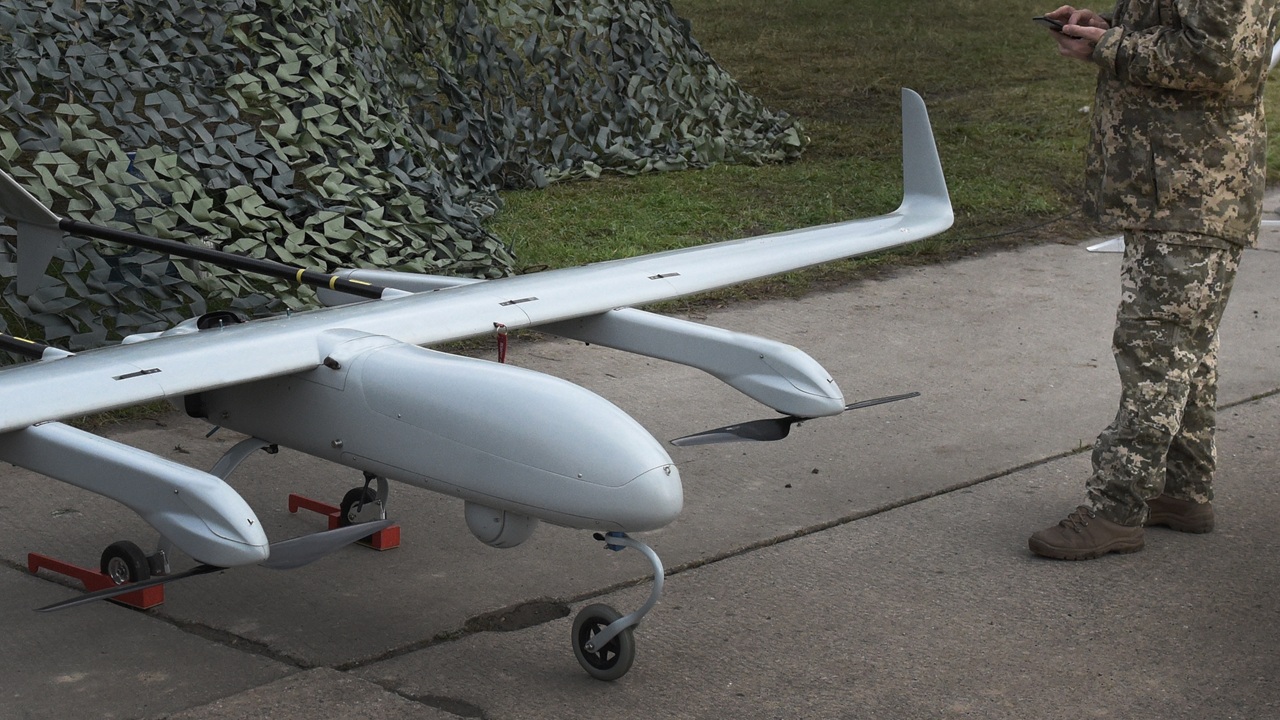
That’s why the Israeli drone startup, Heven AeroTech, is stunning the world with its new Z1, a hydrogen fuel cell-powered drone. What it means, quite frankly, is that the DIU is convinced that the underlying hydrogen fuel cell technology for the Z1 is sound. They have assessed that the hydrogen fuel cell technology powering this innovative new drone prototype is safe, reliable, and scalable.
Defense Scoop, an industry trade publication, reports that the Z1 has up to 10 hours of endurance on a single hydrogen fuel cell. That’s significantly more than most batteries, and quieter, with a lower thermal signature than combustion engines. The Z1 possesses vertical takeoff and landing (VTOL) and can be quickly deployed in under five minutes. What’s more, it has a payload capacity of under ten pounds, with much of that weight coming from its modular sensor and communications gear.
The reason why the DIU’s embrace of the Z1 is so important is because of that hydrogen fuel cell. That technology, if it works as well as the DIU believes, will extend the mission endurance of the Z1 drone without burdening America’s already strained logistical supply chain. That’s because, unlike a battery-powered drone, the units employing the Z1 would not need to halt operations, return the drone to base, and swap out the batteries once they were depleted.
Further, the Z1 is ultra-quiet because of that hydrogen fuel cell, and the heat its systems give off is far lower than other drones in use today.
Hydrogen Changes the Drone Endurance Equation
Hydrogen is a magnificent fuel source because it ensures operational endurance and the batteries that utilize hydrogen allow for bursts of operation that won’t drastically drain that fuel source the way conventional power is drained by modern drones operating on the battlefield. Beyond that, hydrogen’s high energy per unit mass and cooling properties ensure thermal management—this thing doesn’t glow like a rocket on thermal scanners—while operating at supersonic speeds.
That’s a huge advantage for future reconnaissance/rapid strike platforms.
Meanwhile, a recent report in Interesting Engineering further highlights the uniqueness of this development. Alongside the embrace of the Z1 by the DIU (and the wider military), comes a mobile, self-sustaining hydrogen production and refueling station. This system can keep drones operational in austere environments for many months without the need for traditional fuel or even the logistics that sustains current drone operations.
It’s called a “nanogrid solution,” which is a very small, self-contained energy and power system designed to operate independently from a larger electrical grid. This is a low-signature technology, which is great for operating near frontlines during conflict. There are no loud generators, a minimal thermal plume, and reduced electromagnetic emissions. In other words, it’s perfect for special operations and intelligence, surveillance, and reconnaissance (ISR) missions.
Think about it for a moment. US forces operating in contested zones in the Indo-Pacific, or in the Arctic, or even the Middle East, could easily employ these systems anywhere for any period of time, and have reliable drone operations with minimal threat of counterattack against these mobile stations. Such a system could refuel drones constantly and could even support 24/7 ISR operations.
Solar Power, Water Vapor, and On-Demand Hydrogen
This mobile, self-sustaining hydrogen production/refueling station engages solar panels to power an onboard electrolyzer. That electrolyzer then harvests atmospheric moisture, producing hydrogen fuel on demand. From there, the hydrogen is stored in sold-state tanks and used to refuel hydrogen drones like the Z1.
If the system works as advertised, the United States is poised to revolutionize drone warfare—one of the most crucial parts of modern warfare—in a serious way.
Of course, it isn’t only the Americans who are getting involved in this project. A European aerospace company unveiled its own hydrogen-fueled supersonic prototype, the Destinus-3, at the Paris Air Show. Using a liquid hydrogen both as fuel and as a pre-coolant to help turbojets operate efficiently, this drone can travel at near-hypersonic speeds, giving the Europeans a truly competitive hydrogen-powered prototype drone.
If the European Destinus-3 project is successful, this system could eventually bridge the gap between turbojets and ramjets, thereby offering efficient, high-speed flight, as per an analysis by the National Defense Magazine.
The European Destinus-3 prototype possesses a larger airframe than typical drones, it signals hydrogen’s broader aerospace promise beyond endurance UAVs.
All in all, hydrogen is gaining traction because hydrogen fuel cells offer significantly longer endurance for UAVs and robots, making them appealing for persistent ISR. Lower acoustic and thermal signatures reduce detectability compared to combustion power. What’s more, the mobile nanogrids remove dependence on vulnerable supply chains, enhancing the usefulness, and lethality, of drones.
About the Author: Brandon J. Weichert
Brandon J. Weichert is a senior national security editor at The National Interest. Recently, Weichert became the host of The National Security Hour on America Outloud News and iHeartRadio, where he discusses national security policy every Wednesday at 8pm Eastern. Weichert hosts a companion book talk series on Rumble entitled “National Security Talk.” He is also a contributor at Popular Mechanics and has consulted regularly with various government institutions and private organizations on geopolitical issues. Weichert’s writings have appeared in multiple publications, including The Washington Times, National Review, The American Spectator, MSN, and the Asia Times. His books include Winning Space: How America Remains a Superpower, Biohacked: China’s Race to Control Life, and The Shadow War: Iran’s Quest for Supremacy. His newest book, A Disaster of Our Own Making: How the West Lost Ukraine is available for purchase wherever books are sold. He can be followed via Twitter @WeTheBrandon.
Image: Shutterstock / Bumble Dee.
The post Why the Pentagon Is Eyeing a Hydrogen-Powered Drone appeared first on The National Interest.
Источник: nationalinterest.org