

«Данное сообщение (материал) создано и (или) распространено иностранным средством массовой информации, выполняющим функции иностранного агента, и (или) российским юридическим лицом, выполняющим функции иностранного агента»
 Topic: Space Blog Brand: The Buzz Region: Americas Tags: China, Department of Energy (DOE), Moon, NASA, and Nuclear Power Could NASA Put Nuclear Power on the Moon? It’s Not That Crazy January 24, 2026 By: Brandon J. Weichert
Share
Sustainable nuclear power, and an internet connection from the moon to Earth, are vital precursor components to a permanent lunar settlement.
America has (finally) formally committed to deploying a nuclear fission reactor on the lunar surface by the year 2030. This is being crafted via a renewed partnership between NASA, now under the leadership of former SpaceX astronaut Jared Isaacman, and the United States Department of Energy.
About NASA’s “FSP” Nuclear Moonshot
This reactor effort is known as “Fission Surface Power” (FSP). It is meant to deliver continuous, reliable electricity for long-duration lunar operations—something that solar power alone cannot provide during the moon’s 14-day-long lunar night.
The system in question is a compact, modular fission reactor—likely providing 10-40 kilowatts initially, with a scalability of around 100 kilowatts over time. This is part of a broader effort by the United States to build the infrastructure needed to support a permanent American astronaut presence on the moon.
Frankly, it’s a long time coming. There are many details to work out, of course. But the fact that NASA finally has an administrator (as well as a president in the White House) who is a builder and doer rather than a professional talker, these long-delayed plans are finally gaining traction.
And it couldn’t come at a better time. After all, since the end of the Cold War, U.S. space policy has been listless.
Now that there are other powers on Earth that are seeking to dominate space—notably China, which plans to permanently occupy the moon and deny it to others—this initiative may be the last chance Washington has for maintaining its winnowing lead over China.
Fission Surface Power: The Backbone of a Permanent Lunar Base
The compact, modular fission reactor can operate for years without the need for refueling. It works independent of sunlight, dust, or temperature swings. The system is designed to be assembled on Earth and activated on the moon. Such a system would support habitats, life-support, in-situ resource utilization (ISRU) mining, and defense systems (yes, you heard that right).
With this ambitious project, Isaacman is leading his agency away from the stagnation of bureaucracy that had come to define its operations and to the risk-taking, trailblazing work of earlier generations at NASA. For example, this project is akin to NASA’s historic work in developing radioisotope systems and microreactors.
Such programs that NASA since the end of the Cold War had deprioritized in favor of “safe” satellite operations and redundant visits to the aging International Space Station (ISS) in low-Earth orbit (LEO).
At its peak, America’s space program was a true innovator. The technology it developed to support the complexity of manned spaceflight operations spawned a bevy of unpredictable—highly successful—technologies in the civilian sector that we still take for granted today. Technologies that could have only been conceived of because of the experience with the manned spaceflight exploration program.
Toward that end, the utilization of a small, modular nuclear fission reactor on the moon might be the added push that the small modular nuclear reactor industry—a growing industry in its own right—needs to become a viable endeavor on Earth. This technology has promised to streamline and enhance the world’s energy usage.
Sadly, the industry remains very niche. Just as with so many things that NASA used for space exploration over the decades—notably during its heyday in the Apollo era—this mission could give the small modular nuclear industry a real boost that it otherwise might not have gotten.
“Flags and footprints” is the way that NASA describes its previous lunar mission objectives during the Apollo era. That has been replaced with an explicit mission of permanent human presence. And permanent human presence requires stable baseload power.
Mining operations of the kind NASA intends their astronauts to pioneer while living on the moon are all energy intensive. What’s more, military-relevant infrastructure (tracking, communications, navigation) cannot go dark for two weeks at a time.
China’s “No-Go” Zones on the Moon
The unspoken fear of Washington is that China and Russia are intended to deploy their own nuclear reactor first. The Chinese are well-positioned to do so, and they could easily bring their Russian “friends” along for the ride.
The Trump administration rightly fears that the Chinese (and Russians) might establish “no-go zones” around critical terrain on the lunar surface. Indeed, the leader of China’s lunar program, Ye Pejian, in 2019, implied that this was precisely what China would do if given the opportunity.
Beijing and Moscow have already announced joint plans to place a reactor on the moon in the 2033-35 timeframe, as part of their International Lunar Research Station concept. Isaacman is pushing for a 2030 timeframe to deliberately beat the Sino-Russian alliance to the moon.
Not everyone is convinced this is a realistic timeline. Critics of the ambitious plan highlight that there has been significant slippage in the Artemis schedule. There are also concerns that the budget for such a mission is highly uncertain.
Meanwhile, there are complications to launch and integration challenges for such a reactor (even though it is much smaller than traditional nuclear reactors). What’s more, there are environmental concerns about placing a nuclear reactor—however small—on the moon.
The Internet Comes to the Moon
Another related endeavor is the quest to establish reliable Wi-Fi…on the moon. NASA has been working with Nokia Bell Labs to deploy the first-ever cellular network on the moon. The first real test of this project is the Intuitive Machines’ IM-2 mission, wherein Nokia will demonstrate a 4G/LTE link between a lunar lander and surface rovers.
NASA wants 4G internet rather than something more modern simply because it’s a tried-and-true system. No need to get overly complicated with something more advanced that might fail. This will be, after all, a proof-of-concept. Fourth-Generation internet is a proven, reliable, and power-efficient internet. The hardware already exists and can be adapted for the rugged terrain of the lunar surface.
Once established, the 4G internet can ultimately be scaled to 5G and, eventually, beyond.
According to a report from the BBC, future lunar operations will require local, high-bandwidth, low-latency communications—a lunar internet—not just one-off, garbled, unreliable radio signals like the Apollo astronauts had.
This is also connected to the Artemis program. Fourth-generation internet on the moon would allow for continuous communications during the 14-day lunar night, local networks independent of Earth’s line-of-sight communications will increase efficiency of lunar operations, too.
Beyond that, the presence of US-made 4G internet creates vital command-and-control infrastructure. It enables coordination of surface and orbital systems. And it establishes technological norms that other visitors to the moon will have to follow.
Consider this: the United States in the 1940s built the global infrastructure supporting telecommunications. That fact has given the US intelligence and military apparatus unprecedented (unspoken) advantages over its rivals today.
The United States could repeat that by being the first one to develop reliable lunar communications infrastructure.
Put simply, without lunar internet and without a small, modular nuclear reactor on the moon, there is little chance for a permanently manned lunar base. With these two programs, it is obvious that the Trump administration is dedicated to a permanent American presence on the moon…and getting there well before the Chinese (and Russians) can arrive.
About the Author: Brandon J. Weichert
Brandon J. Weichert is a senior national security editor at The National Interest. Recently, Weichert became the host of The National Security Hour on America Outloud News and iHeartRadio, where he discusses national security policy every Wednesday at 8pm Eastern. Weichert hosts a companion book talk series on Rumble entitled “National Security Talk.” He is also a contributor at Popular Mechanics and has consulted regularly with various government institutions and private organizations on geopolitical issues. Weichert’s writings have appeared in multiple publications, including The Washington Times, National Review, The American Spectator, MSN, and the Asia Times. His books include Winning Space: How America Remains a Superpower, Biohacked: China’s Race to Control Life, and The Shadow War: Iran’s Quest for Supremacy. His newest book, A Disaster of Our Own Making: How the West Lost Ukraine is available for purchase wherever books are sold. He can be followed via Twitter @WeTheBrandon.
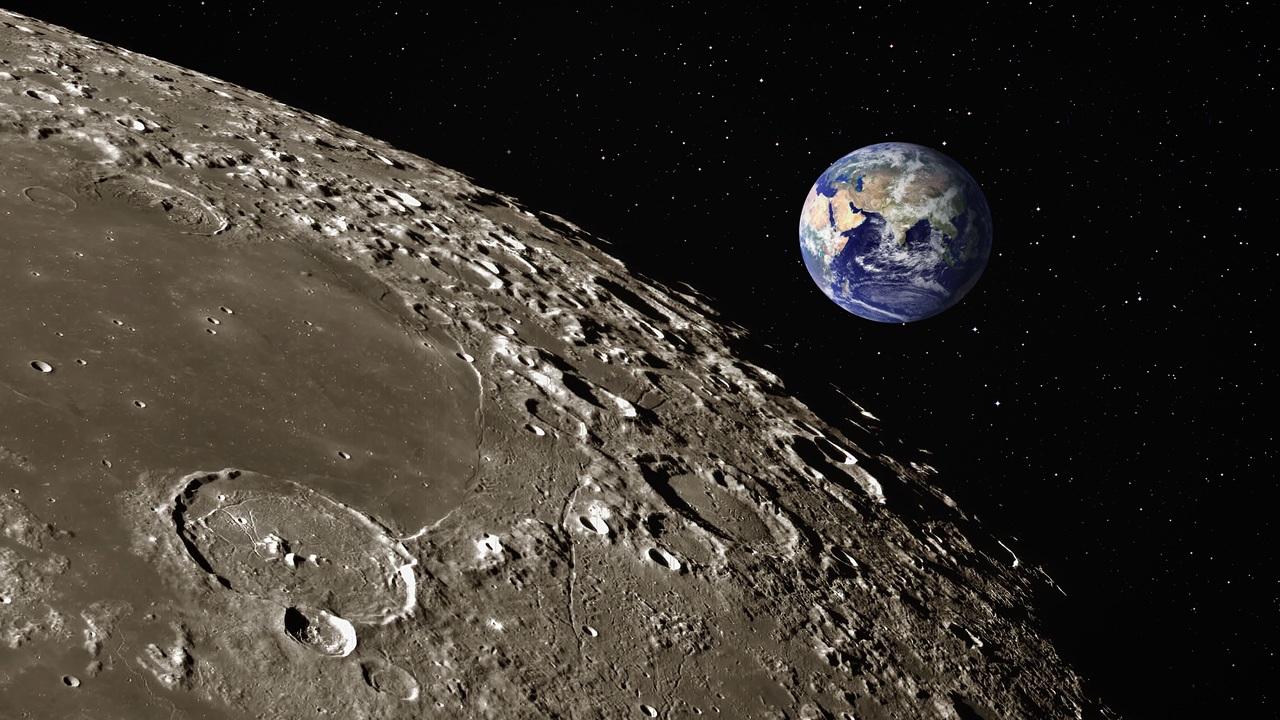
Image: Shutterstock / muratart.
The post Could NASA Put Nuclear Power on the Moon? It’s Not That Crazy appeared first on The National Interest.
Источник: nationalinterest.org