

«Данное сообщение (материал) создано и (или) распространено иностранным средством массовой информации, выполняющим функции иностранного агента, и (или) российским юридическим лицом, выполняющим функции иностранного агента»
 Topic: Diplomacy, Land Warfare, and Terrorism Blog Brand: Middle East Watch Region: Middle East Tags: Israel, MENA, Mohammed bin Salman (MbS), Muslim Brotherhood, Pakistan, Saudi Arabia, Sudan, United Arab Emirates, United States, and Yemen Why Is Saudi Arabia Abandoning Peace? January 23, 2026 By: Hussain Abdul-Hussain
Share
In the last few months, Riyadh has turned away from US-aligned partners in the Middle East.
Saudi Arabia is undergoing a major regional realignment, abandoning the pursuit of an integrated Middle East with a thriving knowledge economy and dusting off the kingdom’s old rhetoric against Zionism and in favor of the Muslim Brotherhood. Last week, Saudi Arabia went as far as lobbying President Donald Trump to spare the Iranian regime, Riyadh’s archrival since 1979.
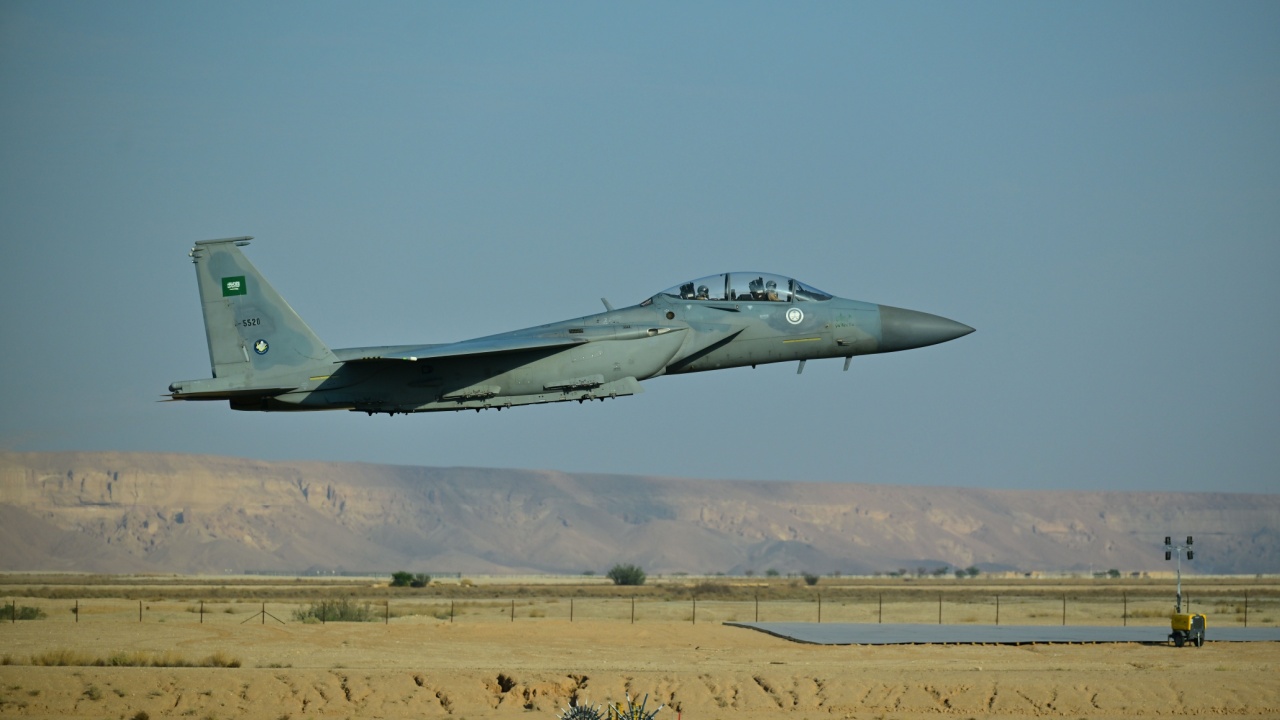
This followed Saudi Arabia’s parting ways with the United Arab Emirates (UAE) over Yemen. The Saudi air force struck Emirati assets and paved the way for its Yemeni allies—mainly the Muslim Brotherhood’s Al-Islah—to expand southward toward Aden. But that was only one piece of the Saudi realignment puzzle.
In Sudan, Riyadh abandoned the Quad Plan it had signed on, which stipulated that the two warring generals—Abdul-Fattah al-Burhan, the chief of the Sudanese Armed Forces (SAF), and Muhammad Daglo “Hemedti”, the leader of the Rapid Support Forces (RSF)—cease fire and hand over the country to civilian leaders.
Saudi Arabia said it would be funding Burhan’s purchase of $1.5 billion worth of Pakistani weapons, in violation of a global embargo on exporting arms to Sudan. Burhan is a holdover from Omar al-Bashir’s Muslim Brotherhood regime. Bashir hosted late Al Qaeda leader Osama Bin Laden when the former planned his attacks on US embassies in Kenya and Nairobi and on the USS Cole in the Gulf of Aden. Like Hemedti, Burhan is under US sanctions and is allied with the Sudanese Islamic Movement and its militias.
Riyadh’s anger flashed over Israel’s recognition of Somaliland and took out its venom on the UAE, accusing the two countries of implementing a “Zionist project” that aims at partitioning Arab and Muslim countries to weaken them and dominate them.
Since the accession of King Salman Abdul-Aziz and his son Crown Prince Mohammed bin Salman (MBS) to power in 2015, Riyadh has presented itself as a reformer. Islam was reinterpreted away from the fundamentalism that had dominated Saudi Arabia for decades. Normalization with Israel seemed inevitable, with a small caveat that Israel should guarantee only “a pathway” to a Palestinian state. In other words, Saudi recognition of Israel did not even have to wait for the establishment of a Palestinian state.
But suddenly, MBS reversed course. Saudi columnists, all of whom print the government’s views, started arguing that normalization between Muslims and Jews is impossible unless one side changes its views and converts to the religion of the other. An editorial in the daily Al-Riyadh stated: “Wherever Israel is present, there is ruin and destruction. [Israel] pursues policies that disregard international law, do not recognize human rights, and do not respect the sovereignty of states or the integrity of their territories, while working to exploit crises and conflicts to deepen divisions.”
Saudi media not only badmouthed Israel, but also America, a move uncharacteristic of Islamist governments, such as Qatar and Turkey, which try to praise their ties with America while bashing the Jewish state, hoping to split the two allies.
Thus, Saudi pundits went after the United States itself. “Trump’s doctrine represents an era characterized by violent and direct intervention based on exploiting technological and informational superiority to impose a new political reality that aligns with [his] right-wing populist ideology,” wrote Rami Al-Ali in Okaz.
Saudi realignment in policy—distancing itself from the UAE, normalizing relations with Israel, and cozying up to Qatar and Turkey—and in media, as seen in Saudi talk shows and editorials, is unmistakable. The question is why.
The most probable answer would be domestic failure. With four years until the deadline for MBS’s Vision 2030, Saudi Arabia is still far from transforming its economy from oil rents to knowledge. In 2025, oil activities contributed around 40–45 percent of Saudi GDP, compared to about 22 percent in the UAE.
Reliance on oil foreshadows trouble in a country with a fast-growing population and a world where energy prices are declining. Riyadh needs to sell oil at around $96 per barrel to balance its budget, but the price averaged $65 in 2025, forcing the Saudi deficit to balloon to around $65 billion.
Economic prosperity has been the foundation of the Saudi social contract. When shaken, the Saudi government itself will start facing sociopolitical headwinds, and the only way Arab and Muslim governments know how to deflect popular anger over domestic issues is to brandish their Islamist and anti-Zionist credentials, and this is exactly what Saudi Arabia started doing in the past few weeks.
If Saudi Arabia continues on this pathway, it will progressively start sounding like Qatar and Turkey, and a few years down the road, like Islamist Iran. Turkey and Qatar have perfected talking from both sides of their mouth, on one hand praising their strategic alliance with America, and on the other hand bashing the West and its system of liberal democracy. In doing so, they often find themselves in the same ditch with anti-American powers such as Russia, China, and the BRICS bloc.
It has not helped that Washington has maintained strong ties with Ankara and Doha, despite their firebrand anti-Western rhetoric and their support of the Muslim Brotherhood. This may have convinced the Saudis, who started eradicating jihadi Islam from their ranks after 9/11, that they can get away with using Islamism as a tool to project influence outside their borders, as long as violent Islamism stays away from America and Americans.
Saudi Arabia is going down a road that will be trouble for America. Washington needs to be aware of the ongoing change, lest one day America wakes up and starts asking again: Why do they hate us?
About the Author: Hussain Abdul-Hussain
Hussain Abdul-Hussain is a research fellow at The Foundation for the Defense of Democracies (FDD). He focuses on the Gulf region and Yemen. Hussain earned a degree in History and Archeology from the American University of Beirut, after which he worked as a reporter and later managing editor at Beirut’s The Daily Star. In Washington, Hussain helped set up and manage the Arabic satellite network Alhurra Iraq, after which he headed the Washington Bureau of Kuwaiti daily Alrai. Hussain has worked as a visiting fellow with Chatham House and has written for The New York Times and The Washington Post. Follow him on X: @hahussain.
Image: Previtte / Shutterstock.com.
The post Why Is Saudi Arabia Abandoning Peace? appeared first on The National Interest.
Источник: nationalinterest.org