

«Данное сообщение (материал) создано и (или) распространено иностранным средством массовой информации, выполняющим функции иностранного агента, и (или) российским юридическим лицом, выполняющим функции иностранного агента»
 Topic: Critical Minerals, Digital Infrastructure, and Naval Warfare Blog Brand: Techland Region: Americas, Asia, and Eurasia Tags: China, Defense Industrial Base, Germanium, Great Power Competition, North America, Russia, Telecommunications, Undersea Cables, and United States Seabed Sabotage, Germanium, and the Future of American Digital Power January 23, 2026 By: Jahara Matisek, Morgan Bazilian, and Macdonald Amoah
Share
It’s not solely the vulnerability of undersea cables that constrains US digital and military power, but China’s leverage over germanium supply chains.
When undersea telecommunications cables are damaged, investigators often look for ships, anchors, and signs of sabotage. That has played out repeatedly in the Baltic Sea, where cable disruptions (and other damaged seabed infrastructure, such as gas pipelines) have prompted vessel inspections and concern due to gray zone coercion and hybrid activities being conducted by China and Russia.
These incidents are no longer isolated. North Atlantic Treaty Organization (NATO) navies, European security services, and US defense planners increasingly treat the seabed as a contested domain, where undersea infrastructure is probed, mapped, and periodically disrupted as part of routine great power competition.
But even if every cable on the seabed were perfectly defended, the United States and its allies would still confront a potentially more consequential vulnerability upstream. Fiber-optic networks are becoming the bedrock of modern economies. They carry military command-and-control (C2), intelligence traffic, financial clearing, and cloud computing, and they depend on industrial supply chains that are small in scale, slow to adapt, and vulnerable.
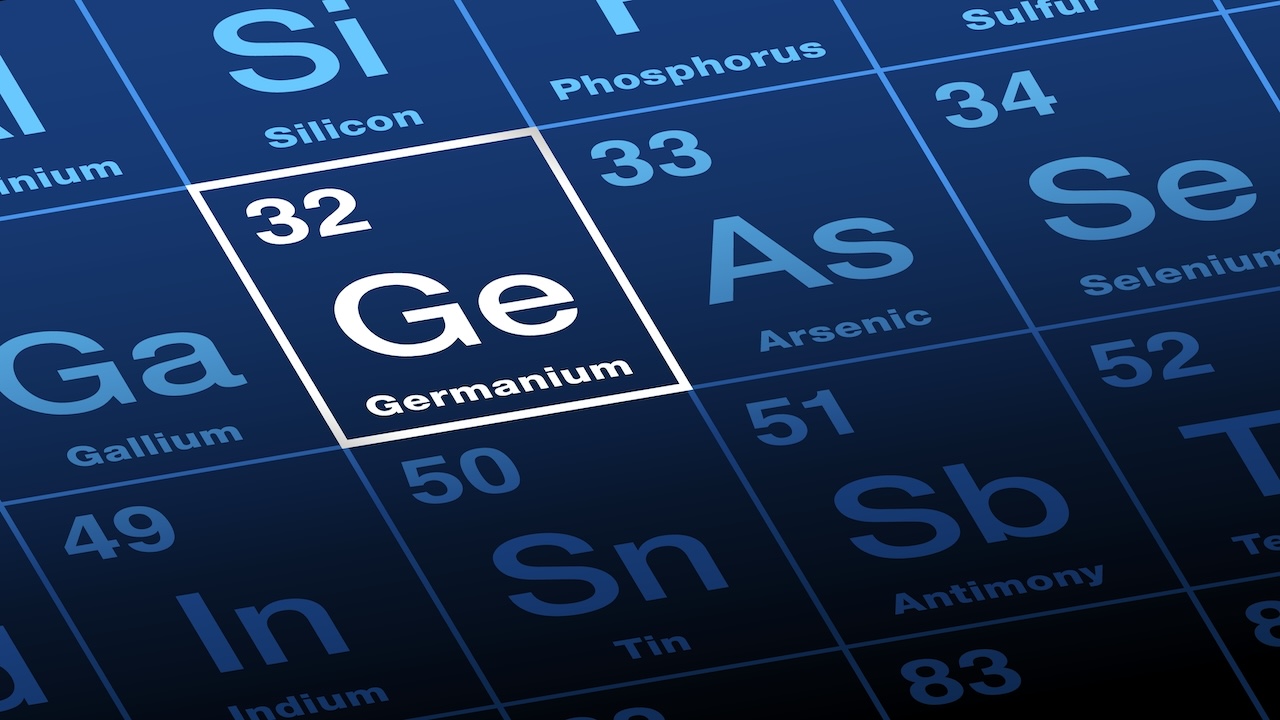
Germanium, a byproduct mineral used in fiber-optic manufacturing, is part of this seabed vulnerability. China can constrain access to key upstream materials, such as germanium, through export licensing and regulatory controls, leading to slower expansion or higher prices. While China halted its ban on germanium in late 2025, some controls remain in place.
The White House in January 2026 declared that processed critical minerals and their derivative products (including germanium) are essential to national security and to defense industrial base resilience, directing negotiations with partners to adjust imports accordingly.
Fiber optics are often discussed as needed for civilian and economic purposes. These cables also enable modern power: they link military C2, Intelligence, Surveillance, and Reconnaissance (ISR), logistics, finance, and data-intensive joint all-domain warfare systems into a cohesive whole. The cables are even important for the use of unjammable drones on both sides of the Russo-Ukraine War. Yet typical analyses focus on cybersecurity, satellites, or 5G standards while assuming the physical network itself is stable, fungible, and resilient.
The strategic danger is not that China could suddenly shut down the internet. It is that by controlling narrow upstream inputs such as germanium, Beijing can impose delays, uncertainty, and cost on the expansion and repair of the fiber networks that enable American economic and military power. This industrial chokepoint represents a new layer of digital vulnerability, not rooted in cyberattacks or sabotage, but in the political economy of globalized mineral supply chains.
Germanium: The Calculus of Leverage
Germanium is in an unusual position in critical minerals strategy because it lacks the glamour of copper, lithium, or rare earths. It is seldom mined as a primary product; instead, it is recovered mainly as a byproduct of zinc smelting and other industrial streams. This structure has important implications for how it can be leveraged.
Byproduct production cannot be easily scaled up in response to market needs. Germanium supply is structurally price-inelastic. Because it is a minor byproduct, rising prices do not trigger the traditional market response of increased supply. A doubling of germanium prices cannot convince a zinc miner to flood the market with zinc just to harvest the byproduct. This market failure effectively locks the supply curve, leaving the West vulnerable to volatility that money cannot solve in the short term. Because output is tied to unrelated host-metal production cycles and specialized refining capacity, germanium supply is inherently slow to adjust.
In fiber-optic manufacturing, this issue becomes operationally binding. Germanium compounds are used as dopants to tweak the refractive index of fiber cores relative to cladding, producing low-loss, high-performance transmission lines. This is not a generic materials choice, and tolerances are tight: altering dopants or substituting materials is technically feasible, but time-consuming and costly because of qualification standards and performance certification to ensure needed purities. These manufacturing realities mean that small amounts of germanium can have outsized economic and military impacts.
The strategic problem, then, is how easily a missing mineral can be replaced or qualified—and how an adversary might weaponize that supply chain to disrupt the production of critical systems. The logic resembles how Allied bombers targeted German ball-bearing plants in World War II to constrain the “war machine” by choking a narrow but essential industrial input.
Scale, Policy, and Strategic Resilience of Fiber Networks and Germanium Supply Chains
The significance of germanium constraints becomes clearer when viewed against the scale and pace of fiber expansion, with expectations of global seabed cables increasing by 48 percent by 2049. The United States is pushing for more fiber networks, across the land and undersea, to support broadband goals, cloud computing, and data-intensive national security systems. Upstream constraints influence not only how quickly new networks can be deployed, but how rapidly damaged infrastructure can be repaired and redundancy established.
Efforts to mitigate leverage include increased investments in domestic capacity and recycling. In 2025, the Pentagon announced as $18.5 million investment to expand germanium and silicon optic production capacity, signaling a shift toward building resilience rather than relying solely on foreign sources.
Recycling for germanium is another emerging resilience strategy. Partnerships across defense agencies to recycle germanium from manufacturing scrap and preform yield losses not only recover scarce material, but reduce reliance on mining and refining bottlenecks that are often offshore and difficult to scale quickly. Apropos, Korea Zinc has announced a massive $7.4 billion investment to expand and refurbish a plant in Tennessee to process waste metal that exists on the site—this would include germanium. These waste-to-value approaches reflect a broader global understanding that supply-chain resilience is as much about reuse and qualification agility as it is about new extraction.
The broader strategic lesson for national security is this: infrastructure systems that appear robust often rest on narrow upstream foundations that quietly shape their resilience. In modern competition, an adversary does not need to cut cables or trigger a crisis to gain leverage. It can exploit hidden chokepoints that determine timing, cost, and adaptation. As seabed warfare and supply-chain statecraft become normalized features of great power competition, controlling the inputs that build critical infrastructure is just as consequential as controlling the infrastructure itself.
About the Authors: Jahara Matisek, Morgan Bazilian, and Macdonald Amoah
Morgan D. Bazilian is the director of the Payne Institute and professor at the Colorado School of Mines, with over 20 years of experience in global energy policy and investment. A former World Bank lead energy specialist and senior diplomat at the UN, he has held roles at NREL and in the Irish government, and advisory positions with the World Economic Forum and Oxford. A Fulbright fellow, he has published widely on energy security and international affairs.
Lt. Col. Jahara “Franky” Matisek (PhD) is a US Air Force command pilot, nonresident research fellow at the US Naval War College and the Payne Institute for Public Policy, and a visiting scholar at Northwestern University. He is the most published active-duty officer currently serving, with over 150 articles on industrial base issues, strategy, and warfare.
Macdonald Amoah is an independent researcher with interests across critical mineral supply chains, advanced manufacturing gaps, the industrial base, and the geopolitical risks in the mining sector.
DOD Disclaimer: The views of Lt Col Matisek are his own.
Image: Peter Hermes Furian/shutterstock
The post Seabed Sabotage, Germanium, and the Future of American Digital Power appeared first on The National Interest.
Источник: nationalinterest.org