

«Данное сообщение (материал) создано и (или) распространено иностранным средством массовой информации, выполняющим функции иностранного агента, и (или) российским юридическим лицом, выполняющим функции иностранного агента»
 Topic: Diplomacy Blog Brand: Middle East Watch Region: Middle East Tags: Iran, Israel, Libya, MENA, Russia, Syria, Turkey, UAE, Ukraine, Ukraine War, and Vladimir Putin Russia’s New Middle East Strategy January 22, 2026 By: Anna Borshchevskaya, and Matt Tavares
Share
Russia has not abandoned the game in the Middle East, and many countries in the region still have reasons to expand ties with Moscow.
Don’t count Russia out in the Middle East. Conventional wisdom suggests Russia is rapidly losing influence across the region. (“Russia’s standing in the Middle East has cratered,” wrote Michael McFaul and Abbas Milani of Stanford University in July 2025, to take just one example). But Russia remains an active force in the Middle East, and the United States should move to thwart Moscow’s ambitions in the region.
Of course, many of Russian president Vladimir Putin’s partners in the region have been weakened or collapsed in recent months. Rebels ousted Syrian dictator Bashar al-Assad in December 2024, and Israel has pummeled Hamas and Hezbollah, both of which are backed by the Kremlin’s longtime friend Iran. Putin’s war of choice in Ukraine continues to deplete Russia’s resources. But these setbacks have not yet amounted to a geostrategic defeat or a regional realignment against Russia.
Russia does not just retain a presence in the Middle East; it is poised for a resurgence. Such a comeback would harm American interests, especially if Putin agrees to pause his war against Ukraine. Absent punitive postwar terms—which appear unlikely—Russia could emerge from its Ukraine invasion stronger in the Middle East than before, in at least three ways.
First, Russia remains influential across the region, particularly as Moscow’s ties to American adversaries grow. Putin’s partnership with Iran, for instance, continues to strengthen—despite Russia’s failure to aid Iran during the 12-day war with Israel and the United States over the summer. Recently leaked Russian defense documents confirm that Moscow has started assembling the first 16 Russian Su-35 fighters for Iran under a $6.5 billion deal that would modernize Iran’s air force and boost its air defenses, including against Israel. Putin is even attempting to mediate between Israel and Iran.
Second, Russia is still very much a presence in post-Assad Syria. Moscow retains its military bases there, serves as a key economic partner, and enjoys important political influence. New Syrian president Ahmed al-Shara shows no signs of abandoning Russia even while looking to strengthen his ties with the West. Sharaa has said that he made a deal with Moscow in December 2024 to stay out of the fighting, letting Russia drop Assad but stay in Syria.
Russia also retains a presence in Libya, where Moscow relocated most of its military assets from Syria. All this lets Russia remain a force on the strategically vital Mediterranean—and to project power into NATO’s southern flank, the Middle East, and Africa.
Third, Russia retains strong economic and diplomatic ties with American partners across the region. No American friend in the Middle East has rescinded a major agreement with Russia; nor have any of America’s Middle Eastern partners sided decisively with the West to isolate Russia on the world stage for Putin’s invasion of Ukraine. America’s regional partners made no move, for example, to join Western sanctions against Russia.
If anything, Russia’s economic ties with Turkey and the Gulf states have only strengthened after Russia invaded Ukraine in early 2022. Russia’s non-oil trade with the UAE reached $11.5 billion in 2024, a 5 percent increase from the previous year, as Emirati companies continue to invest in such critical Russian sectors as energy and transport.
In August 2025, UAE president Sheikh Mohamed bin Zayed visited Russia to strengthen economic ties between the two countries, following his participation in the Putin-hosted BRICS summit in Kazan, Russia, in October 2024. Most recently, Russia and Saudi Arabia signed a rare, visa-free agreement on the sidelines of a Saudi-Russian investment forum in Riyadh last December.
Russia’s clout across the region is poised to resurge, especially if the Ukraine war pauses. That would free up Russian time and resources, allowing the Kremlin to refocus on the Middle East. For centuries, Moscow has sought to control the Eastern Mediterranean—a goal that will long outlast Putin. Russian rulers have long coveted the region’s warm-water ports and its strategic location for power projection into Europe, including NATO’s current southern flank.
Russia’s defense industrial base remains durable, and if the Ukraine war ends or pauses, Russia would suddenly be able to sell Middle East states considerably more capabilities. Some analysts sneer at the quality of Russian military equipment, but many potential buyers have pent-up demand for Russian kit. And many Middle Eastern actors never lost interest in Russian weaponry, even if they feared Western sanctions.
Many in the Middle East accuse the United States of hypocrisy and double standards, and they have noticed that Washington has done far more to support Kyiv than to support its Arab partners. Such perceptions, right or wrong, make the region receptive to Russia. And, of course, Russia also plays a central role in the global energy market.
All these areas of interdependence create opportunities for Moscow to project its narrative across the region, including through propaganda outlets such as RT and Sputnik Arabic, which already reach millions daily. In 2015, RT Arabic ranked among the three most-watched channels in Egypt, Morocco, Saudi Arabia, Jordan, the UAE, and Iraq. In 2024, RT Arabic reportedly reached 46.9 million viewers, with five times as many Facebook followers as Al Jazeera or Al Arabiya.
Asking Putin to join the US-led “Board of Peace” to oversee Gaza’s reconstruction is a step in the wrong direction. Instead, US policymakers should take steps now to block Russia’s likely resurgence across the Middle East and North Africa. Russia’s war in Ukraine has highlighted the deep ties between the Middle East and European theaters.
The United States can compete for influence in the Middle East, particularly in the Mediterranean, as part of a holistic strategy to counter Russia. It could prioritize Syria and seek ways to bolster Ukraine across the region as an alternative to Russia. Ukraine is well-positioned to counter Russia across the region, especially in the arms market.
An ounce of prevention is better than a pound of cure. If the United States does not act now, it will have a harder time countering Russia in the Middle East—and Europe too, from Russia empowering adversarial actors to potentially complicating US freedom to maneuver in the Eastern Mediterranean, to give a few examples. Putin is playing the long game. President Donald Trump should, too.
About the Authors: Anna Borshchevskaya and Matt Tavares
Anna Borshchevskaya is the Harold Grinspoon senior fellow at the Washington Institute. In June 2024, she served as a consultant for the US Department of State on defense strategies in the Black Sea region. She was previously with the Atlantic Council and the Peterson Institute for International Economics.
Matt Tavares is a former official in the US Department of Defense with two decades of experience in US national security. He is now focused in the private sector on emerging technologies and the evolving nature of armed conflict.
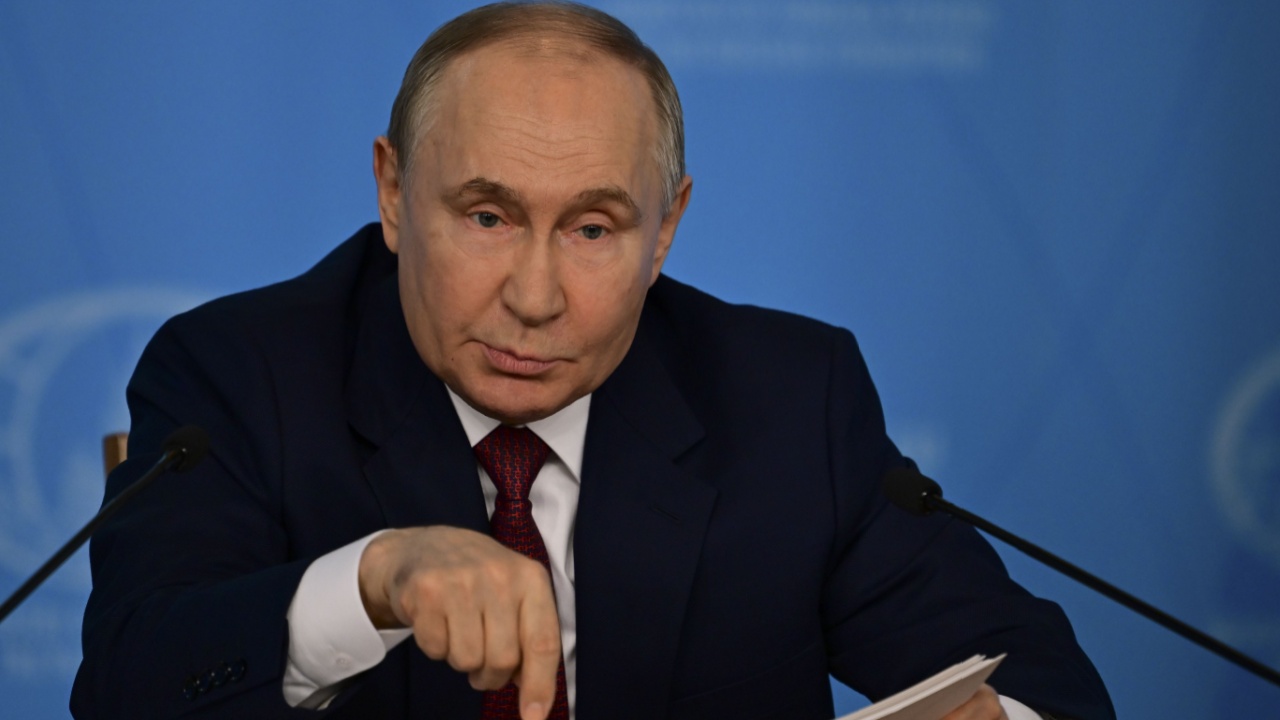
Image: PhotoIbo / Shutterstock.com.
The post Russia’s New Middle East Strategy appeared first on The National Interest.
Источник: nationalinterest.org