

«Данное сообщение (материал) создано и (или) распространено иностранным средством массовой информации, выполняющим функции иностранного агента, и (или) российским юридическим лицом, выполняющим функции иностранного агента»
 Topic: Solar Energy, and Space Blog Brand: The Buzz Region: Asia Tags: China, Japan, Solar Power, Space-Based Solar Power, and United States Japan Beams the Future from Orbit—While America Watches January 22, 2026 By: Brandon J. Weichert
Share
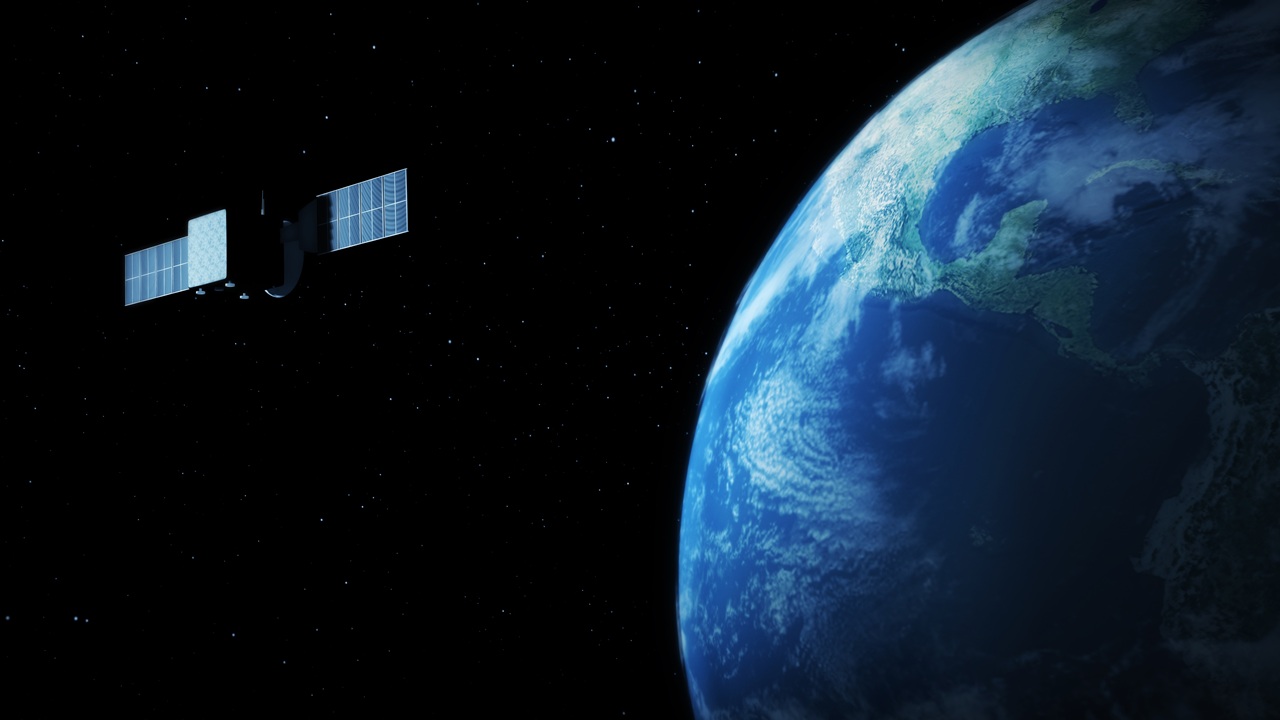
Japan’s OHISAMA Project is a practical demonstration of space-based solar power (SBSP)—which, if scaled up, could solve many of the world’s energy needs.
Space-based solar power (SBSP) is a technology whose time has come. First conceived of in the late 1960s by NASA scientist Peter Glaser as a method for creating clean, reliable energy, the technology sat in the basement for decades. Petroleum-based products remained the primary form of energy production.
America Has Toyed with Space-Based Solar Power for Decades
And, if not petroleum-based energy products, then the political and scientific wings of the United States preferred to look elsewhere—nuclear, hydro, wind, or even terrestrial solar power—but the concept of SBSP was largely forgotten. Occasionally, it’d be brought up in the inner circles of government, when the conversation turned to alternative sources of energy (and the displeasure in the way that both solar power and wind power were developing).
In fact, in 2007, the National Security Space Office wrote a briefing extolling the benefits of SBSP for the then-George W. Bush administration. According to that report, SBSP would have been a way for the United States and its allies in the post-9/11 world to break its dependence on oil from “unstable parts of the world.” At that time, oil prices had surged from $15 per barrel to $80 per barrel. The 2007 report stipulates that, “American and allied energy source security is now under threat from actors that seek to destabilize or control global energy markets as well as increased energy demand competition by emerging global economies.”
But, in the final year of the unpopular Bush administration, as the world was fixated on the Iraq War, the emerging global financial crisis, and the rise of Barack Obama as the obvious successor to President George W. Bush, SBSP seemed like an afterthought—and a pipe dream. Back to the warehouse this innovative concept went.
The need for SBSP, however, only increased in the intervening years. For a brief moment, the Biden administration seemed curious about the details of this new technology. Then-Vice-President Kamala Harris, whose office ran the space policy shop for the Biden administration, expressed interest and support in SBSP. But once again, it never went anywhere.
How Japan Quietly Made SBSP Real
The dream of SBSP has yet again faded in the minds of most Americans, which is unfortunate—and surprising, considering how pro-space the Trump administration has consistently been.
Enter our friends in Japan, a technological dynamo that has increasingly been picking up the slack that America is leaving in many different technological domains, both military and scientific.
The science behind SBSP is fairly simple. You place massive solar arrays into orbit around the Earth. Once there, those solar arrays collect massive amounts of solar power and then electromagnetically beam it to the Earth below, where that electrical energy is captured by ground-based, terrestrial, solar panels as either baseload power via direct connection to the electrical grid or, possibly, conversion into manufactured hydrocarbon fuels.
Another idea that was kicked around was simply beaming the energy collected in orbit directly to consumers on the ground below. Essentially, the energy would be beamed to any home or office building or factory that utilized SBSP services.
No Clouds, No Night, No Blackouts: Killing the Intermittency Problem
What makes SBSP so interesting—the key difference between itself and the conventional solar power that we are all familiar with—is that SBSP operates independent of the terrestrial weather. Whereas conventional solar power requires clear skies and sunlight (that is only available for part of the day), SBSP is continuously collecting and transmitting solar energy to the Earth below—without any interruption or conditions.
There is no intermittency in the power generation, which is why, if it can be scaled, SBSP could be one of the greatest breakthroughs in the energy sector in decades.
Japan’s OHISAMA Project is the name of the country’s SBSP endeavor. It wirelessly beamed microwave energy from a small satellite (a collector) in Earth orbit, then converted that beamed microwave energy into usable electricity. Though this was only a demonstration, it proved the concept could work at a larger scale.
Here’s why this is important. The Japanese have the ability now to beam energy anywhere on Earth. If there is a military unit or outpost far removed from even basic energy infrastructure, they could conceivably receive this energy if they have a collector on the ground with them.
If there is a base somewhere that is vulnerable to having its power grid hacked or destroyed, it could instead rely upon a collector in orbit—and the only threat to those collectors would be anti-satellite (ASAT) weapons. Even then, there are ways to better defend those orbital solar collectors and to have replacements on hand, should they be destroyed.
China Wanted SBSP First—and Knows Exactly Why It Matters
This is a technology that China has longed to dominate, too.
Even as the Americans ignored this technology for decades, the Chinese have expressed deep interest in it. That interest has only increased in the last decade, as Beijing recognizes the strategic advantages of this technology.
Imagine their bases on those manmade islands in the South China Sea being reliant on beamed energy from space rather than whatever they are relying upon today.
If this technology could be scaled over time, China might become much less reliant on imported petroleum products—adding a layer of security to China that right now Beijing’s leaders lack (the Americans could damage China by damaging China’s energy imports).
For a time, it looked as though China was going to beat the West to developing working SBSP. Instead, it is Japan that has achieved this herculean task.
And that is entirely because of the strategic circumstances that Tokyo finds itself in. So, like with directed energy weapons (DEWs), Japan is making headway for the entire US-led alliance structure.
SBSP is About Power, Not Electricity
SBSP is no longer science fiction. It is strategy. Japan has just shown that space can be turned into a reliable, uninterrupted power plant with direct military, economic, and geopolitical consequences.
The question now is not whether SBSP works, but whether the United States intends to lead—or watch another foundational technology migrate overseas while its rivals adapt it for their own military purposes.
Energy security is national security. And, in the 21st century, the ultimate high ground is Earth’s orbit. If Washington continues to dither while allies and adversaries alike move forward, America will once again find itself dependent, reactive, and strategically late to a fight it once had every advantage to win.
About the Author: Brandon J. Weichert
Brandon J. Weichert is a senior national security editor at The National Interest. Recently, Weichert became the host of The National Security Hour on America Outloud News and iHeartRadio, where he discusses national security policy every Wednesday at 8pm Eastern. Weichert hosts a companion book talk series on Rumble entitled “National Security Talk.” He is also a contributor at Popular Mechanics and has consulted regularly with various government institutions and private organizations on geopolitical issues. Weichert’s writings have appeared in multiple publications, including The Washington Times, National Review, The American Spectator, MSN, and the Asia Times. His books include Winning Space: How America Remains a Superpower, Biohacked: China’s Race to Control Life, and The Shadow War: Iran’s Quest for Supremacy. His newest book, A Disaster of Our Own Making: How the West Lost Ukraine is available for purchase wherever books are sold. He can be followed via Twitter @WeTheBrandon.
Image: Shutterstock / Maingraph.
The post Japan Beams the Future from Orbit—While America Watches appeared first on The National Interest.
Источник: nationalinterest.org