

«Данное сообщение (материал) создано и (или) распространено иностранным средством массовой информации, выполняющим функции иностранного агента, и (или) российским юридическим лицом, выполняющим функции иностранного агента»
 Topic: Air Warfare Blog Brand: The Buzz Region: Americas Tags: Air Defense, Missile Interceptor, Missiles, United States, and US Navy Why the US Navy Is Looking for a Better Interceptor Missile January 20, 2026 By: Stavros Atlamazoglou
Share
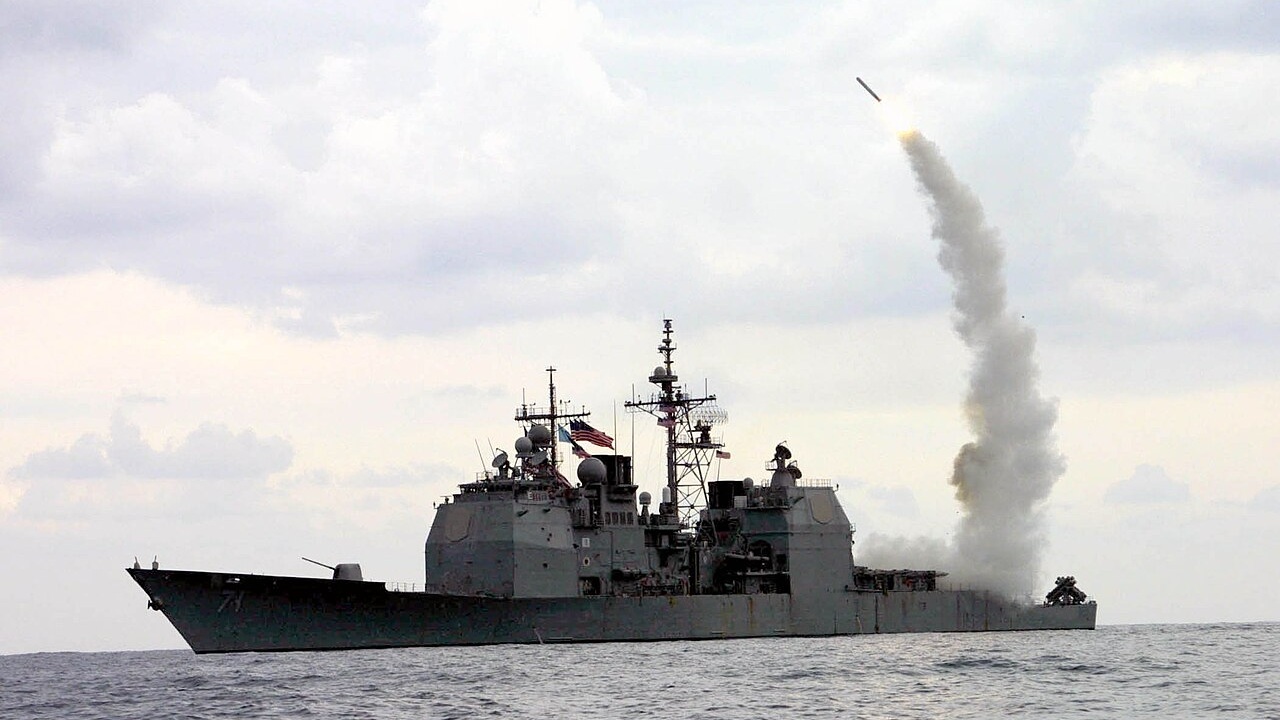
As China and other adversaries build up their stocks of anti-ship missiles, the US Navy is looking for an answer—one that can be adapted to existing warships’ VLS cells.
The US Navy is looking to upgrade its standard missiles with next-generation munitions that will be able to intercept long-range missiles, while also being capable of hypersonic strikes.
In a recent conference, the Navy’s most senior surface warfare officer outlined the new capabilities the service is looking to bring to its warships as tensions with China and Russia continue to rise.
A Worthy Successor to the “SM” Missile
The Navy is looking for a next-generation surface-to-air missile that will replace the venerable Standard Missile series, which has been in service since the Cold War.
Although the SM series has received significant upgrades since its introduction decades ago, the Navy is looking for new munitions that will be able to meet the advanced missile threats coming out of China and Russia.
The quest for a new fleet missile stems mainly from the Chinese military’s increasingly expansive and advanced arsenal of supersonic, ballistic, and hypersonic munitions.
“We have to continue building not just better missiles, but finding better ways to use our vertical launchers,” Rear Admiral Derek Trinque, the Navy’s director of the surface warfare development office (N96), said during the 38th Surface Navy Association national symposium on Tuesday.
The Navy is getting SM-6 missiles at a faster rate than what is stipulated in the contract, Trinque revealed. However, the acquisition process for the next-generation munition the Navy is looking to buy will need to be even more efficient to meet the demands of the entire fleet.
The Navy is looking at a modular propulsion option that will allow it to increase the capacity of its vertical launching system (VLS) cells and pack more missiles on every warship. Its Arleigh Burke-class destroyers and Ticonderoga-class cruisers use VLS cells to carry munitions for both offensive and defensive purposes.
“By using up a full-sized propulsion stack, one that takes up an entire VLS cell, I can now have a long-range offensive counter air weapon or another option for hypersonic strike,” Trinique explained. “With smaller propulsion stacks that allow me to dual-pack and then quad-pack inside one Mark 41 VLS cell, I can greatly increase the capacity of a given launcher. And I can cover the engagement envelope from the highside of the ESSM (Evolved SeaSparrow Missile) to SM-6.”
The Navy Is Investing in Better Weapons, Not More Warships
The Navy is pushing hard to field more advanced systems to counter the numerical superiority of its Chinese counterparts. In the event of a clash, the People’s Liberation Army Navy could field more than 700 warships and support vessels. By comparison, the US Navy has fewer than 400 warships in the active roster, and not all of them are battle-ready.
Still, the US Navy has certain advantages over the PLAN, including superior technology and vastly greater combat experience. Moreover, in certain types of warships—including aircraft carriers and submarines—the US Navy is clearly superior to the Chinese Navy.
The new missile, as well as other advanced munitions in the pipeline, will help bridge the numerical gap—although the Navy must be able to build it in sufficient numbers to be useful.
About the Author: Stavros Atlamazoglou
Stavros Atlamazoglou is a seasoned defense journalist specializing in special operations and a Hellenic Army veteran (national service with the 575th Marine Battalion and Army HQ). He holds a BA from the Johns Hopkins University and an MA from the Johns Hopkins’ School of Advanced International Studies (SAIS). His work has been featured in Business Insider, Sandboxx, and SOFREP.
Image: Wikimedia Commons.
The post Why the US Navy Is Looking for a Better Interceptor Missile appeared first on The National Interest.
Источник: nationalinterest.org