

«Данное сообщение (материал) создано и (или) распространено иностранным средством массовой информации, выполняющим функции иностранного агента, и (или) российским юридическим лицом, выполняющим функции иностранного агента»
 Topic: Air Warfare Blog Brand: The Buzz Region: Europe Tags: Drones, MANPADS, Missiles, Russia, Shahed-136, and Ukraine War Russia Just Made the Next Big Move in the Ukraine Drone War January 20, 2026 By: Brandon J. Weichert
Share
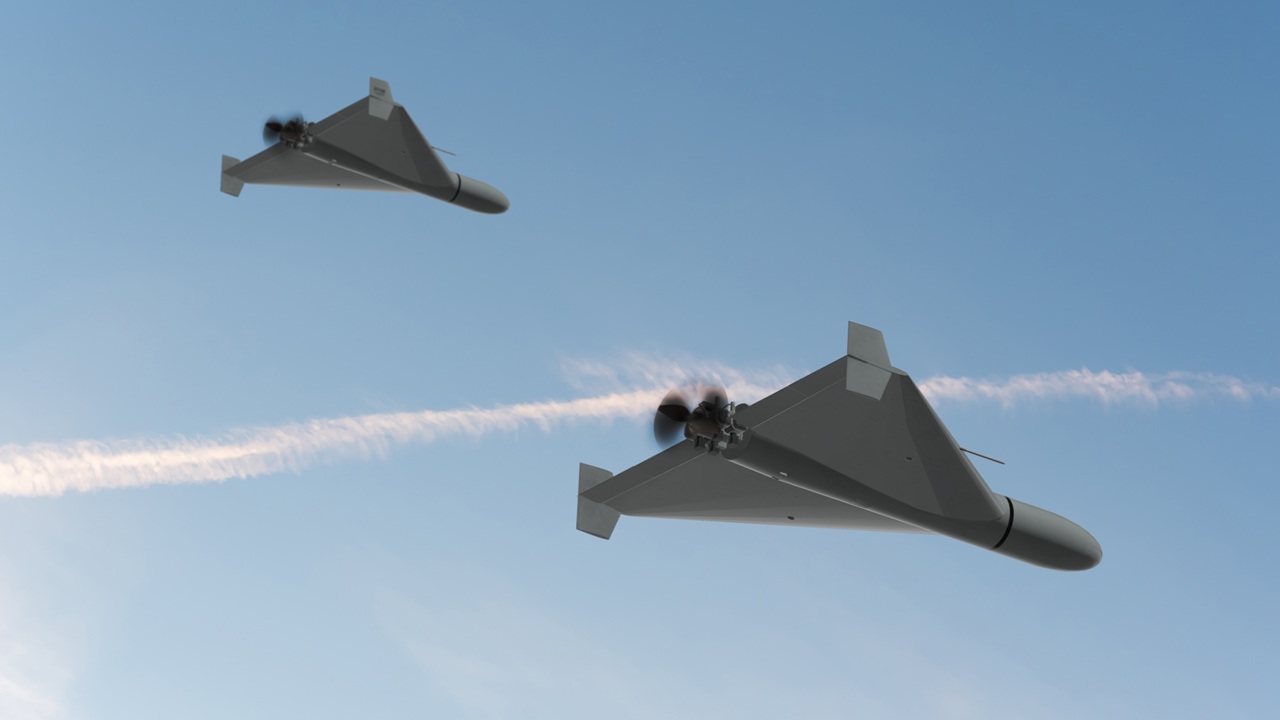
Russia has begun equipping its Shahed kamikaze drones with MANPADS missile launchers in order to take on Ukrainian counter-drone helicopters—so far with little success.
Ukrainian forces recently shot down a Russian Shahed-type one-way attack drone that was fitted with a man-portable air defense missile (MANPADS). This is believed to be the first observed instances of a Shahed drone carrying a MANPADS into battle. The drone was reportedly operating in northern Ukraine’s Chernihiv region when it was taken down.
According to Defense Post, the MANPADS onboard the downed Russian drone was identified as a 9K333 Verba, Russia’s modern infrared homing shoulder-fired surface-to-air missile system with a range of around 4 miles (6.5 kilometers). This modification includes a radio modem and camera, indicating Russian is aiming for remote control or operator-in-the-loop guidance.
Why Would Russia Put a Missile Launcher on a Kamikaze Drone?
There is some confusion as to why the Russians would have installed such a system on what a kamikaze drone would normally be. It is likely that the intention of the Russians was to deter/threaten Ukrainian counter-drone defenses and helicopters. Since the Shahed (and the Geran, its Russian counterpart) became a ubiquitous feature of the Ukraine War, Ukraine has perfected the use of helicopters, like Soviet-era Mi-8/Mi-17 or Mi-24 attack helicopters for counter-drone operations. The next step in the arms race is equipping drones with weapons that can take down these helicopters.
Of course, a main question on everyone’s mind is how useful the MANPADS would be on such a drone. After all, MANPADS require sensor and targeting data along with stable targeting—requiring information that is far easier to gather if the launcher is held steady by a person on the ground than if it is airborne. These factors are unlikely to be achieved if the MANPADS is installed on a loitering drone, no matter how steady the flight may be.
What’s more, as the Defense Post piece points out, the Shahed has limited maneuverability and situational awareness, due to the fact that it is not meant for the kind of operation that would be conducive for employing a MANPAD onboard.
Russia Is Trying to Out-Innovate the Ukrainians
This wasn’t the only example of a radical attempt at counter-drone innovation by the Russians. The Kyiv Post indicates that one Geran-2 “E” Variant was carrying both a Verba MANPADS and a thermobaric warhead. Another instance saw Russia arming its Shahed drones with R-60 air-to-air missiles. Analysts at the Institute for the Study of War argue that this is part of a larger attempt by Moscow to make these drones capable of engaging aerial threats.
So far, these efforts have not paid off for the Kremlin. While certainly an interesting development, these MANPAD-armed drones are highly vulnerable to existing (and developing) Ukrainian counter-drone systems. This new system is unlikely to drastically undermine the advantages that Ukraine has in counter-drone defenses. Of course, that might change over time—especially if the Russians can work out methods for making their drones more compatible with the unwieldy and finicky MANPADS launchers.
The development shows that, despite rocky early steps, Russia is committed to evolution in order to remain competitive in the war. The Russian Army is now taking the original Iranian-made Shahed loitering munition beyond static strikes and trying to make them capable of engaging dynamic targets. If they succeed, it could be a real change in the drone war.
How Will Ukraine Respond?
Despite performance issues, drones armed with MANPADS launchers will still complicate the counter-drone operations of Ukraine. Over time, the Ukrainians will likely be forced to adopt new tactics with the counter-drone systems. These, in turn, will force changes in how helicopters and light aircraft operate near contested airspace.
For their part, Russian designers are experimenting with the integration of cameras and remote controls for more real-time control links on drones originally designed to be one-way strike weapons. The deployment of a MANPADS-armed drone indicates where the next evolution of loitering munitions is going. It is a dynamic response to Ukrainian air tactics. Yet its combat-effectiveness remains very much in doubt.
About the Author: Brandon J. Weichert
Brandon J. Weichert is a senior national security editor at The National Interest. Recently, Weichert became the host of The National Security Hour on America Outloud News and iHeartRadio, where he discusses national security policy every Wednesday at 8pm Eastern. Weichert hosts a companion book talk series on Rumble entitled “National Security Talk.” He is also a contributor at Popular Mechanics and has consulted regularly with various government institutions and private organizations on geopolitical issues. Weichert’s writings have appeared in multiple publications, including The Washington Times, National Review, The American Spectator, MSN, and the Asia Times. His books include Winning Space: How America Remains a Superpower, Biohacked: China’s Race to Control Life, and The Shadow War: Iran’s Quest for Supremacy. His newest book, A Disaster of Our Own Making: How the West Lost Ukraine is available for purchase wherever books are sold. He can be followed via Twitter @WeTheBrandon.
Image: Shutterstock / Anelo.
The post Russia Just Made the Next Big Move in the Ukraine Drone War appeared first on The National Interest.
Источник: nationalinterest.org