

«Данное сообщение (материал) создано и (или) распространено иностранным средством массовой информации, выполняющим функции иностранного агента, и (или) российским юридическим лицом, выполняющим функции иностранного агента»
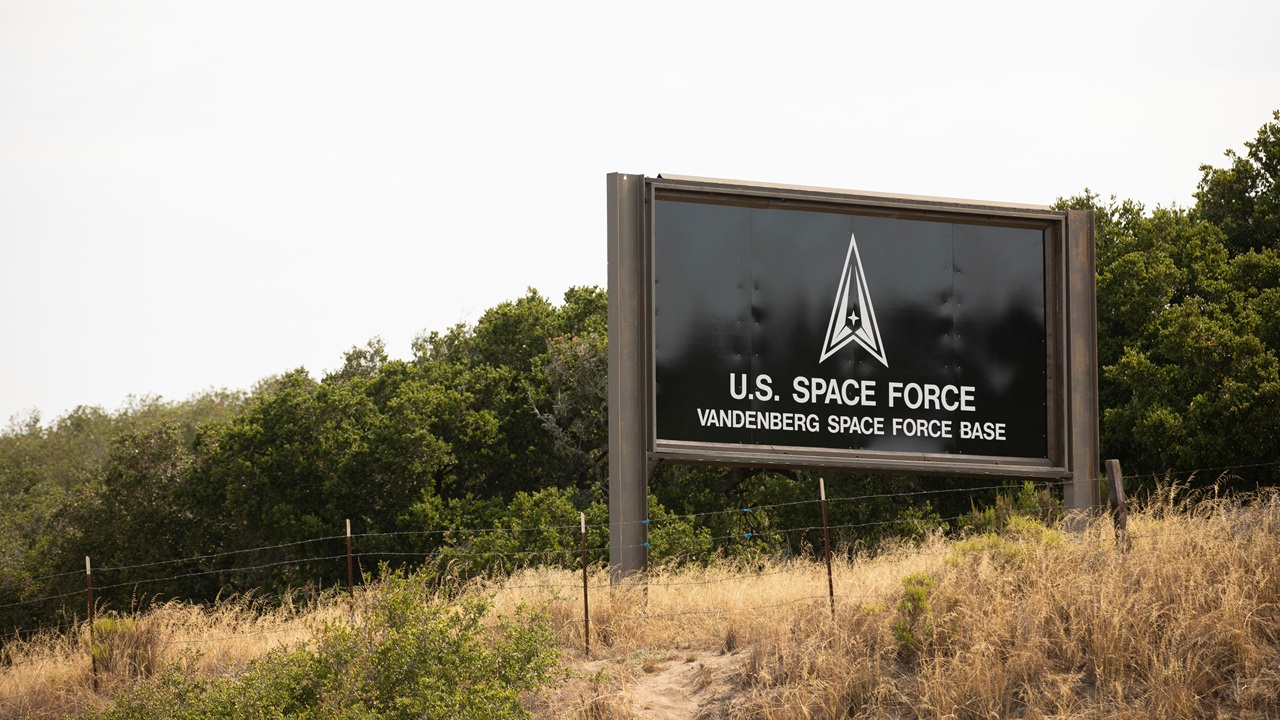 Topic: Space Blog Brand: The Buzz Region: Americas Tags: California, North America, Satellites, SpaceX, United States, and US Space Force Vandenberg Space Force Base Is Quietly Becoming America’s Space Fortress January 13, 2026 By: Brandon J. Weichert
Share
The Space Force has put out an offer for private space firms to operate from Vandenberg Space Force Base in California, acting as a force multiplier for its own capabilities.
The United States Space Force is finally exploring ways to expand their heavy-and-super-heavy rocket launch infrastructure at Vandenberg Space Force Base (VSFB), according to a recent report from Defense News, an online industry publication.
Space Is No Longer a Sanctuary
Specifically, on December 29 of last year, Space Launch Delta 30 issued what’s known as a Request for Information (RFI), essentially asking the private space sector if there was any interest in building a new launch facility—Space Launch Complex-14, SLC-14—on the massive property of Vandenberg Space Force Base to accommodate larger rockets.
Vandenberg is ideally suited to such an expansion. Occupying a territory of 22 square miles along California’s southern coastline, it plays host to units from the Space Force, the Air Force, and the California Air National Guard—altogether hosting around 18,000 personnel, both civilian and military. The base is located to the northwest of Santa Barbara, but is far enough away that rocket launches would not significantly disrupt civilian life.
As an aside, when we talk about “Heavy” launch vehicles, we mean systems that weigh anywhere from 20,000 to 50,000 kilograms (44,092–110,231 lb) into Low-Earth Orbit (LEO).
When referencing “Super-Heavy” lift vehicles, that means any system weighing more than 50,000 kg (110,000 lb). These systems are critical for placing heavier national security satellites and other future military systems in the strategic high ground of space.
Space Dominance Is Launch Dominance
As Defense News notes, SLC-14 would be the first facility on the West Coast specifically built for these higher-capacity rockets. But what does this really mean?
For starters, it highlights how grateful we should all be for the fact that the United States possesses the most robust and innovative private space sector in the world. There’s a reason that the military is reaching out to firms like SpaceX for assistance in exploiting this unused area of Vandenberg. There is simply no way that the military could do this alone. They need the private sector’s buy-in.
Moreover, the private sector is interested. That’s a win across the board.
This is part of a greater need for the United States to have the launch infrastructure to support more operations in the critical orbits around the Earth. Already, the strategic high ground of space has gone from an almost exclusively American domain to, like so much of the rest of the global commons, a strategically vital region contested amongst the great powers—notably the United States, China, and Russia.
The Missing Link in America’s Military Space Architecture
In his first term, President Donald Trump rightly assessed that the US needed to drastically revamp its military space program. Thus, the United States Space Force, under the umbrella of the United States Department of the Air Force, was born.
The Space Force’s entire mission has been to focus on space dominance (or, to use the Pentagon’s preferred euphemism, space superiority). But to dominate space today means that the United States needs a more robust launch infrastructure, notably for military space operations.
Hence, the move by the USSF to convert a large chunk of the Vandenberg Space Force Base into a launch facility for heavy and super-heavy-lift vehicles that will be managed by the far more efficient (and cost-effective) private space sector.
By creating this capability at a true military facility, rather than a NASA-run launch facility like Cape Canaveral, the USSF is exerting more control over this most important process for national security space missions. This reduces the load on the civilian Cape Canaveral launch site, enhances Space Force’s experience with military space launches, and better protects national security.
What Heavy and Super-Heavy Lift Really Means for Vandenberg
A heavy/super-heavy-lift launch facility at Vandenberg would enhance deployment of larger, more capable military satellites. It would support rapid response of constellation reconstitution after a crisis—meaning that after a “Space Pearl Harbor” scenario in which a rival disables a sizable portion of America’s key satellite constellation, the Space Force could rapidly launch replacement satellites.
Here’s an even more important element: geography. People think of space and they forget that space accessibility is key. There are a handful of places on this planet that space organizations usually use for launches. For instance, the French have held onto a strip of territory in South America known as French Guyana in large part because its location gives France the rest of the European Union (EU) advantageous positioning to launch systems into LEO using the Earth’s gravitational rotation at the equator—decreasing the amount of fuel required and lowering the cost.
In the case of Vandenberg, its physical location makes it perfect for polar and sun-synchronous orbital launches. These orbital planes above the Earth are hard to get to without that heavy-lift capacity due to their distance from the ground.
But, once in those orbits, militaries can utilize them for total Earth observation, missile warning, and other intelligence collection purposes. Vandenberg is better suited for these launches than Canaveral ever was.
SpaceX Changed the Rules—Now Everyone Else Must Catch Up
So, the USSF wants to know if any private space sector firms—SpaceX, Blue Origin, United Launch Alliance (ULA), Relatively Space, or other smaller firms—are interested in strategic West Coast launch access. Possessing this capability would give any firm prime competitive advantage in bidding for expensive military space launches.
The Space Force wants the industry responses to the RFI by February 12 of this year. After that, it will evaluate the proposals and determine which partner (or partners) would be best suited for this capability. Once executed, SLC-14 would be operational within the next few years—positioning the base for a larger role in national security space launches.
Air & Space Force Magazine highlighted recently that there were a whopping 66 launches from 2025 from Vandenberg, a drastic increase from previous years in that same location. This has been driven by commercial and defense missions, hence the perfect fusion of the private space section in America with the Space Force. Notably, SpaceX has been approved to double its launch temp at VSFB. Accordingly, VSFB has approved new launch pads and hangars to keep pace with the demand.
The expansion reflects a longer-term effort to make the West Coast a more robust counterpart to the already expansive Space Coast on the Eastern Seaboard. Further, this expansion opens new opportunities for firms lacking West Coast facilities and it could attract investment and boost the local aerospace ecosystems.
These are all wins for Uncle Sam, and will help to achieve victory in the new Space Race with China, Russia, and many other foreign states.
Time is not on America’s side. It looks as though the Trump administration is finally aligning its grand strategy of space dominance with real, increased infrastructure to support those necessary goals. The only question is whether the United States can achieve these herculean goals on the shortened timeframe of the new Space Race.
About the Author: Brandon J. Weichert
Brandon J. Weichert is a senior national security editor at The National Interest. Recently, Weichert became the host of The National Security Hour on America Outloud News and iHeartRadio, where he discusses national security policy every Wednesday at 8pm Eastern. Weichert hosts a companion book talk series on Rumble entitled “National Security Talk.” He is also a contributor at Popular Mechanics and has consulted regularly with various government institutions and private organizations on geopolitical issues. Weichert’s writings have appeared in multiple publications, including The Washington Times, National Review, The American Spectator, MSN, and the Asia Times. His books include Winning Space: How America Remains a Superpower, Biohacked: China’s Race to Control Life, and The Shadow War: Iran’s Quest for Supremacy. His newest book, A Disaster of Our Own Making: How the West Lost Ukraine is available for purchase wherever books are sold. He can be followed via Twitter @WeTheBrandon.
Image: Shutterstock / Matt Gush.
The post Vandenberg Space Force Base Is Quietly Becoming America’s Space Fortress appeared first on The National Interest.
Источник: nationalinterest.org