

«Данное сообщение (материал) создано и (или) распространено иностранным средством массовой информации, выполняющим функции иностранного агента, и (или) российским юридическим лицом, выполняющим функции иностранного агента»
 Topic: Air Warfare Blog Brand: The Buzz Region: Asia Tags: China, Guerrilla Warfare, HIMARS, Rocket Artillery, Taiwan, and Taiwan Invasion The Great Debate: Could HIMARS Launchers Doom Taiwan? January 7, 2026 By: Brandon J. Weichert
Share
Taiwan has invested billions of dollars in HIMARS launchers for use against Chinese warships—but the systems have clear limitations in Taiwan’s enclosed terrain.
A fierce debate has been tearing apart military experts for some time. As the United States continues plying the embattled island democracy of Taiwan with a variety of weapons, Beijing has begun lashing out, conducting sweeping military exercises right off the coast of the island, simulating missile attacks, and practicing for blockades and what appears to be an invasion.
The $11 Billion Signal That Set Beijing on Edge
The latest round of Chinese exercises around Taiwan took place in response to the Trump administration’s decision to send $11 billion worth of weapons to Taiwan.
The shipment included Javelin missiles, howitzers, ATACMS missiles, loitering munitions, and HIMARS. The objective was to enhance Taiwan’s defense against China. Washington claims that the shipment is part of America’s obligations to Taiwan under the Taiwan Relations Act.
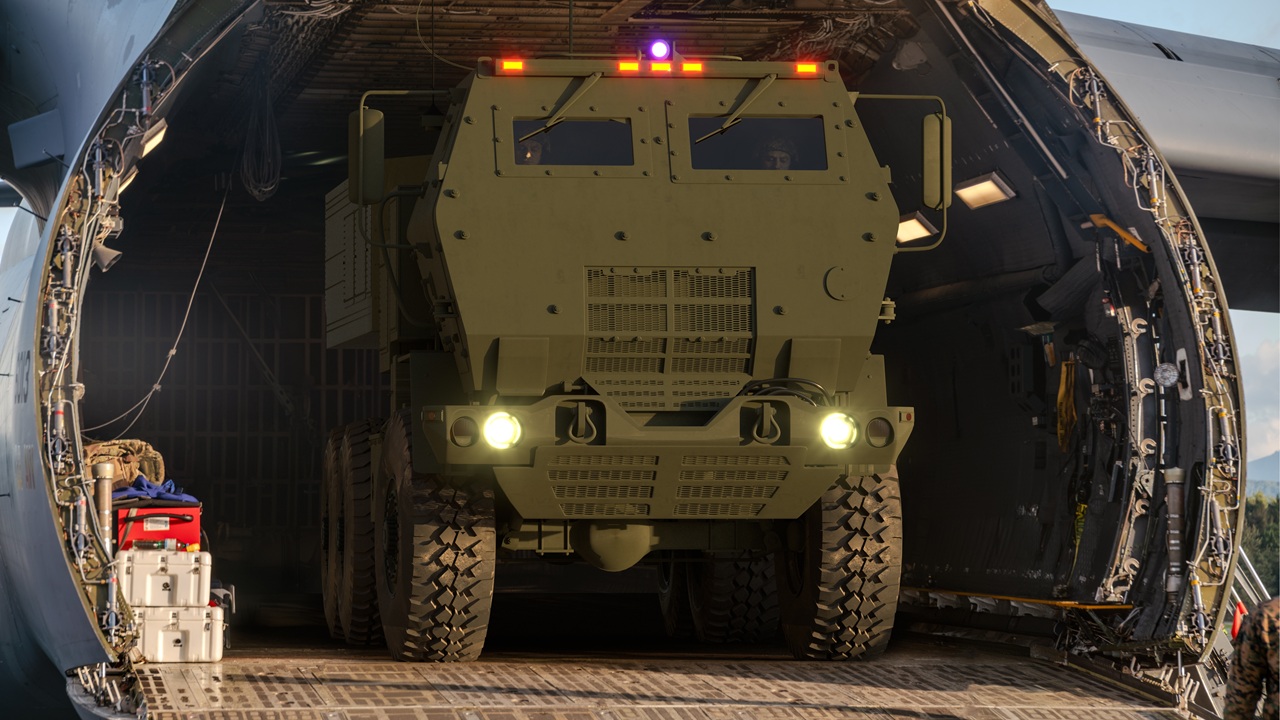
One system, in particular, has created a storm of controversy both within US military (and Taiwanese) circles and Chinese military experts. That is the US-made High Mobility Artillery Rocket System (HIMARS) system. This system has become a staple of the Ukraine War, and is used with great frequency by the US military and its allies across the Middle East.
Taiwanese and American military experts believe the HIMARS system makes up the primary element of any asymmetric defense strategy. This system allows for Taiwan’s Armed Forces to focus on a mobile, dynamic defense of their island that increases the survivability of their forces while under attack from China.
HIMARS can be used in a variety of situations, such as coastal defense. With a range of 186 miles (300 kilometers), they could allow for Taiwan’s defenders to potentially strike Chinese warships and forces as they are massing in ports in China (such as Dalian or Fujian). Taipei believes HIMARS could be essential for anti-ship missile defenses.
Overall, both the Taiwanese and American militaries are planning to turn Taiwan and its surrounding waters into an impenetrable “hellscape.” HIMARS and the other weapons sent to Taiwan by the Trump administration are part of that plan. Taiwan’s military is training to ensure their HIMARS are long-term players for the island’s defense, even if Chinese forces overrun the beaches. The key element for Taiwan is to disperse their HIMARS, using urban centers for cover, and moving them all around the countryside of Taiwan.
At first blush, this seems like a solid strategic plan in many respects. But on the mainland, Chinese military experts are already beginning to poke holes in it.
Shoot-and-Scoot Tactics Don’t Work in Mountains and Megacities
One Chinese military researcher in particular, Fu Zhengnan, believes that the HIMARS is a system that is poorly suited to the unique geography of Taiwan. Fu’s argument is that the American HIMARS system is meant for large, open battlefields. In other words, HIMARS does well for those forces utilizing the system in the desert and the muddy flatlands of Eastern Europe—especially Ukraine, where the systems have been used to great effect. But this system will not be dealing with that terrain in Taiwan.
Taiwan has a rugged, mountainous, and forbidding terrain comprising its countryside.
Beyond its countryside are the major cities of Taiwan, which are densely packed and populated areas. These cities will become focal points of any Chinese invasion into the country—and HIMARS will have difficulty employing its “shoot-and-scoot” technique that makes it such a desired defensive system.
For HIMARS to provide the dynamic defense that Taiwan’s strategic planners are anticipating it to provide, the fuel requirements for this mobile system are immense. During a blockade and/or invasion scenario, those supply chains supporting the defensive systems on the island will be under immense pressure. And the cities make it hard for HIMARS’ shoot-and-scoot methodology to work because of the tight quarters and overpopulated nature of those areas.
The mobility issue facing the HIMARS systems in the major cities of Taiwan will not be ameliorated in the countryside. In the wilds of Taiwan, it is the mountainous, rugged terrain that makes the dynamic shoot-and-scoot a problem.
Throw in potential fuel shortages after a Chinese blockade and/or landing on the island, and there’s an entirely new set of complications that HIMARS is unprepared to handle.
Plus, the Chinese insist that they have total surveillance coverage over Taiwan, thanks to their growing satellite network in orbit. Beijing’s leaders argue that Taiwan’s forces will have great difficulty obscuring these large systems from the watchful eye of the Chinese military—meaning that they can easily be located and destroyed by Chinese airpower, drones, and artillery.
HIMARS a “Porcupine in a Glass Box,” China Says
Fu is quoted in China Daily, a Chinese government publication, as describing what may befall the American-made HIMARS on Taiwan as “porcupine in a glass box.” This is a reference to the US and Taiwanese “hellscape” strategy. Another term to describe it is a “porcupine defense” strategy.
Still, it’s a catchy way to describe how Chinese war planners view HIMARS in Taiwan.
The fact that Taiwan is planning to use HIMARS to attack Chinese ports once a massive Chinese buildup is detected means that the impetus on China to strike against Taiwan even before their forces have rallied at the key staging grounds on the Mainland is high.
What’s more, for all the talk from the Chinese side about how they are overcoming the threat that HIMARS poses to them, Chinese detection technology is not as great as we were led to believe. This is especially true in the wake of the Trump administration’s successful tactical raid on Caracas,Venezuela that resulted in the capture of Nicolas Maduro. Not one of the Chinese-made early warning radar systems detected the American force moving over Caracas, indicating that Western suppression technologies are effective against Chinese detection gear—the same kind of systems that would undoubtedly be deployed by Taiwan and its allies as a prelude to any possible HIMARS bombardment of Chinese ports.
HIMARS Could Help—but Will They Save Taiwan?
While it’s true that HIMARS systems will have more difficult maneuvering in the geography of Taiwan than they do in either Ukraine or the Middle East, and that could very well lead to their destruction, in the run-up to any Chinese attack on the island, Taipei will likely be able to pop off several fusillades from their HIMARS systems as the Chinese forces are massing at their rally points.
Once Chinese forces are underway and surrounding the island, however, it is likely that the reduced mobility and strained supply chains for the HIMARS will drastically degrade their utility and effectiveness to the defense of the island.
About the Author: Brandon J. Weichert
Brandon J. Weichert is a senior national security editor at The National Interest. Recently, Weichert became the host of The National Security Hour on America Outloud News and iHeartRadio, where he discusses national security policy every Wednesday at 8pm Eastern. Weichert hosts a companion book talk series on Rumble entitled “National Security Talk.” He is also a contributor at Popular Mechanics and has consulted regularly with various government institutions and private organizations on geopolitical issues. Weichert’s writings have appeared in multiple publications, including The Washington Times, National Review, The American Spectator, MSN, and the Asia Times. His books include Winning Space: How America Remains a Superpower, Biohacked: China’s Race to Control Life, and The Shadow War: Iran’s Quest for Supremacy. His newest book, A Disaster of Our Own Making: How the West Lost Ukraine is available for purchase wherever books are sold. He can be followed via Twitter @WeTheBrandon.
Image: Shutterstock / Mike Mareen.
The post The Great Debate: Could HIMARS Launchers Doom Taiwan? appeared first on The National Interest.
Источник: nationalinterest.org