

«Данное сообщение (материал) создано и (или) распространено иностранным средством массовой информации, выполняющим функции иностранного агента, и (или) российским юридическим лицом, выполняющим функции иностранного агента»
 Topic: Politics Blog Brand: The Buzz Region: Americas Tags: Donald Trump, Nicolas Maduro, South America, United States, and Venezuela Nicolas Maduro Is Gone. Now What? January 4, 2026 By: Brandon J. Weichert
Share
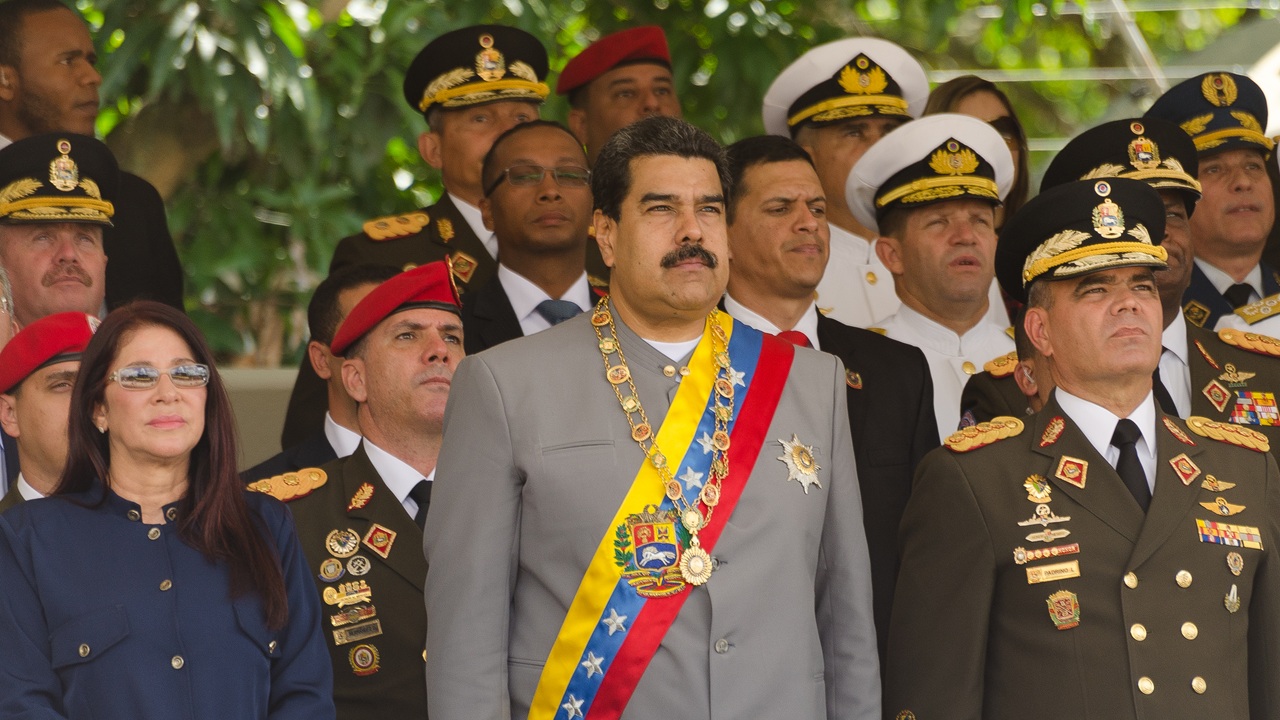
Despite the capture of Venezuelan dictator Nicolas Maduro, the remainder of his regime is still in power in Caracas—raising difficult questions for how the Trump administration should proceed.
In the early dawn hours of January 3, the US military struck a decisive blow against the Chavista regime in Venezuela. Under the cover of darkness, elements of the United States Special Forces zipped into the night skies of Caracas, broke into President Nicolas Maduro’s home, captured him and his wife, and exfiltrated them to the United States. No casualties were reported, and it took several hours before the regime could even reconfigure itself to mount a meaningful response.
The best Caracas could do was to issue a series of strong rebukes over the attack. For his part, President Donald Trump put the leadership of Mexico, Cuba, and Colombia on notice as possibly being next on Washington’s hit list. As the Chavista regime attempted to reorganize, it became clear that power did not shift to democratic forces in Venezuela.
Indeed, the regime exists in a strange state of make-believe.
Chavismo Is Still in Power in Venezuela
Delcy Rodriguez, the country’s vice-president, is ostensibly the new leader of the Chavista regime that has persisted in power for far too long. Yet the vice president finds herself spewing her wrath over the Trump administration’s arrest—kidnapping—of Maduro and his wife from Moscow.
Delcy Rodriguez’s brother, Jorge, is the other half of this dictatorial dynamic duo. He serves as the head of Venezuela’s National Assembly, and apparently remains in an undisclosed location in Caracas.
The country’s defense minister, Padrino Lopez, is another leading figure who is issuing fire-and-brimstone speeches. Of course, world leaders might note the fact that not a single one of Venezuela’s Russian-made air defenses so much as activated when the Americans came for Maduro.
Lastly, Diosdado Cabello, Venezuela’s highly influential interior minister, has issued a string of invective against the United States since Maduro’s capture. Cabello is another of the worst members of the Chavista regime. And Cabello, Lopez, and the Rodriguez siblings are all intimately involved with the management of the state-sponsored Cartel of the Suns, a Venezuelan transnational crime group helping to prop up the regime.
In other words, lopping off Maduro as the head of the regime—without any plans to do more to change Venezuela’s leadership—probably only means further repression inside Venezuela in the near term, and possibly a more widespread threat emanating from there over time.
Trump Says “No More Wars”—Then Promises to “Run” Venezuela
Over the past day, there have been confusing and seemingly contradictory bits of information coming from within the Trump administration.
On the one hand, Secretary of State Marco Rubio has supposedly informed Sen. Mike Lee (R-UT), a prominent skeptic of the use of force, that the White House was not planning any further military actions against Venezuela at this time.
Yet the president himself stated that his intention was to control Venezuela until a provisional government could be formed to take over. Trump insisted that, unlike the bulk of his political coalition at home, he was not afraid of putting “boots on the ground” in Venezuela.
The 47th president campaigned on a platform of opposing foreign regime change wars. Now, however, he is vowing not only to “run the country,” but claiming that US energy firms will be taking over Venezuela’s vast oil, natural gas, and rare earth mineral resources. But with the old regime still firmly in control of the streets of Caracas, how can that happen?
Many leaders in Washington today are asking themselves similar questions. Remember, Trump barely defeated Rep. Ro Khanna’s (D-CA) war powers resolution last month that was meant to prevent the president from unilaterally exercising military force in Venezuela.
The boat strikes and cargo ship seizures have been somewhat limited uses of force, mostly consistent with presidential war powers under previous administrations. But the grabbing of Maduro is an escalation—and a broader US invasion of Venezuela would be an even larger one.
Two Options for Venezuela’s Immediate Future
One source indicated that Grenell’s “Cartel-Lite” approach was in the offing. This is a reference to current Special Presidential Envoy for Special Missions of the United States, Richard Grenell, who is allegedly at the center of an ongoing fight within the administration over the future of the Venezuela policy.
Some within the White House have favored the introduction of Maria Corina Machado as the next democratic leader of Venezuela to completely wash away the malign Chavista regime. There are, however, factions that do not think Machado could achieve the kind of postwar stability that would be required for the United States to be satisfied that its mission in Venezuela has been successfully completed. This was something that President Trump alluded to in his initial press conference, following Maduro’s successful arrest.
Another faction in the administration wants to simply cut a deal with the existing regime in order to get access to the natural resources of Venezuela. Grenell is more toward this end. They call it the “Cartel-Lite” approach because the plan still leaves the cartel-supporting elements of the Chavista regime in power in Caracas, in exchange for those elements cutting favorable deals with US companies and no longer doing business with China, Russia, or Iran.
Neither of these options is ideal. Capturing the country to exploit its bountiful natural resources may sound financially beneficial, but it is a long-term commitment—not to mention a violation of international law. And there is no guarantee that an already-recalcitrant Congress will go along with these designs.
Besides, with leaders such as the Rodriguezes and Cabello still in power in Caracas, the greater question to ask is whether Trump actually ended the threat posed by the Venezuelan regime—or only worsened it.
About the Author: Brandon J. Weichert
Brandon J. Weichert is a senior national security editor at The National Interest. Recently, Weichert became the host of The National Security Hour on America Outloud News and iHeartRadio, where he discusses national security policy every Wednesday at 8pm Eastern. Weichert hosts a companion book talk series on Rumble entitled “National Security Talk.” He is also a contributor at Popular Mechanics and has consulted regularly with various government institutions and private organizations on geopolitical issues. Weichert’s writings have appeared in multiple publications, including The Washington Times, National Review, The American Spectator, MSN, and the Asia Times. His books include Winning Space: How America Remains a Superpower, Biohacked: China’s Race to Control Life, and The Shadow War: Iran’s Quest for Supremacy. His newest book, A Disaster of Our Own Making: How the West Lost Ukraine is available for purchase wherever books are sold. He can be followed via Twitter @WeTheBrandon.
Image: Shutterstock / StringerAL.
The post Nicolas Maduro Is Gone. Now What? appeared first on The National Interest.
Источник: nationalinterest.org