

«Данное сообщение (материал) создано и (или) распространено иностранным средством массовой информации, выполняющим функции иностранного агента, и (или) российским юридическим лицом, выполняющим функции иностранного агента»
 Topic: Air Warfare Blog Brand: The Buzz Region: Americas Tags: Caribbean, Donald Trump, Nicolas Maduro, South America, Special Forces, US Air Force, US Army, US Navy, and Venezuela Six Minutes in Caracas: How US Special Forces Grabbed Nicolas Maduro January 4, 2026 By: Brandon J. Weichert
Share
The raid on Venezuelan dictator Nicolas Maduro’s compound in Caracas—involving units from the US Army, Navy, Air Force, and Marines—highlighted the US military’s extreme proficiency at inter-service operations.
“Operation Absolute Resolve,” the codename for the United States’ snatching of Venezuelan dictator Nicolas Maduro, was a triumph of planning, leadership, capabilities, and timing. Whether the operation that ultimately allowed for US forces to capture Maduro and his wife in the early morning hours of January 3 leads to something better or worse geopolitically remains to be seen. But the operation itself was a tactical masterstroke.
Maduro’s Capture Was a Raid for the History Books
Under the overall command of President Donald Trump, who as commander-in-chief had overall mission authority and political direction—and Chairman of the Joint Chiefs of Staff Air Force Gen. Dan “Razin’” Caine, who possessed operational oversight and military execution—a joint force of American military units deployed into Venezuela. Among the American forces that went charging into the pre-dawn hours of Caracas’ skies were elements belonging to the United States Army DELTA Force, the 160th Special Operations Aviation Regiment (SOAR) “Night Stalkers,” along with Army Intelligence and reconnaissance support.
The US Air Force, the Navy, and Marine Corps rounded out support functions for this joint strike. The National Geospatial-Intelligence Agency (NGA), US Cyber Command (USCYBERCOM) and Space Command (USSPACECOM) were involved, along with multiple other alphabet soup intelligence agencies in Washington.
A total of 150 aircraft were deployed by the combined US force.
The Americans targeted La Carlota airbase, Fuerte Tiuna, El Volcán, and La Guaira Port. According to official reports from the Pentagon, US forces employed Suppression of Enemy Air Defenses (SEAD) tactics to neutralize the much-ballyhooed Russian-made air defenses ringing Caracas. In doing so, US Special Forces teams were able to enter Caracas with little difficulty.
Further reporting indicates that at least since August, a CIA paramilitary team had been inserted into the country and began conducting pattern-of-life surveillance on Maduro. One unconfirmed report has floated the possibility that a high-placed source within the Maduro government facilitated the accurate surveillance of Maduro—which is how the Americans knew exactly when and where to grab the Venezuelan leader.
Another report suggests that Maduro, in an uncanny act of kindness, ordered his forces to stand down for the Christmas holiday, disbelieving that Trump was serious about attacking the regime.
Thus, the Trump administration, with their surveillance and intelligence advantages on the ground, had a pristine opportunity and opted to go for it.
The Venezuela Raid Showed Off America’s Inter-Service Proficiency
The operation supposedly lasted just over six minutes. In those six minutes, the Americans removed Maduro—without a single loss of American life. And, according to the White House, most of Maduro’s security detail were Cubans, so it was done with a minimal loss of Venezuelan lives, too.
Of the DELTA Force elements involved in the raid, the 1st Special Forces Operational Detachment-Delta/C-Task Force was present. It was the lead special mission unit tasked with directly capturing Maduro.
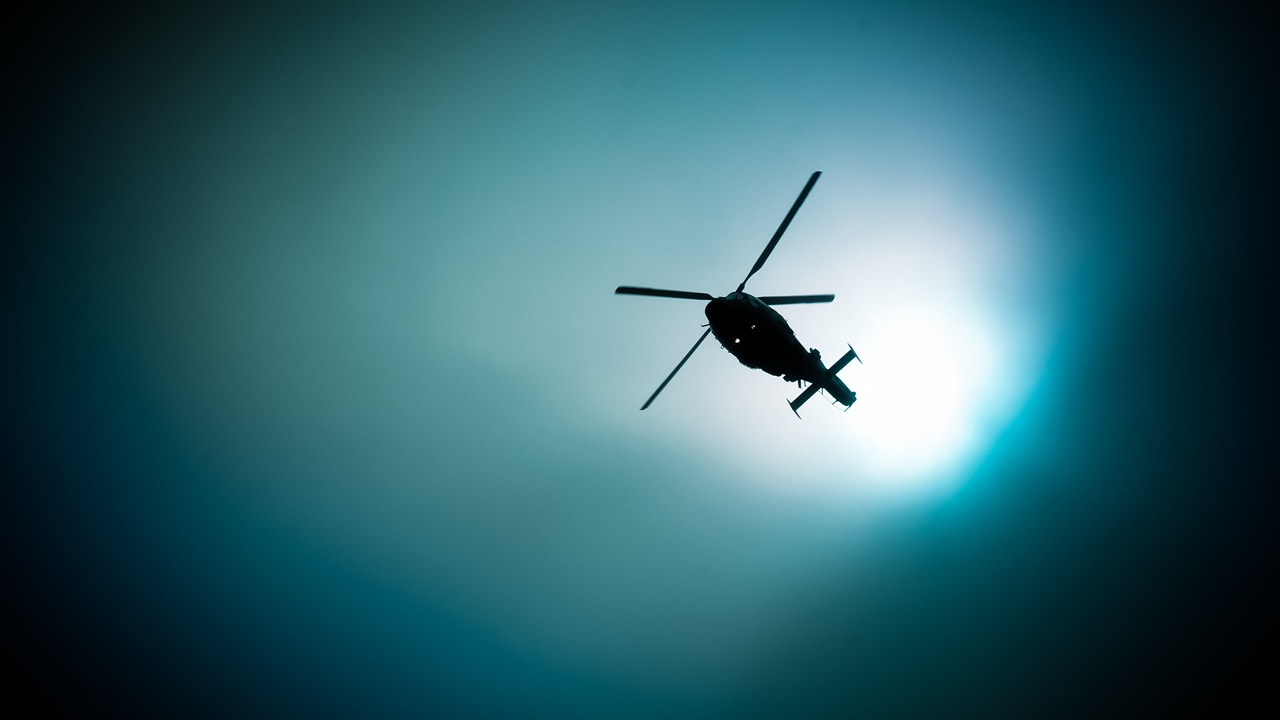
The legendary “Night Stalkers” provided aviation support, including troop lift, assault helicopters, and MH-47 Chinooks. Meanwhile, the US Army provided intelligence, surveillance, and reconnaissance (ISR) as well as target acquisition for precision entry.
As for the US Air Force, they likely directed aerial assets across Venezuelan airspace and integrated with Army Special Forces. As noted, there were reportedly more than 150 aircraft in the battlespace, meaning the Air Force likely played a key role in air dominance. In addition to manned aircraft, the Air Force likely employed MQ-9 Reaper drones and other unmanned aerial assets to conduct overwatch, targeting, and strike coordination.
The US Navy played a role, too. The USS Gerald R. Ford (CVN-78), as well as various destroyers and other support warships in the region, carried out strikes and air superiority operations during the saturation phase of the insertion. It has been reported that E/A-18G Growlers from the carrier were deployed to suppress the enemy air defenses in Caracas. Once it was complete, the amphibious assault ship, USS Iwo Jima, was used as both a staging area and detention platform for Maduro and his wife before they transited to the United States.
The Navy’s flotilla also provided air defense, sea control, and logistical support for joint operations in Venezuela.
Marine Corps units participated by supporting strikes and providing rapid response elements in the littoral approaches.
Remember, Tactical Victory Is Not Strategic Success
In all, the Americans achieved their major objectives. It is important to note, though, that this was not the culmination of a war. Nor was it a simple battle. It was a smash-and-grab-style raid. Media commentators around the world has compared the attack to the US invasions of Grenada in 1983 and Panama in 1989, but a better analogy is probably the killing of Osama bin Laden in 2011—in which Navy SEALs stormed the elusive terrorist leader’s compound in Pakistan, killed him, took his body, and left.
Because the rest of the Chavista regime in Caracas is still intact, it is unclear how America’s relations with Venezuela will actually change. Saturday’s raid demonstrated that the US military retains tactical dominance. As for strategic brilliance? That remains to be seen. After all, if the ouster of Maduro fails to fundamentally change the facts on the ground in Venezuela, or improve the lives of tens of millions of Venezuelans within the country and seeking refuge abroad, then was it really worth it?
About the Author: Brandon J. Weichert
Brandon J. Weichert is a senior national security editor at The National Interest. Recently, Weichert became the host of The National Security Hour on America Outloud News and iHeartRadio, where he discusses national security policy every Wednesday at 8pm Eastern. Weichert hosts a companion book talk series on Rumble entitled “National Security Talk.” He is also a contributor at Popular Mechanics and has consulted regularly with various government institutions and private organizations on geopolitical issues. Weichert’s writings have appeared in multiple publications, including The Washington Times, National Review, The American Spectator, MSN, and the Asia Times. His books include Winning Space: How America Remains a Superpower, Biohacked: China’s Race to Control Life, and The Shadow War: Iran’s Quest for Supremacy. His newest book, A Disaster of Our Own Making: How the West Lost Ukraine is available for purchase wherever books are sold. He can be followed via Twitter @WeTheBrandon.
Image: Shutterstock / Tiden Studio.
The post Six Minutes in Caracas: How US Special Forces Grabbed Nicolas Maduro appeared first on The National Interest.
Источник: nationalinterest.org