

«Данное сообщение (материал) создано и (или) распространено иностранным средством массовой информации, выполняющим функции иностранного агента, и (или) российским юридическим лицом, выполняющим функции иностранного агента»
 Topic: Air Warfare Blog Brand: The Buzz Region: Americas Tags: Air Force, Aircraft, Eurofighter Typhoon, F-22 Raptor, Fighter Jets, and United States Supersonic Without the Burn: The Hidden Power of Supercruise January 1, 2026 By: Harrison Kass
Share
Supercruise favors high-end air superiority platforms, widening the performance gap between fifth-generation fighters and legacy aircraft.
Supercruise is sustained supersonic flight without afterburner.Distinguishable from a brief supersonic fast, or afterburner-assisted flight, supercruise is becoming a premium feature of modern fighter design for its offering of efficiency, survivability, and operational flexibility. And although supercruise unlocks supersonic flight, the technology is not about raw speed—it’s about sustained advantage.
The History of Supercruise
The early jets could exceed the sound barrier—but only with the assistance of afterburners. This afterburner dependency resulted in a massive fuel burn and an increased heat signature that could only be used in short durations. So, Cold War fighters were forced to reserve their afterburners for sprints and climbs, lest they deplete their entire fuel stores. The downside to this conservatism was subsonic speeds. But the technology required to facilitate supercruise didn’t mature until the end of the Cold War.
Supercruise technology is dependent upon a variety of features: high thrust-to-weight engines that are efficient at military power; advanced turbofan designs with higher bypass ratios, balanced for supersonic flight; inlet designs that are variable, or optimized, to reduce drag at supersonic speeds; airframe shaping that reduces drag; and materials that can tolerate sustained heat. So, supercruise is a system-level achievement, depending upon a complementary set of breakthroughs, rather than one single technological achievement.
How Supercruise Works
Supercruise allows an aircraft to accelerate through the transonic region without lighting burners. Then, the aircraft can maintain Mach 1 (767 miles per hour) or beyond with military thrust. It’s that simple, really, but the benefits are profound; the aircraft burns less fuel, achieves a longer range, and requires less maintenance. This gives the pilot more tactical discretion and fewer operational constraints.
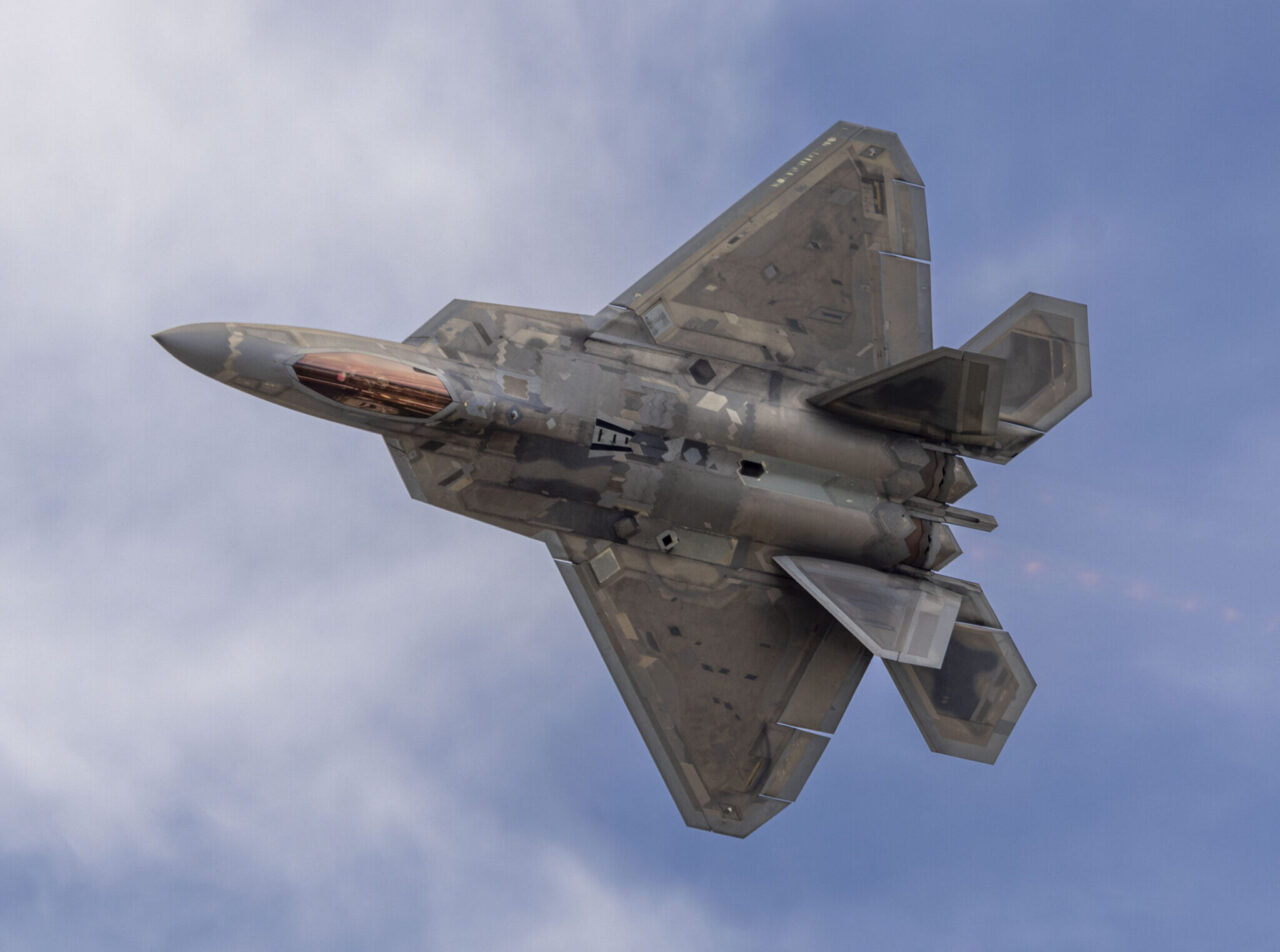
The most capable supercruiser is the F-22 Raptor, which can sustain Mach 1.7+ (1,304 miles per hour) speed without afterburner. But the fifth-generation F-22 isn’t the only aircraft with supercruise. The Eurofighter Typhoon, a fourth-generation multirole fighter, has limited supercruise, depending on the loadout. The Dassault Rafale also has modest supercruise capabilities. And the J-20, China’s first fifth-generation fighter, is claimed to have supercruise, depending on the engine variant, but this is unconfirmed. That’s a small cohort, and of course, within that cohort, not all supercruise capabilities are equal. Payload and altitude matter, especially at the margins of the capability, meaning effortless, categorical supercruise may only exist in one current fighter, the F-22.
Tactical Applications for Supercruise
Obviously, supercruise allows an aircraft to travel faster while burning less fuel—this allows for faster response times without the fuel penalty. Supercruise also allows fighters to enter an air-to-air merge with higher energy states, an advantage in a turning fight. Without afterburners lit, aircraft have lower infrared signatures, which makes them harder to detect, harder to intercept, and thus, more likely to survive. And supercruise reduces an aircraft’s reliance on tankers, which are non-stealth and vulnerable and a high-value target, especially within China’s A2/AD network, which specifically singles out enablement aircraft like tankers and AWACS.
Strategically, supercruise favors high-end air superiority platforms, widening the performance gap between fifth-generation fighters and legacy aircraft. Supercruise also reduces dependency on forward basing while enhancing deterrence through the compression of reaction time.
But supercruise does have its drawbacks. Namely, it requires expensive engines with increased design complexity. So, in the future, not all aircraft will feature supercruise; the technology will remain a premium feature, likely found on high-end sixth-generation platforms like the F-47 NGAD and FCAS.
About the Author: Harrison Kass
Harrison Kass is a senior defense and national security writer at The National Interest. Kass is an attorney and former political candidate who joined the US Air Force as a pilot trainee before being medically discharged. He focuses on military strategy, aerospace, and global security affairs. He holds a JD from the University of Oregon and a master’s in Global Journalism and International Relations from NYU.
Image: DVIDS.
The post Supersonic Without the Burn: The Hidden Power of Supercruise appeared first on The National Interest.
Источник: nationalinterest.org